Why Botanical Names Help Screen Dried Plant Products for Import
Quick answer: A botanical name and country of origin make dried-plant import screening more precise than a broad product label.
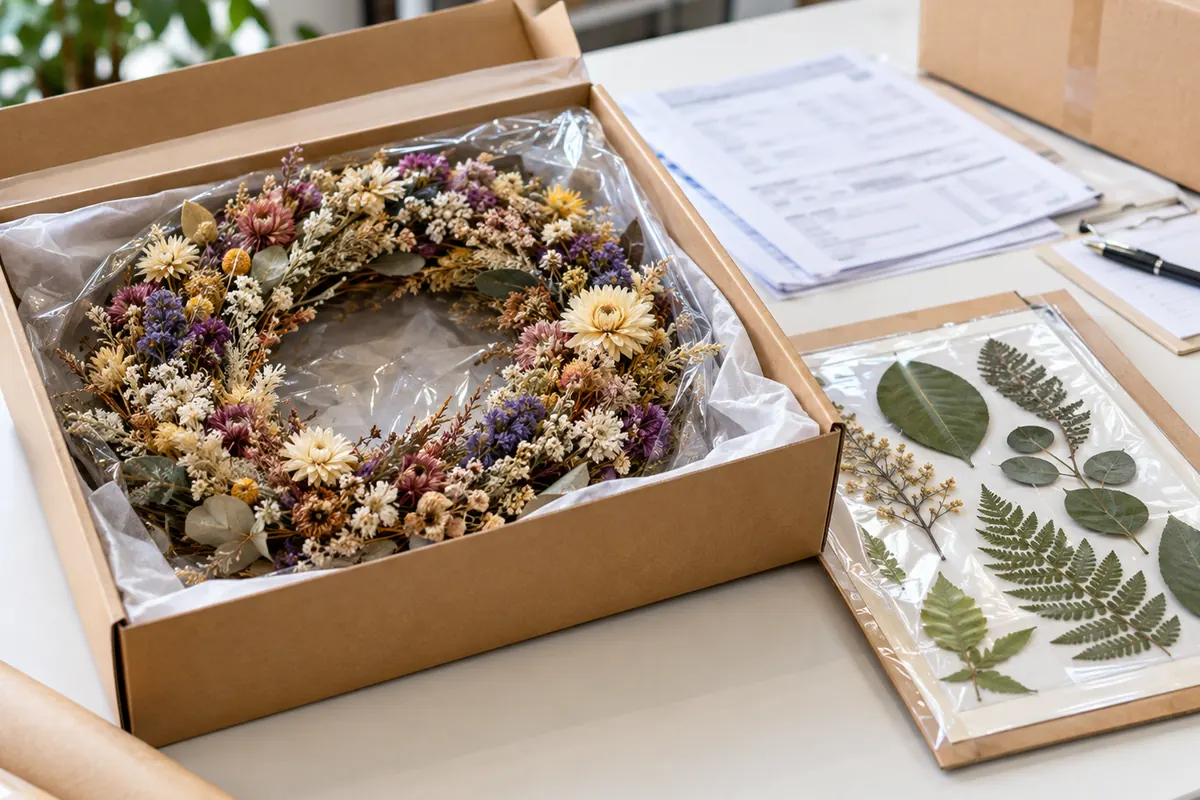
What makes this shipment different?
Common names can refer to several species, and one decorative SKU may mix multiple plants. APHIS's requirements are commodity- and origin-specific, so the importer needs supplier data that identifies what is actually in the package.
A practical review sequence
Request a materials list from the grower or manufacturer and map each plant part to its country of harvest. Ask the importer or broker to check the current APHIS requirements before booking.
Prepare these details for a quote
- Common and scientific name
- plant part
- country harvested and processed
- natural vs artificial components
- seeds/pods/bark
- treatment
- final product use
- photos.
Common question
What if the supplier does not know the scientific name?
Ask the supplier or qualified botanist to identify the material before making an import declaration or shipping decision.
Request a shipment review
Send the exact product and model, origin, destination, packed dimensions, gross weight and cargo-ready date. For sensitive goods, attach matching product documents and final packing photos. ANELGO can review the request against current route availability; an inquiry is not a booking or carrier approval.
Request a freight quote ↗View the relevant service ↗Official references
Related guides
- Dyed or Preserved Flowers: Document the Natural Material and Treatment
- Folding Knives: Photos and Design Details for Import Review
- Wig Kits with Adhesive or Remover: Separate Accessory Screening
- Browse all shipping guides
Privacy notice · Contact ANELGO