Lithium Batteries and Electronics from China to Brazil: Classification and Carrier Review
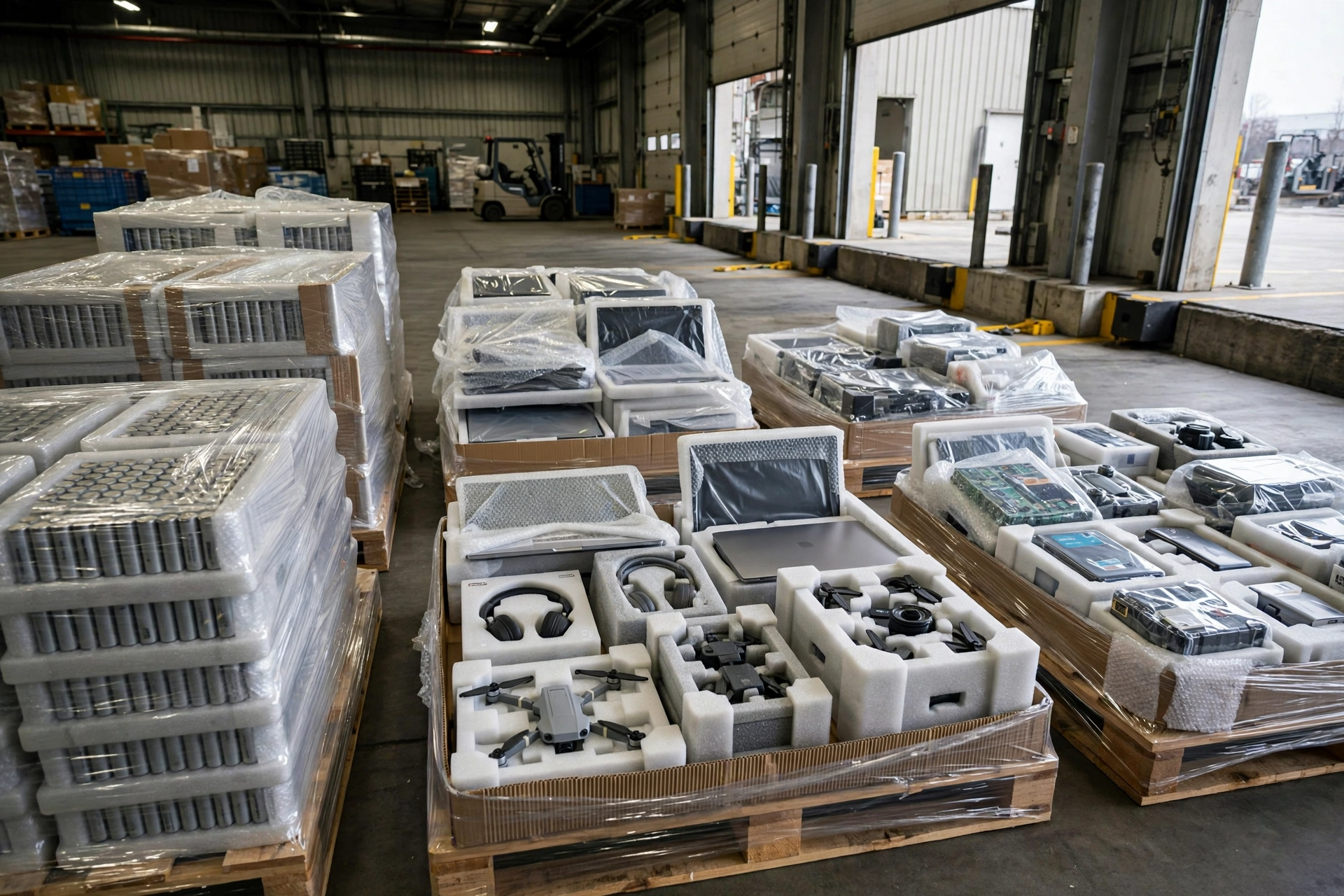
Brazil is a major market for electronics and battery-powered goods from China, and most shipments travel by ocean to a Brazilian port. The carrier reviews the battery and the device together: what the battery is, whether it is installed or spare, and how the whole shipment is packed.
Start with the battery, not the device
The first questions are always about the battery: its chemistry, watt-hour rating, whether it ships alone, packed with equipment, or contained in equipment, and whether it is a lithium-ion or lithium-metal type. Those answers decide the UN number, usually UN3480 for lithium-ion batteries shipped alone or UN3481 for batteries packed with or contained in equipment, and the packing instruction that applies.
Most carriers ask for a UN38.3 test summary and a safety data sheet before quoting. A test summary that cannot be traced to the exact battery model, or a watt-hour figure that does not match the marking on the battery, will slow the review down. Confirm the classification in writing before the goods leave the factory.
Installed batteries and spare batteries are different entries
A battery installed in a device travels under the equipment entry, while a spare battery travels on its own entry. The two are reviewed differently, so the quote should state how many units have batteries installed and how many spare batteries travel separately.
Keep spare batteries on a separate line in the quote, with their own quantity, watt-hour rating and package type. Mixing spares into the device line is a common reason a booking is sent back for correction.
Ocean is the usual first leg
Ocean freight under the IMDG Code is the common choice for larger battery and electronics shipments to Brazil, because it accepts configurations that air cannot. Even so, acceptance is carrier-specific: the line checks the classification, packaging, stowage position and documentation, and may refuse a booking it cannot stow.
Give the carrier the full picture up front — battery type, watt-hour, quantity, package type and gross weight — rather than a partial description. A booking confirmation is not the same as carrier acceptance; the line may still ask for corrected documents before loading.
Destination requirements in Brazil
Brazil applies its own import and product requirements to electronics and batteries, separate from the transport rules. The forwarder and the destination agent handle the arrival steps, but they need the same classification and packaging data the ocean or air carrier used.
Confirm the destination requirements for the specific goods before dispatch. A document set that cleared another market does not automatically clear Brazil.
What to send for a quote
A usable quote starts with the device model and quantity, the battery chemistry and watt-hour rating, whether batteries are installed or spare, the package type and gross weight, origin and destination, and the cargo ready date. Add the UN38.3 test summary and safety data sheet when they are available.
An inquiry or estimate is not final carrier acceptance. Rates, transit time and acceptance all depend on the exact product, route and carrier, so confirm them in writing once the carrier has reviewed the full shipment data.
Related guides
- Lithium Battery Shipping: What to Check Before Booking
- Lithium Battery Mixed Electronics Consolidation
- Lithium Battery Shipping: UN3480 vs. UN3481
Official references
For a route-specific logistics review, provide the product, origin, destination, packed dimensions, weight and ready date.
Request a shipment review ↗Frequently asked questions
Do electronics with batteries installed ship under the same entry as spare batteries?
No. Batteries installed in equipment travel under the equipment entry, usually UN3481 for lithium-ion, while spare batteries are a separate entry, usually UN3480. Keep them on separate lines in the quote.
Can lithium batteries ship by air to Brazil?
It depends on the battery type, configuration and state of charge, and on the airline. Standalone lithium-ion batteries shipped by air must be at a state of charge not exceeding 30% of rated capacity. Confirm the air option with the carrier before promising a date.
What documents does a Brazil-bound battery shipment need?
Carriers usually ask for a UN38.3 test summary, a safety data sheet, the watt-hour rating, the UN number and packing details. Destination requirements depend on the exact product and route, so confirm the document list in writing with the forwarder before dispatch.