Knives and Blades from China to the UK: Description, Packaging and Carrier Review
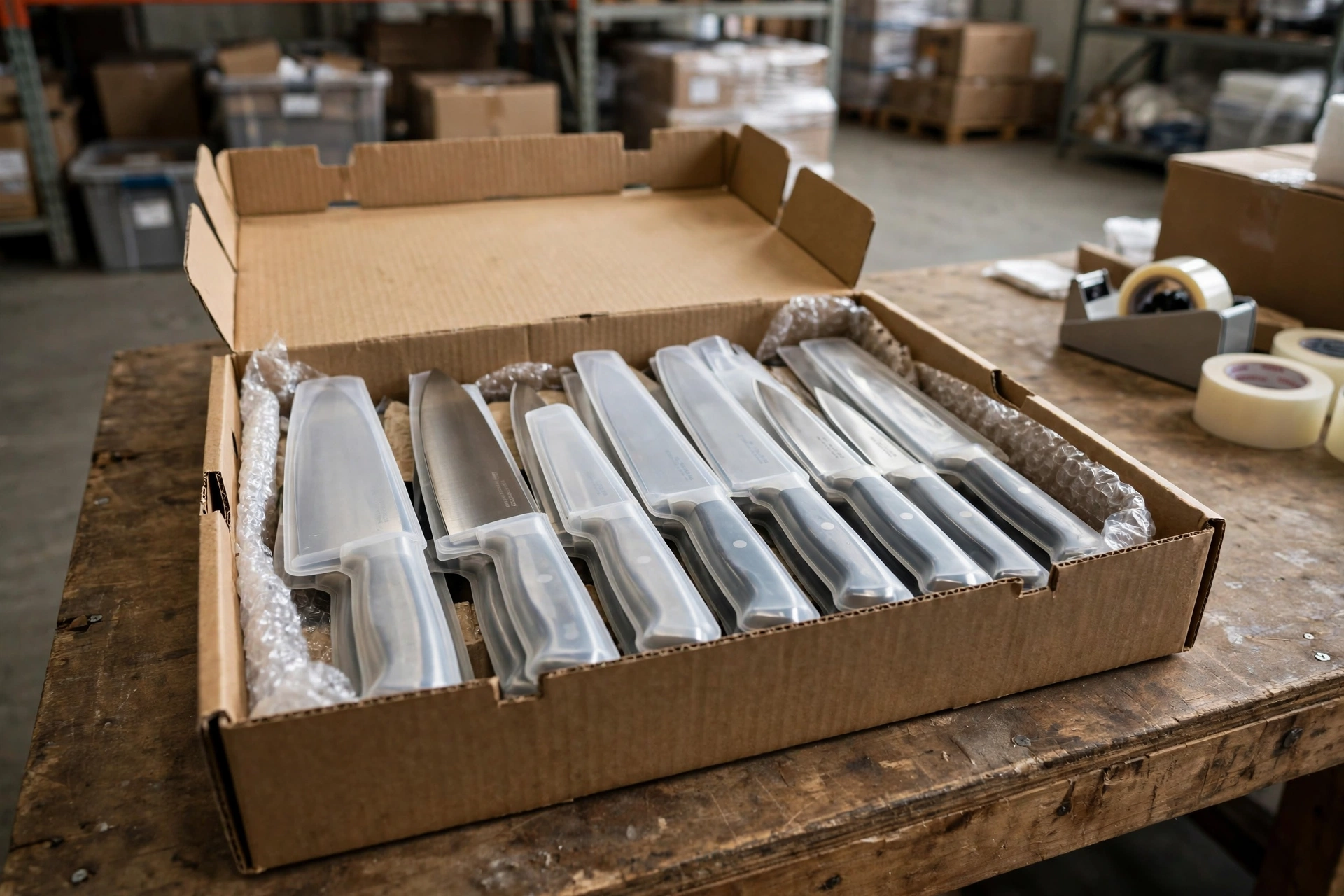
Kitchen knives, folding knives, utility blades and similar goods are routine exports to the UK, but bladed goods are screened more closely than ordinary cargo. The carrier and customs need an accurate description of each item, and the packaging has to protect the blades and the people handling the cartons.
Describe each item exactly
The first question is always what each item is: blade type, blade length, folding or fixed, and handle material. A vague description such as tools or kitchenware slows the review down, because the carrier and customs cannot screen what they cannot identify.
List every model separately, with its own quantity. A mixed carton of different knives needs the full breakdown, not a single line for the carton.
Packaging that protects the blade and the handler
Each blade should be secured with an edge guard or sheath, packed so it cannot move or cut through the carton. Cartons must be strong and sealed, and the packing must keep the blades apart so they cannot damage each other in transit.
Loose blades in a carton are a common reason a shipment is refused. Check every carton before it leaves the warehouse, and keep one packing method across the whole order so the carrier reviews a single, consistent setup.
Carrier screening
Some carriers restrict or refuse bladed goods, so disclose the goods before booking rather than after the cartons arrive at the port. A carrier that accepts kitchen knives may still refuse a different blade type, so the product list decides the answer.
A booking confirmation is not the same as carrier acceptance. The carrier may still ask for corrected documents or different packaging before loading.
Customs description and documents
The commercial invoice and packing list must describe each item exactly and match the physical goods, with quantities and values per model. A mismatch between the documents and the cartons is a common reason a shipment is held at arrival.
Confirm the document list with the forwarder and customs broker before dispatch. Destination requirements depend on the exact goods and route.
What to send for a quote
A usable quote starts with the product list with blade details for each model, quantities and carton count, package type and gross weight, origin and destination, and the cargo ready date.
An inquiry or estimate is not final carrier acceptance. Rates, transit time and acceptance all depend on the exact product, route and carrier, so confirm them in writing once the carrier has reviewed the full shipment data.
Related guides
- Knife Import Freight from China to the USA
- Folding Knife Design Import Freight Review
- Knife Packaging for International Freight
Official references
For a route-specific logistics review, provide the product, origin, destination, packed dimensions, weight and ready date.
Request a shipment review ↗Frequently asked questions
Can knives ship from China to the UK by air?
Some bladed goods can travel by air, but carriers screen them closely and some refuse them. Confirm the air option with the carrier before planning around it, and do not promise a delivery date until the carrier has accepted the booking.
How should knife blades be packed for export?
Each blade should be secured with an edge guard or sheath, packed so it cannot move or cut through the carton, and the carton should be strong and sealed. Loose blades in a carton are a common reason a shipment is refused.
What documents does a UK-bound knife shipment need?
The commercial invoice and packing list must describe each item exactly, with quantities per model. The exact document list depends on the goods and route, so confirm it in writing with the forwarder and customs broker before dispatch.