E-Bike and E-Scooter Lithium Batteries from China to the USA: UN3171 Checklist
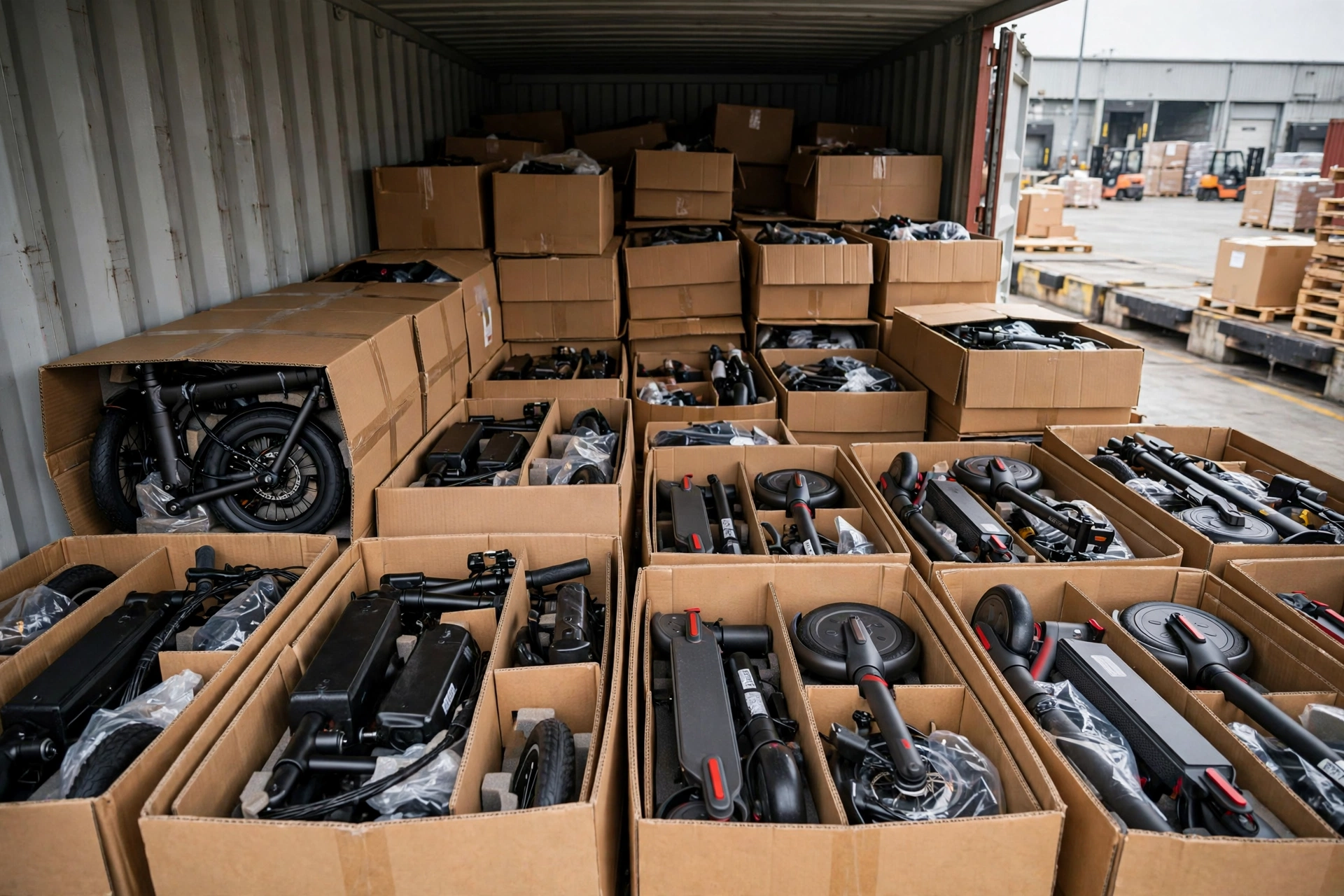
E-bikes and e-scooters are battery-powered vehicles, and their lithium batteries travel with them as part of the same shipment entry in most cases. That makes the quote different from a standalone battery shipment: the carrier needs the vehicle and the battery described together, including whether any spare batteries travel separately.
UN3171 covers the vehicle and its battery together
A battery-powered vehicle is usually classified as UN3171, battery-powered vehicle, with the battery installed. The entry covers the vehicle as a whole, so the quote should state the vehicle model, the battery chemistry and watt-hour rating, and whether the battery is removable or fixed.
If the battery can be removed, say so in the shipment data. A removable battery that travels outside the vehicle is a different entry from one installed in the vehicle, and the carrier reviews them differently.
Spare batteries are a separate entry
Spare or additional batteries do not travel under the UN3171 vehicle entry. They are classified on their own, usually as UN3480 for lithium-ion batteries shipped alone or UN3481 for batteries packed with equipment, with their own packing instruction.
Keep spare batteries on a separate line in the quote, with their own quantity, watt-hour rating and package type. Mixing spares into the vehicle line is a common reason a booking is sent back for correction.
Ocean is the usual mode; air is narrow
Ocean freight under the IMDG Code is the usual mode for e-bikes and e-scooters, because the vehicles are bulky and the batteries are large. Air carriage of battery-powered vehicles is tightly limited and often not available, so check the air option with the carrier before planning around it.
Damaged, defective or recalled batteries need a separate review and are often refused outright. If any battery in the shipment is damaged or has been recalled, disclose it before booking rather than after the goods arrive at the port.
What the carrier checks before acceptance
Before accepting the shipment, the carrier checks the UN38.3 test summary for the battery, the watt-hour rating and marking, the state of charge, the packaging and securing, and whether the battery shows any damage. The US Department of Transportation treats lithium batteries as hazardous material, and shippers must meet the applicable requirements for the mode used.
A booking confirmation is not the same as carrier acceptance. The carrier may still ask for corrected documents or different packaging before loading.
What to send for a quote
A usable quote starts with the vehicle model and quantity, the battery chemistry and watt-hour rating, whether batteries are installed or spare, the package type and gross weight, origin and destination, and the cargo ready date. Add the UN38.3 test summary and safety data sheet when they are available.
An inquiry or estimate is not final carrier acceptance. Rates, transit time and acceptance all depend on the exact product, route and carrier, so confirm them in writing once the carrier has reviewed the full shipment data.
Related guides
- Lithium Battery Shipping: What to Check Before Booking
- Lithium Battery Shipping: UN3480 vs. UN3481
- Damaged Lithium Battery Return Route Review
Official references
For a route-specific logistics review, provide the product, origin, destination, packed dimensions, weight and ready date.
Request a shipment review ↗Frequently asked questions
Do e-bike batteries ship under the same entry as the bike?
Usually yes when the battery is installed in the vehicle: the shipment is classified as UN3171, battery-powered vehicle. A battery that travels outside the vehicle is a separate entry, usually UN3480 or UN3481, and needs its own line in the quote.
Can e-bikes and e-scooters ship by air from China to the USA?
Air carriage of battery-powered vehicles is tightly limited and often not available. Ocean freight is the usual mode. Confirm the air option with the carrier before planning around it, and do not promise the buyer an air transit time until the carrier has accepted the booking.
What if a battery in the shipment is damaged?
Disclose it before booking. Damaged, defective or recalled batteries need a separate review and are often refused. They must not be mixed into a normal vehicle or spare-battery shipment without the carrier's written acceptance.