US Import Customs Clearance Checklist: Entry, Duty & Release
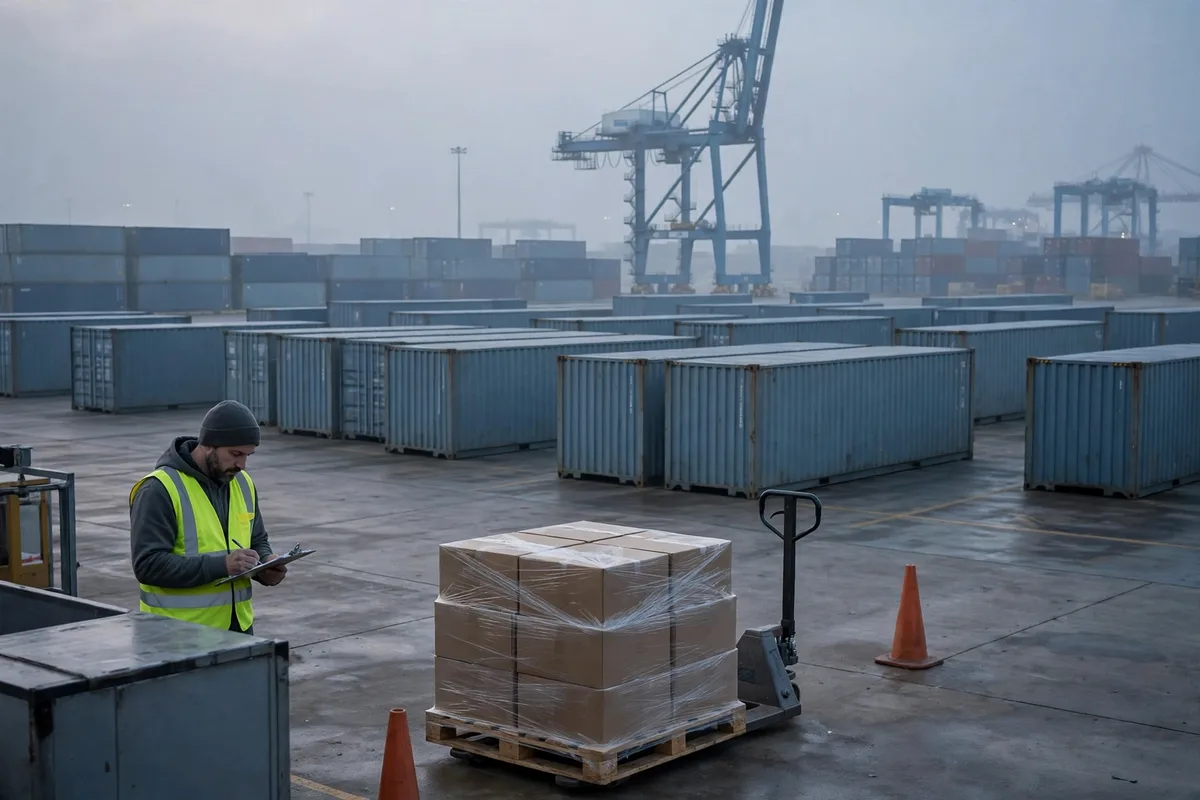
Customs clearance decides whether a shipment from China enters the United States or waits at the port. This checklist follows the entry in order: the file prepared before arrival, the entry and bond, duty and examination, and the checks after release. Tick each item before the goods move on.
How to use this checklist
This page covers the United States import clearance process and the file that supports it. It does not repeat the general export documents list or the United States import documents list: the international shipping documents checklist on this site is the general export master list, and the China to USA import documents checklist is the import file list. Both are linked below. Use this page for the sequence — what to prepare, what to file, what to check at release — and use the two lists for the contents of each document.
Work through the four stages in order, and do not file the entry until Stage 1 is complete. An entry filed with the wrong classification or the wrong value has to be corrected after filing, and a correction after filing takes longer than a check before filing. Keep the commercial invoice, the packing list, the bill of lading or air waybill, and the broker's instructions together as one file, so every number on the entry can be traced back to a document in the file. Where the supplier's invoice and the packing list disagree, ask the supplier for a corrected document before the entry is filed, rather than asking the broker to guess which number is right.
A licensed customs broker usually files the entry for the importer, and the importer stays responsible for the accuracy of the entry even when the broker files it. Read the broker's entry summary against the invoice before the goods are released, and keep the full entry file after release: the file is the record the importer relies on if Customs reviews the entry later. A shipment that arrives without a broker appointed, or without a bond in place, cannot be entered at all, so confirm both before the goods leave the origin port.
Stage 1 — Before the goods arrive
Stage 1 settles who clears the goods and what the goods are. The importer of record, the broker, the classification, the origin and the value are all fixed before the vessel or aircraft arrives, because every later step reads them from the entry file. A gap found at the port is a gap that holds the shipment, so settle each item while the goods are still in transit.
Ocean shipments also need the Importer Security Filing, and some goods need a partner government agency check before arrival. Confirm both early: a filing that is late, or a permit that is missing, can hold the goods at the port while the rest of the file waits for it.
Stage 2 — Filing the entry
The entry is the importer's declaration to Customs: what the goods are, where they come from, what they are worth, and what duty applies. The broker files it from the file prepared in Stage 1, and the importer reviews it before it is submitted. Nothing in the entry should surprise the importer: every line on it should trace back to a document already in the file.
Duty is paid with the entry summary, and the bond stands behind the entry until Customs accepts it. Read the entry summary line by line: the classification, the value, the quantity and the duty must match the invoice and the packing list, and any mismatch must be corrected before the release is requested. Where the entry covers several products, check each line separately: a single wrong line can hold the whole entry while the rest of the shipment waits at the terminal.
Stage 3 — Arrival, examination and release
When the goods arrive, Customs decides whether to release them, examine them, or hold them for more information. The arrival notice, the carrier release and the customs release are three separate steps: customs release does not by itself mean the carrier will hand the goods over, and carrier release does not by itself mean Customs has cleared the entry.
Examinations take different forms, from a document review to a physical inspection of the cartons. Answer an exam request with the documents the broker asks for, and do not move the goods until both the customs release and the carrier release are confirmed in writing.
Stage 4 — After release: records and follow-up
Release is not the end of the entry. Customs can review the entry after release, and the importer must be able to show the file that supports every number on it. Keep the entry file complete, consistent and accessible, so a later review starts from documents rather than from memory.
Check the liquidation result when it arrives, and ask the broker about any duty change, refund or additional bill. If an error is found in the entry, raise it with the broker while the entry is still open to correction, and keep the broker's answer in the file with the entry.
Which entry route fits this shipment?
Most commercial shipments from China enter under a formal entry, but the right route depends on the shipment, not on habit. Use the table to check the fit, and confirm the route with the broker before filing: the broker knows the current thresholds, the port practice, and whether a partner agency filing applies to the goods.
| Entry route | When it fits | What to check before filing |
|---|---|---|
| Formal entry | Commercial shipments and most China–US imports | Classification, value, bond and partner agency checks complete |
| Informal entry | Low-value shipments that meet the informal-entry conditions | Current value threshold and eligibility confirmed with the broker |
| Entry with partner agency review | Food, cosmetics, medical devices, electronics and other regulated goods | Agency filing or registration confirmed before arrival |
| Temporary importation under bond | Goods entering for a limited purpose and leaving again | Bond terms and the re-export plan agreed with the broker |
Common reasons US import entries are held or rejected
Most holds come back to the same few errors. The invoice and the packing list disagree on quantity or value, so Customs cannot match the entry to the goods. The classification is wrong, so the duty is wrong. The Importer Security Filing is missing, or it is inconsistent with the bill of lading. The bond is not in place, or the partner government agency has not released the goods. A value that looks inconsistent with the goods — a price far below the usual range for the product, or a related-party price with no supporting records — can also draw a closer look at the entry.
The fix is the same in each case: correct the file, not the goods. Ask the broker what Customs or the agency needs, supply the document or the correction, and wait for the release before the goods move. Do not change the invoice or the packing list after filing without telling the broker: a document changed without a matching entry correction is a new mismatch, and it holds the shipment longer. Keep a note of every hold, the reason given, and the correction made, so the same error does not repeat on the next shipment from the same supplier.
What this checklist cannot decide
This checklist cannot set the duty rate, the classification, or the value of the goods: those follow the tariff schedule, the transaction, and the broker's review of the file. It cannot predict whether Customs will examine a shipment, and it cannot clear a shipment that a partner government agency has not released. The broker's review is part of the process, not an extra step: the entry is only as good as the file behind it.
It also cannot replace the broker's advice on a specific entry. Where the goods are regulated, the value is disputed, or the entry has been held, ask the broker before the next step, and keep the broker's answer in the file with the entry.
US import and customs guides on this site
- China to USA Import Documents Checklist: Invoice, ISF and Product Records
- International Shipping Documents Checklist: Export, Transport & Customs Clearance
- Customs Clearance and Incoterms for China–US Imports: Complete Guide
- ISF 10+2 for China to USA Ocean Freight: Timing and Data Checklist
Related guides
- China to USA Import Documents Checklist: Invoice, ISF and Product Records
- International Shipping Documents Checklist: Export, Transport & Customs Clearance
- Customs Clearance and Incoterms for China–US Imports: Complete Guide
- ISF 10+2 for China to USA Ocean Freight: Timing and Data Checklist
Official references
- US Customs and Border Protection: Trade
- ICC: Incoterms 2020
- FIATA: International Federation of Freight Forwarders Associations
For a route-specific logistics review, provide the product, origin, destination, packed dimensions, weight and ready date.
Request a shipment review ↗Frequently asked questions
Who files the customs entry — the importer or the broker?
A licensed customs broker usually files the entry for the importer, and the importer stays responsible for the accuracy of the entry even when the broker files it. The importer confirms the classification, the value and the origin, and reviews the entry summary before the goods are released. The broker files from the importer's file, so a complete and consistent file is what makes the filing smooth.
What happens if Customs holds the shipment for examination?
Customs can review the documents, inspect the cartons, or ask for more information before release. The broker tells the importer what is needed, and the importer supplies the document or the correction. The goods stay at the terminal until Customs releases them, and the carrier release is confirmed separately.
Does customs release mean the carrier will deliver the goods?
No. Customs release and carrier release are separate steps. Customs release means Customs has cleared the entry; carrier release means the freight and terminal charges are settled and the carrier will hand the goods over. Both must be confirmed before the goods leave the terminal.