Sensitive Cargo from China to Canada: Classification, Documents and Carrier Review
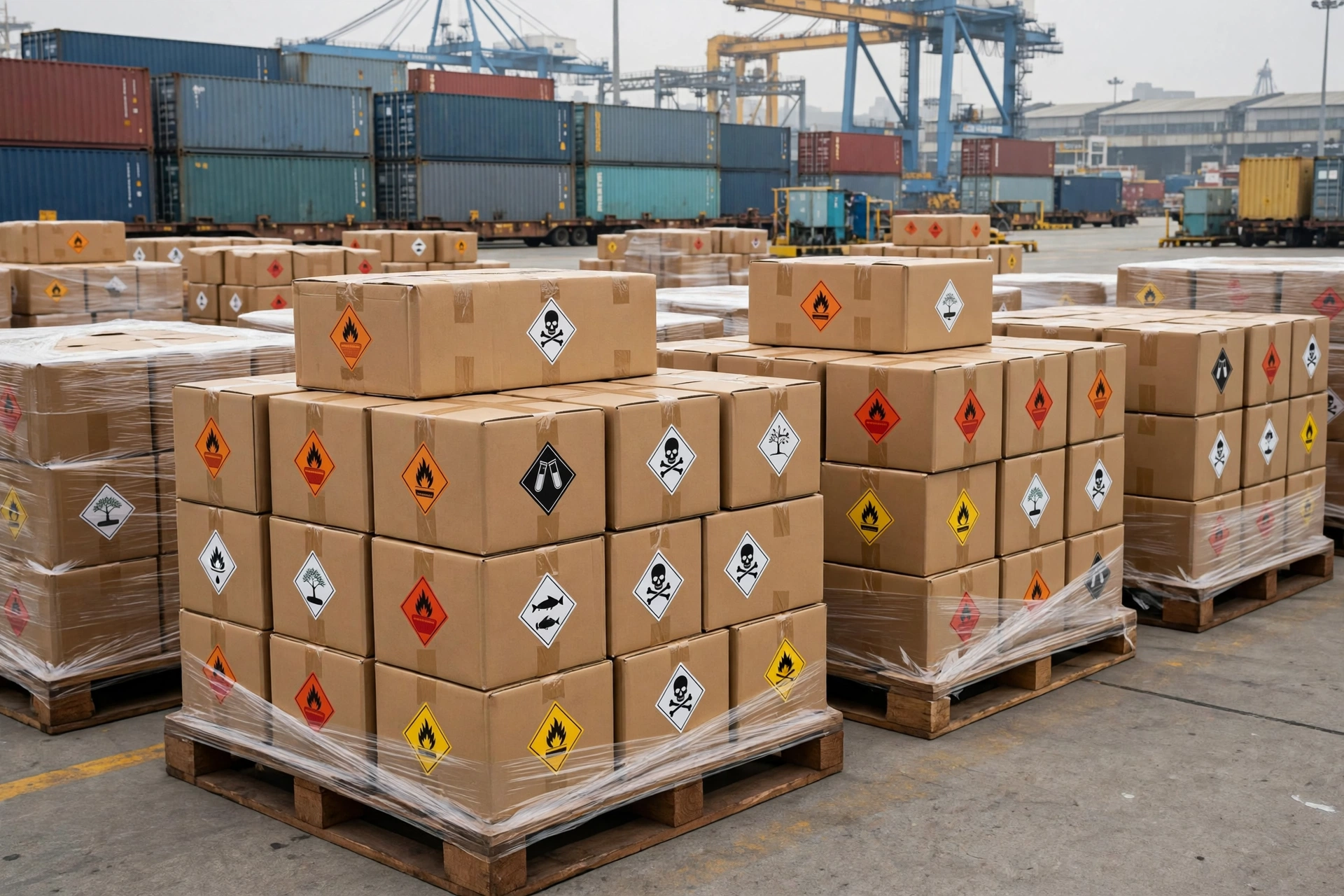
Canada-bound sensitive cargo — lithium batteries, aerosols, perfume, lighters, cosmetics and similar goods — is reviewed the same way as anywhere else, but against Canada's own rules at destination. The ocean or air leg follows international codes, and the Canadian road leg follows the Transportation of Dangerous Goods Regulations. A quote is only useful once the carrier has the full product picture.
Start with classification
The first questions are always about the goods themselves: what each product is, its UN number and class, and how it is packed. Lithium batteries are usually UN3480 or UN3481, aerosols are usually UN1950, and alcohol-based perfume is usually UN1266. Those answers decide the packing instruction and the documents the carrier will ask for.
Confirm the classification in writing before the goods leave the factory. A wrong UN number on the booking is a common reason a shipment is sent back for correction.
Ocean is the usual first leg
Ocean freight under the IMDG Code is the common choice for larger sensitive cargo shipments to Canada, because it accepts configurations that air cannot. Even so, acceptance is carrier-specific: the line checks the classification, packaging, stowage position and documentation, and may refuse a booking it cannot stow.
Give the carrier the full picture up front — product type, UN number, quantity, package type and gross weight — rather than a partial description. A booking confirmation is not the same as carrier acceptance; the line may still ask for corrected documents before loading.
Air is narrower
Air freight follows the IATA Dangerous Goods Regulations, and the limits are tighter than ocean. Some configurations are restricted to cargo aircraft only, and some goods are not accepted by air at all.
If the schedule depends on air, check the air option before promising a date to the buyer. An air booking that the airline later refuses costs more time than an ocean booking made earlier.
The Canadian road leg follows the TDG Regulations
Once the goods arrive in Canada, the onward road and rail legs are governed by the Transportation of Dangerous Goods Regulations, administered by Transport Canada. The forwarder or road carrier handles vehicle, documentation and marking requirements for that leg, but they need the same classification and packaging data the ocean or air carrier used.
Keep one consistent data set across all legs. If the road carrier receives different figures from the ocean booking, the handover stalls while the paperwork is reconciled.
What to send for a quote
A usable quote starts with the product details and UN number where known, quantities and carton count, package type and gross weight, origin and destination, and the cargo ready date. Add the safety data sheet for each product, and the UN38.3 test summary for lithium batteries, when they are available.
An inquiry or estimate is not final carrier acceptance. Rates, transit time and acceptance all depend on the exact product, route and carrier, so confirm them in writing once the carrier has reviewed the full shipment data.
Related guides
- Sensitive Cargo Freight Quote from China to the USA
- Sensitive Cargo Carrier Acceptance Before Dispatch
- China-USA Air vs. Ocean Freight
Official references
- Transport Canada: Transportation of Dangerous Goods
- IMO: Verification of the Gross Mass of a Packed Container
For a route-specific logistics review, provide the product, origin, destination, packed dimensions, weight and ready date.
Request a shipment review ↗Frequently asked questions
Does Canada use the same dangerous goods rules as the USA?
No. The ocean and air legs follow the same international codes — the IMDG Code and the IATA Dangerous Goods Regulations — but the Canadian road and rail leg follows Canada's Transportation of Dangerous Goods Regulations, administered by Transport Canada. The classification data is the same, but the destination rules are Canada's own.
Can sensitive cargo ship by air from China to Canada?
Some goods can, under the IATA Dangerous Goods Regulations, but air is narrower than ocean and some configurations are restricted or not accepted. Confirm the air option with the carrier before planning around it.
What documents does a Canada-bound sensitive cargo shipment need?
Carriers usually ask for a safety data sheet, the UN number and classification, packing details, and, for lithium batteries, a UN38.3 test summary. The exact list depends on the goods and route, so confirm it in writing with the forwarder before dispatch.