Cosmetics from China to Thailand: Product Review and Shipping Checklist
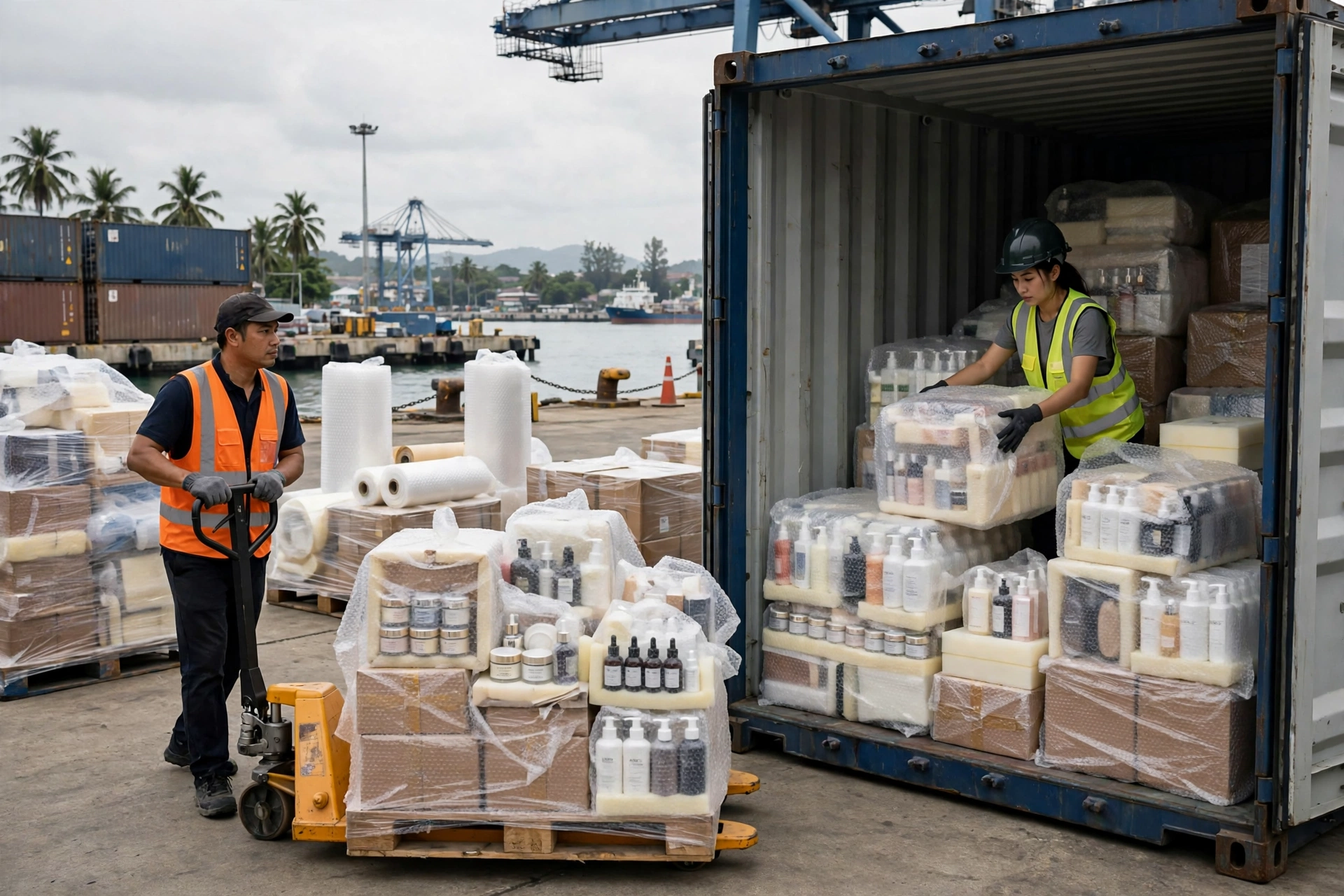
Thailand is a steady market for cosmetics from China, and most shipments travel by ocean, with air used for smaller or urgent lots. Cosmetics are not one category for transport purposes: a cream, a powder and an alcohol-based liquid are each reviewed on their own formulation, so the shipment is best reviewed product by product.
Start with the product list, not the route
The first questions are always about the products themselves: the formulation of each item, whether it is a liquid, cream, powder or spray, the alcohol content where it applies, and the quantity of each. Those answers decide how each product is classified and packed.
Send the full product list up front rather than a partial one. A product left off the list may need a different classification, and discovering that after the goods arrive at the port costs more time than listing it at the start.
Classification depends on the formulation
Most cosmetics travel as general cargo, but alcohol-based liquids may be classified as flammable liquids, and the exact entry depends on the formulation and flash point. Do not guess the classification from the product name alone, because two products that look the same can carry different entries.
Confirm the classification for each product in writing before the goods leave the factory. The carrier reviews the safety data sheet and the formulation data, and may refuse a booking it cannot screen.
Packaging that survives the journey
Liquid cosmetics need leakproof inner packaging, sealed caps and upright packing with absorbent material, placed in cartons strong enough to hold their weight if one bottle leaks. Powders need sealed containers and cushioning so they cannot burst or spill inside the carton.
Cartons must be strong enough to hold their weight when stacked, and the packing must keep the products from moving or pressing against each other. A leaking carton can delay the whole shipment, so the packing is worth checking before dispatch.
Ocean or air
Ocean freight is the usual mode for larger cosmetics shipments, because it accepts a wider range of products and the transit is routine. Air freight is faster but narrower: flammable liquids face strict quantity and configuration limits by air, and some products cannot fly at all.
If the schedule depends on air, check the air option for the specific products before promising a date to the buyer. An air booking that the airline later refuses costs more time than an ocean booking made earlier.
What to send for a quote
A usable quote starts with the product list and quantities, the formulation and safety data sheet for each liquid product, the package type and gross weight, origin and destination, and the cargo ready date.
An inquiry or estimate is not final carrier acceptance. Rates, transit time and acceptance all depend on the exact product, route and carrier, so confirm them in writing once the carrier has reviewed the full shipment data.
Related guides
- Shipping Perfume & Cosmetics from China: Complete Guide
- Perfume & Aerosol Shipping Review from China
- Perfume Shipping from China to the USA: Quote and Carrier Review
- Cosmetics from China to South Korea: Product Review and Shipping Checklist
- Liquid Cosmetics Freight: Leakproof Packing and Quote Data
Official references
For a route-specific logistics review, provide the product, origin, destination, packed dimensions, weight and ready date.
Request a shipment review ↗Frequently asked questions
Are cosmetics from China to Thailand dangerous goods?
It depends on the formulation. Alcohol-based liquids may be classified as flammable liquids, while most creams, powders and water-based products travel as general cargo. Confirm the classification for each product with the forwarder before dispatch.
What documents does a Thailand-bound cosmetics shipment need?
Carriers usually ask for a safety data sheet, the product list with ingredients and quantities, and the packing details. Destination requirements depend on the exact product and route, so confirm the document list in writing with the forwarder before dispatch.
Do Thailand's own import rules affect the shipment?
It can matter. Thailand applies its own import and product requirements to cosmetics, separate from the transport rules that govern the ocean or air leg. Confirm the destination requirements with the forwarder before dispatch rather than assuming a shipment cleared for another market will clear Thailand.