Shipping Perfume & Cosmetics from China: Complete Guide
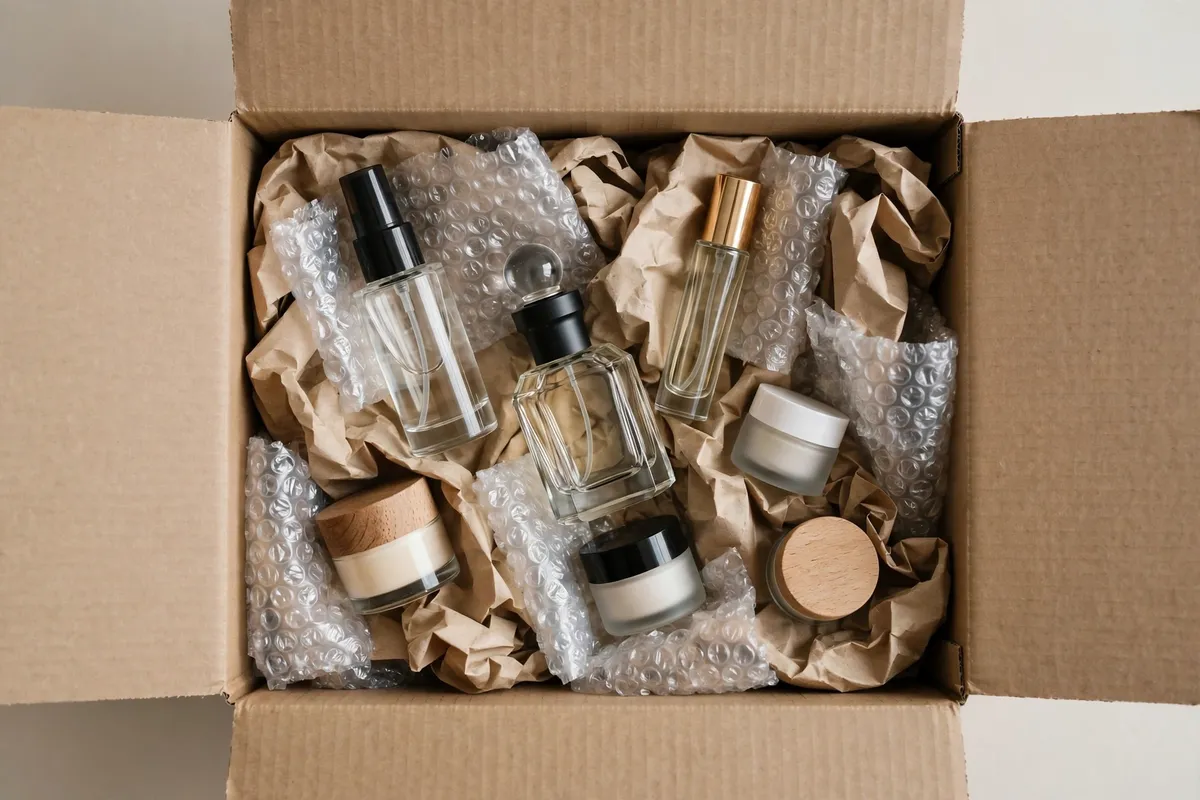
Shipping perfume and cosmetics from China is a product-first decision. Some items are general cargo and others are usually Class 3 flammable liquid, so the classification, packaging and documents depend on the exact product and formulation, with each requirement confirmed in writing before booking.
1. Start with the product and its formulation
A usable review starts with the goods themselves, because cosmetics cover a wide range: creams and serums, perfumes, aerosols, nail polish, essential oils and gift sets do not all ship the same way. Share the exact product name, the form and formulation, whether it contains alcohol or propellant, the packed dimensions and gross weight of each carton, the total carton count, and the origin and destination. A forwarder works from this data, not from a category label, because two products described as cosmetics can need different classification, packaging and carrier review.
Review each SKU on its own, even inside one order. A gift set that combines a perfume, a cream and a miniature vial needs SKU-level data for every item, and a consolidated shipment needs an invoice and packing list that match the cartons item by item. Share the full SKU list with the first enquiry so the classification review covers the whole shipment, not just the headline product.
2. Classification in general terms
Perfume, nail polish and essential oils are usually Class 3 flammable liquid in general terms, and aerosols need a separate propellant and classification review. The exact classification depends on the formulation, the alcohol content and the packaging, so the safety data sheet and the flash point help the forwarder assess the shipment. No single classification covers every cosmetic product, and this guide states no UN number for perfume, nail polish or essential oils: the forwarder confirms the classification for the exact product in writing.
Some cosmetics are general cargo. Creams, serums and powders without flammable components usually ship as general cargo, though the carrier still reviews the product data before accepting the booking. The carrier may also ask for the safety data sheet before confirming the booking, and the forwarder uses the sheet to check the classification, the packing group and the mode limits that apply to the exact formulation. Whatever the product, acceptance depends on the exact goods, route and carrier, and must be confirmed in writing before dispatch.
3. Packaging: leakproof cartons and inner protection
Leakage is the main packing risk for liquid cosmetics, so the packing plan is part of the route review. Plan for sealed caps, inner packaging, absorbent material and a leakproof outer carton, with orientation marks where the carrier requires them. Test the packing with a trial carton before the full order is packed, and check that caps stay sealed, inner packaging holds the bottles in place, and the outer carton shows no leakage after handling. Share the carton dimensions, gross weight and count with the forwarder, and confirm the packing plan in writing before dispatch.
The packing list must match the cartons. State the SKU, quantity and weight per carton, and keep the invoice, packing list and product records consistent with each other. If a carton is repacked or a SKU changes after the quotation, share the update at once, because a change in the goods can change the classification, the mode and the carrier that can take the shipment.
4. Air or ocean: what the mode changes
Air freight follows the IATA Dangerous Goods Regulations, and flammable cosmetic goods face stricter limits by air than by ocean. Ocean shipments follow the IMDG Code, and the same goods may be accepted by ocean when air is not an option. Neither mode is right for every product: the forwarder reviews the mode against the classification, the packaging and the destination before proposing a route.
Timing and cost are quoted per shipment, not published as standard figures, because they depend on the route, the carrier, the season and the cargo. A quote is an estimate for the stated goods and route, and it is not a booking or a promise of space. Ask the forwarder to confirm the service scope, the schedule that applies to the booking, and any restrictions in writing before dispatch.
5. Samples, gift sets and multi-SKU consolidation
Samples are small, but they are not exempt from classification. A perfume sample in a miniature vial needs the same product review as a commercial shipment, and the forwarder confirms the classification, packaging and mode for the sample quantity before booking. A vial that looks harmless on a shelf is still a flammable liquid in a small container, and the same packing and document rules apply, scaled to the quantity in the carton. Share the sample SKU, the quantity and the destination with the first enquiry, and do not assume a small quantity means a simpler review.
Gift sets and consolidated orders add SKU-level work. Each item in a gift set needs its own product data, and a consolidated shipment of several perfume SKUs needs an invoice and packing list that list every SKU, quantity and weight. The forwarder reviews the whole consolidation together, and commercial quantities need carrier approval in writing before the goods are packed for dispatch.
6. How to request a route review
A route review is a data exchange. Provide the product name and formulation, the form and packaging, packed dimensions and gross weight per carton, carton count, origin and destination, cargo-ready date and preferred mode, plus photos and any safety data sheets already available. The forwarder checks the options for the stated route and returns a quotation with the service scope and the documents it needs.
Treat the quotation as a proposal, not an approval. Ask the forwarder to confirm acceptance, required documents, packaging, service scope and any restrictions in writing before booking. If the product, quantity or ready date changes after the quotation, share the update at once, because a change in the goods can change the classification, the mode and the carrier that can take the shipment.
Perfume and cosmetics shipping guides
- Cosmetics from China to Austria: Product Review and Shipping Checklist
- Perfume and Cosmetics from China to Egypt: What to Check Before Booking
- Cosmetics from China to Israel: Product Review and Shipping Checklist
- Perfume and Cosmetics from China to Kuwait: Product Review and Shipping Checklist
- Perfume and Cosmetics from China to Malaysia: What to Check Before Booking
- Perfume and Cosmetics from China to Morocco: What to Check Before Booking
- Perfume and Cosmetics from China to Portugal: Product Review and Shipping Checklist
- Perfume and Cosmetics from China to Saudi Arabia: What to Check Before Booking
- Cosmetics from China to South Korea: Product Review and Shipping Checklist
- Perfume and Cosmetics from China to Spain: Classification, Packaging and Carrier Review
- Cosmetics from China to Sweden: Product Review and Shipping Checklist
- Cosmetics from China to Thailand: Product Review and Shipping Checklist
- Perfume and Aerosols from China to the UAE: What to Check Before Booking
- Perfume and Cosmetics from China to the UK: What to Check Before Booking
- Liquid Cosmetics from China: Leakproof Carton and Freight Review
- Commercial Perfume Shipments from China: Carrier Approval and Quote Checklist
- MoCRA and Freight: Separate Cosmetics Compliance from Shipping Booking
- Importing Cosmetics from China to the USA: Classification, Documents and Route Checklist
- Shipping Liquid Cosmetics from China to the USA: Freight and Entry Prep
- Consolidating Multiple Perfume SKUs from China: What to Declare
- Perfume Air vs Ocean Freight: How Importers Should Compare Routes
- Shipping Perfume Gift Sets from China: Align SKU Lists, SDS and Commercial Invoices
- Shipping Perfume Miniatures and Tester Vials: SKU and Packing Review
- Perfume SDS and Flash Point: What to Provide for Freight Review
- Shipping Perfume from China to the USA: Quote and Route Checklist
- Pack Perfume for International Freight: Leak, Breakage & UN 1266 Review
- Shipping Perfume from China: Air vs. Ocean, SDS and Quote Checklist
- Private-Label Cosmetics from China: Supplier SDS, Label & MoCRA Data
- Can Perfume Samples Be Shipped from China to the USA?
- Shipping Perfume to the USA from China: Hazmat, Documents, Modes
Related guides
- Perfume & Aerosol Shipping Review from China
- Importing Cosmetics from China to the USA: Classification, Documents and Route Checklist
- Perfume SDS and Flash Point: What to Provide for Freight Review
Official references
For a route-specific logistics review, provide the product, origin, destination, packed dimensions, weight and ready date.
Request a shipment review ↗Frequently asked questions
Are all perfumes and cosmetics from China treated as dangerous goods?
No. Some cosmetics are general cargo, while others, such as perfumes, aerosols and nail polish, are usually Class 3 flammable liquid in general terms. The classification depends on the exact product and formulation, so confirm it with the forwarder before booking.
What packaging does a perfume shipment need?
Plan for sealed caps, inner packaging, absorbent material and a leakproof outer carton, with orientation marks where the carrier requires them. Share the carton dimensions, gross weight and count with the forwarder, and confirm the packing plan in writing before dispatch.
Does a quotation mean the perfume shipment is approved?
No. A quotation is an estimate for the stated goods and route, not a booking or a promise of space. Ask the forwarder to confirm acceptance, required documents, packaging, service scope and any restrictions in writing before dispatch.