Dyed or Preserved Flowers: Document the Natural Material and Treatment
Quick answer: For dyed or preserved flowers, disclose both the plant material and the treatment; appearance alone does not establish import eligibility.
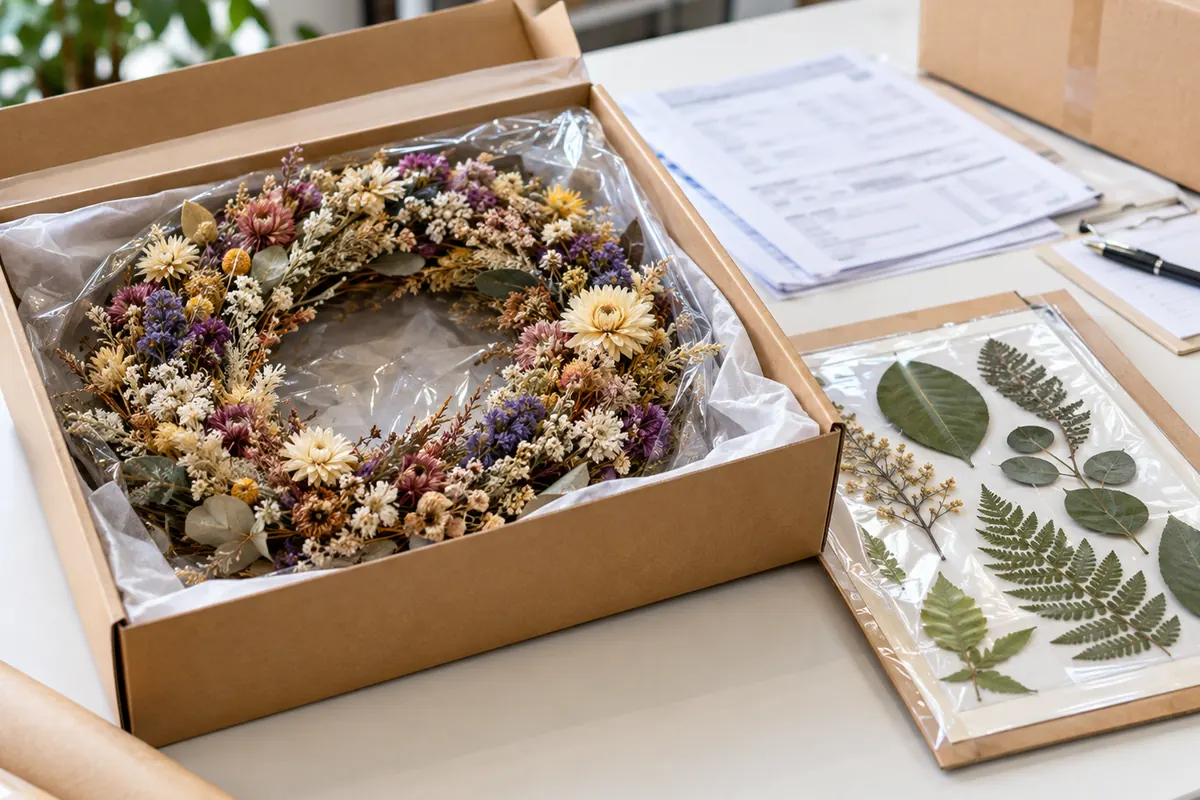
What makes this shipment different?
Coloring, bleaching, glycerin preservation or other processing may change the product but the original species and plant parts remain useful for regulatory screening. Added liquids or coatings can also affect packaging and transport review.
A practical review sequence
Collect treatment details and botanical data from the supplier, then have the importer check applicable APHIS rules for origin and commodity. Share any chemical treatment or coating information that can affect the freight review.
Prepare these details for a quote
- Species and plant parts
- origin
- drying/preservation/dye process
- chemicals or coatings
- seeds/pods
- product and carton photos
- treatment records
- quantity and route.
Common question
Are artificial-color flowers treated as plastic décor?
If natural plant matter remains, describe it accurately and check current requirements based on that material.
Request a shipment review
Send the exact product and model, origin, destination, packed dimensions, gross weight and cargo-ready date. For sensitive goods, attach matching product documents and final packing photos. ANELGO can review the request against current route availability; an inquiry is not a booking or carrier approval.
Request a freight quote ↗View the relevant service ↗Official references
Related guides
- Pressed Leaves and Botanical Specimens: Freight and Import Data
- Utility Knives and Replacement Blades: Declare the Full Kit
- Human Hair Supplier Traceability: Questions to Ask Before Import
- Browse all shipping guides
Privacy notice · Contact ANELGO