Express Courier for Special Cargo Samples from China: What Couriers Accept
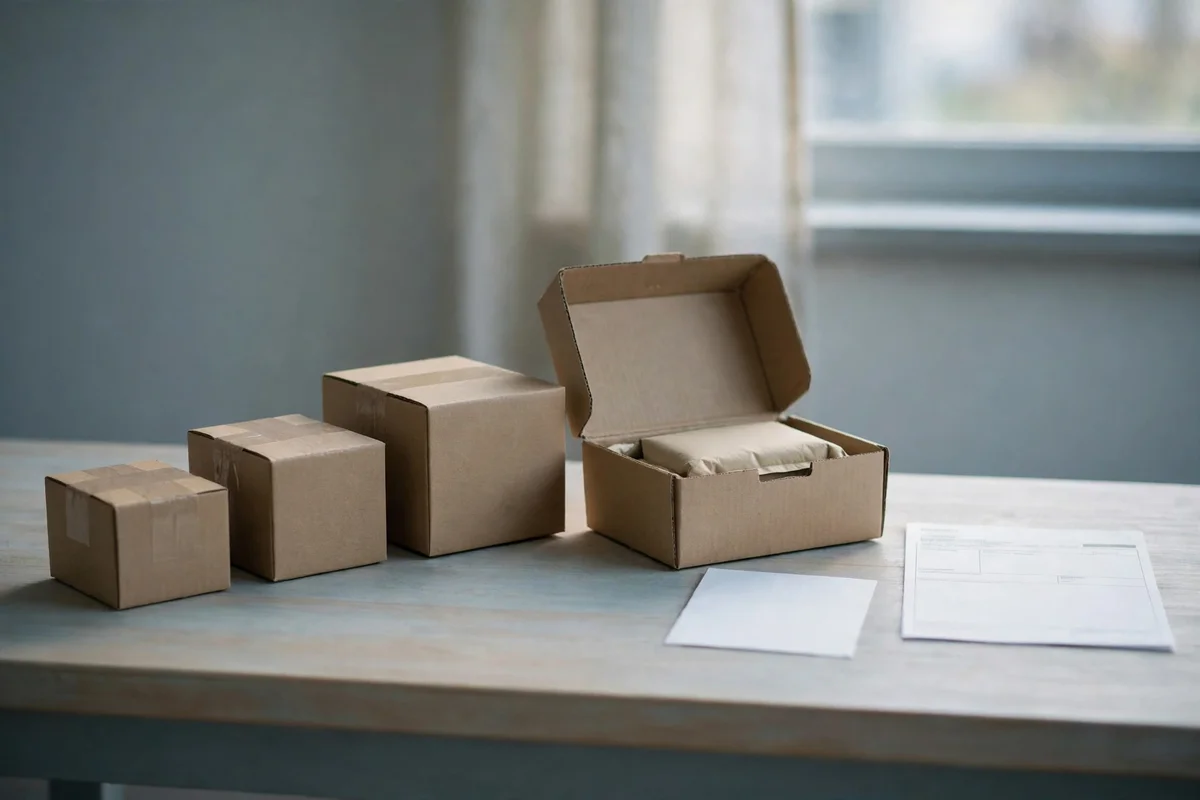
A courier reads a sample the same way it reads any special cargo: by what is inside the parcel. This guide walks acceptance for battery, liquid and perfume samples from China: which services accept each kind, what documents each needs, and how the weight band chooses the route.
How to use this guide
This guide covers courier acceptance only: which courier services accept battery, liquid and perfume samples from China, what documents each asks for, and how the weight band chooses the route. It does not repeat the international express shipping checklist, which walks booking, waybill and delivery for any parcel. Read this guide where the sample itself is the question, and the checklist where the booking itself is the question.
Work through the five stages in order, and do not close the acceptance file before the document the courier asks for is ready. A file closed before the right document is ready may answer for a sample the document never names.
Each stage keeps a record: note the cargo kind, the document and the service. Where two couriers read the same sample differently, keep both answers beside the sample and let the stricter one govern the packing.
Stage 1 — What courier acceptance is, and when it starts
Courier acceptance is the screen before the booking: the courier reads the cargo kind, the packing and the documents, and decides whether the service accepts the parcel. Acceptance is no pledge that the parcel will clear customs or reach the receiver; it is the courier agreeing to carry it under its own rules for that cargo kind.
The screen starts with the sample itself: a battery sample, a perfume sample and a cosmetic sample each read differently, even where the parcels look alike. The courier asks what is inside, how it is packed and what papers travel with it, before asking for a booking.
Where the cargo kind is unclear, the courier asks for the documents first and decides after reading them. A sample sent without the right document may be held at the origin depot, returned, or refused at the counter. Read the acceptance rules before packing, not after booking.
Stage 2 — Batteries: what couriers ask for a battery sample
Batteries divide by how they travel: a battery inside a device, a battery packed with a device, and a battery shipped alone each read differently, and the courier asks which of the three the sample is. The classification follows the battery as packed, not as sold.
For a battery sample the courier asks for the test summary naming the actual cell inside the sample, and a declaration naming the battery, the device and the packing in the same words the booking uses. A summary for a similar cell from the same factory answers for no sample.
Damaged, swollen or recalled batteries have no courier route, and a damaged sample is refused before any document is read. A prototype battery sample is still a battery sample: the courier reads the same documents, and the prototype label changes nothing.
Stage 3 — Liquids and perfume: what couriers ask for a liquid sample
Liquids divide by what is inside the bottle: a perfume, an essential oil, a cleaning solution and an alcohol-based liquid each carry a hazard the courier reads, and the courier asks for a safety data sheet naming the exact product and brand. The sheet must describe the liquid inside the bottle, not a similar liquid from the same factory.
Packing decides as much as the sheet does: a sealed inner container, absorbent material around it, and an outer carton that holds the inner container still. A bottle that can leak is refused before the sheet is read.
Some courier services refuse flammable liquids by air altogether, and a perfume sample one service accepts may be refused by another. Where the liquid is flammable, ask the service first and let its answer govern the route; never send it on a service that never read it.
Stage 4 — Cosmetics and other samples: what documents each needs
Cosmetic samples divide the same way liquids do, by what is inside the jar: a balm, a solid soap or a lotion without alcohol carries no hazard the courier reads, and the courier asks for a declaration that the product carries no flammable liquid, no compressed gas and no toxic chemical, with the composition disclosed in full.
Where the cosmetic carries alcohol or a flammable solvent, the safety data sheet is the document the courier asks for, naming the exact product and brand on the booking. A sheet that names a different product answers for no sample.
Other samples follow the same pattern: a sample of any kind needs a document naming the sample, the packing and the contents in the same words, and a declaration where the contents carry no hazard. The courier reads the document against the sample, not the catalogue entry.
Stage 5 — The weight band chooses the route
The weight band is the last screen, and it chooses the route: a light parcel moves on a courier parcel service, and a heavier parcel may move on a consolidated air service or a courier freight service. The band a parcel falls in is set by the courier table, and the sender reads the table before choosing the service.
The band is read on the packed parcel, not on the sample alone: packing, absorbent material and the outer carton all add weight, and a sample near the edge of a band may fall in the next band once packed. Weigh the packed parcel and read the band from the packed weight.
Where the sample is light and the documents are ready, the courier parcel service is the usual route. Where the sample is heavier, or where the courier parcel service refuses the cargo kind, the consolidated air service or the courier freight service is the route to ask about. The band never overrules the acceptance screen: a parcel the courier refuses stays refused in any band.
Reading one battery sample, one perfume sample and one cosmetic sample through the same courier screen: the documents, the packing and the weight band as one file
Take one battery sample, one perfume sample and one cosmetic sample, and read the documents, the packing and the weight band as one file. The battery sample holds a lithium-ion battery packed with the device, the perfume sample is a small bottle of alcohol perfume, and the cosmetic sample a balm with no harmful chemical inside. The three samples travel one screen, each with a different document in the file.
Behind the battery sample stands the test summary. The summary names the cell inside the sample. The sender reads the summary against the sample: the cell in the summary must be the cell inside the sample, and the device beside it must be the device the sample travels with. A summary naming a different cell reads as no summary.
Beside the summary stands the declaration for the battery sample. The declaration names the battery, the device and the packing in the same words the booking uses. The sender reads the declaration against the summary: the battery the declaration names must be the battery the summary tested.
Behind the perfume sample stands the safety data sheet. The sheet names the exact perfume and brand, and describes the alcohol inside the bottle. The sender reads the sheet against the bottle: the liquid the sheet describes must be the liquid inside the bottle, sealed inside absorbent material inside a carton that holds it still.
Behind the cosmetic sample stands the declaration for products without harmful chemicals. The declaration states that the balm carries no flammable liquid, no compressed gas and no toxic chemical, and it discloses the composition in full. The sender reads the declaration against the jar: the composition the declaration discloses must be the composition inside the jar.
Now read the weight band against the file. The battery sample travels in its device carton, the perfume sample in its sealed inner container and outer carton, and the cosmetic sample in its jar and carton. Each parcel is weighed packed, not bare, and each band read from the packed weight. A parcel that sits near the edge of a band is read in the band it falls in once packed.
A refusal reads the same way. Where the battery sample is refused because the summary names a similar cell, the sender asks the manufacturer for the actual cell summary. Where the perfume sample is refused because the sheet names a different perfume, the sender asks the manufacturer for the full sheet for that perfume. Where the cosmetic sample is refused because the declaration hid a flammable solvent, the sender asks for the safety data sheet instead. The fix follows the refusal note, and the resubmission carries the complete document.
All three documents read together, and the screen closes when they agree. The summary proves the cell, the declaration names the battery sample, the sheet describes the perfume, the second declaration clears the balm of harmful chemicals, and the weight band places each packed parcel on its route. The sender, the manufacturer and the courier each read the same file.
Which document the courier asks for first, by sample
Read the sample, the packing and the weight band before choosing.
| Label | When it applies | What to do first |
|---|---|---|
| A lithium-ion battery packed with a device | The battery travels with or inside a device | Read the test summary with the battery declaration |
| A lithium-ion battery shipped alone | The battery travels alone | Read the test summary with the classification |
| An alcohol perfume or flammable liquid sample | The sample carries a hazard the courier reads | Ask the manufacturer for a safety data sheet for the exact product |
| A balm or solid soap with no harmful chemical | The sample carries no hazard the courier reads | Use the declaration for products without harmful chemicals |
| A sample refused by one courier service | The service never read the sample or documents | Read the refusal note, then ask a service that reads the cargo kind |
Why a special-cargo sample waits before the courier accepts it
Most holds come back to a few causes: a safety data sheet names a similar product from the same factory rather than the exact sample on the booking, so the sheet answers for no sample. A declaration is sent where the courier asked for a safety data sheet, so the screen restarts with the wrong document.
The fix is the same in each case: name the document the courier asks for, the sample the document names, and the packing beside them.
Next is a test summary naming a different cell than the one inside the sample, and a parcel weighed bare, where the packed weight falls in the next band.
What this courier acceptance guide leaves open for the sender and the courier
This guide cannot decide whether a courier will accept a sample the screen holds open: the courier decides, and the sender confirms.
It also cannot replace carrier, forwarder or manufacturer advice on a specific sample: where the courier names a step this guide does not name, ask the courier.
It also cannot say whether a sample the documents never read is free of harmful chemicals.
Express and courier guides on this site
- International Express Shipping Checklist: Courier Booking & Delivery
- Can Perfume Samples Be Shipped from China to the USA?
- Prototype Lithium Battery Samples vs. Damaged Batteries: What to Check First
- Shipping Cosmetic Samples from China: Freight & US Importer Checklist
- Dangerous Goods Air Freight from China: Complete Guide
- Air Freight Booking Checklist: Direct, Consolidated & Carrier Handover
Related guides
- International Express Shipping Checklist: Courier Booking & Delivery
- Can Perfume Samples Be Shipped from China to the USA?
- Prototype Lithium Battery Samples vs. Damaged Batteries: What to Check First
- Shipping Cosmetic Samples from China: Freight & US Importer Checklist
- Dangerous Goods Air Freight from China: Complete Guide
- Air Freight Booking Checklist: Direct, Consolidated & Carrier Handover
Official references
- IATA: Cargo
- FIATA: International Federation of Freight Forwarders Associations
- ICC: Incoterms 2020
- US Customs and Border Protection: Trade
- IMO: International Maritime Organization
- GOV.UK: Import goods into the UK
- ICAO: International Civil Aviation Organization
For a route-specific logistics review, provide the product, origin, destination, packed dimensions, weight and ready date.
Request a shipment review ↗Frequently asked questions
Which couriers accept battery samples from China?
A courier accepts a battery sample where the battery travels inside a device or packed with a device, where the test summary names the actual cell and a declaration names the battery, the device and the packing. A battery shipped alone reads differently, and a damaged battery has no courier route. Ask the service first, and let its answer govern the route.
Can a perfume sample travel by express courier?
A perfume sample can travel by express courier where the exact service accepts flammable liquids and a safety data sheet names the exact perfume and brand. Packing decides as much as the sheet: a sealed inner container, absorbent material and an outer carton that holds the bottle still. Some services refuse flammable liquids by air altogether.
What documents does a special cargo sample need for a courier?
A battery sample needs the test summary for the actual cell and a declaration naming the battery, the device and the packing. A liquid or perfume sample needs a safety data sheet naming the exact product and brand. A cosmetic sample with no harmful chemical needs a declaration disclosing the composition in full. Weigh the packed parcel and read the weight band from the packed weight.