Air Freight Booking Checklist: Direct, Consolidated & Carrier Handover
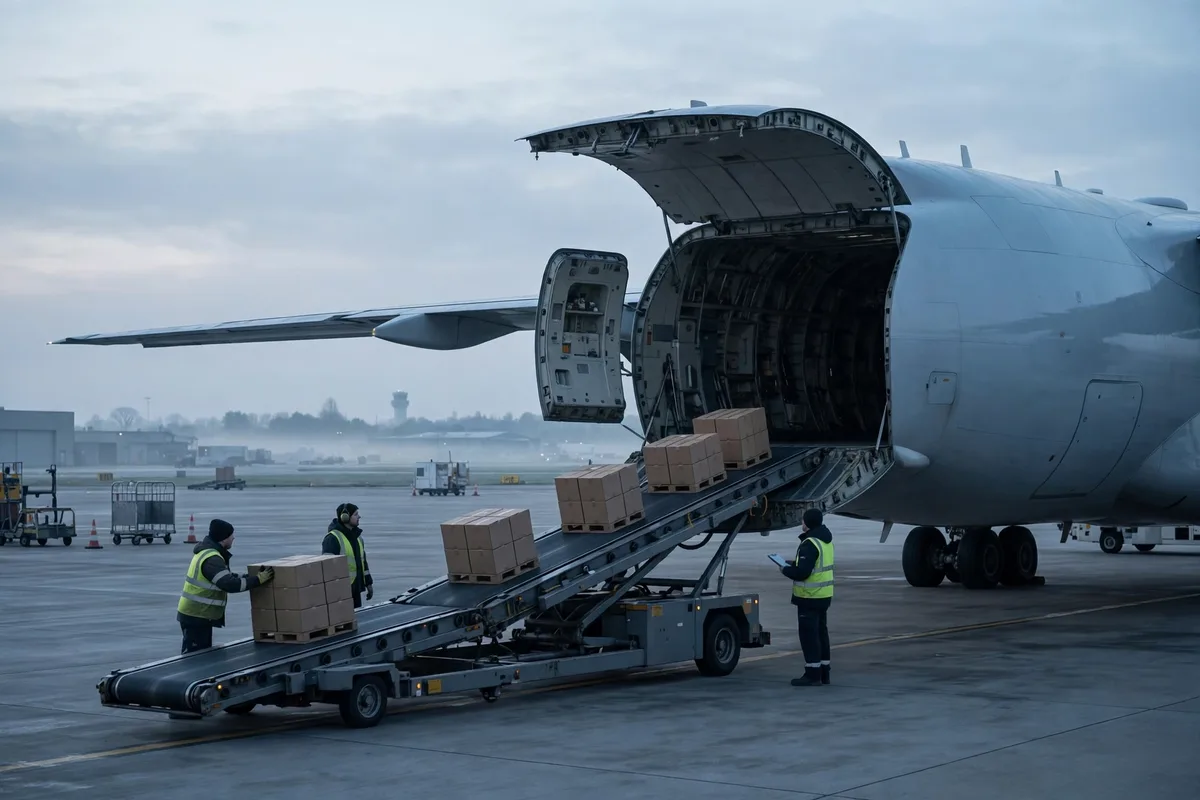
An air freight booking is confirmed in stages: the cargo is ready and described, the service is chosen, the booking is placed and confirmed, and the cargo is screened, loaded and handed over with an air waybill. This checklist walks through those four stages in order.
How to use this checklist
This page is a working tool, not a summary. Tick each item only when the named check has been done and the result is in front of you. A tick means the item was verified, not that the booking is confirmed: the airline and the ground handler each run their own checks, and only they decide whether the cargo is accepted for the flight.
This checklist covers the booking and handover only: getting the cargo ready, choosing the service, placing the booking, and handing the cargo over with an air waybill. It does not cover the air-freight services and routes themselves: the air-freight guide on this site covers those, and it is linked below. It also does not cover the export documents in detail, or the dangerous-goods rules in detail: the shipping documents checklist and the dangerous-goods air checklist on this site cover those, and both are linked below.
Work through the four stages in order. Stage 1 settles what is shipping and when it is ready, Stage 2 the service and the flight, Stage 3 the booking details and the documents, and Stage 4 the screening, the loading and the air waybill. If an item in an early stage cannot be ticked, stop there: a booking placed from the wrong cargo details has to be amended, and cargo loaded from the wrong plan has to be reworked.
Stage 1 — Before you request a booking
Nothing else in this checklist works until the cargo is ready and described. The booking request states the cargo, the chargeable weight, the packed dimensions, the origin and destination airports, and the ready date, and the airline quotes and confirms from those details. Confirm the product, the packing and the quantity before requesting the booking: the HS code must be right for the goods, the dangerous-goods status must be known, and the Incoterms rule must be agreed with the buyer or the seller, because each of these decides how the booking is handled.
Check the cargo details against the goods on hand, not against the sales order alone. Count the cartons, weigh a sample carton, and measure the packed dimensions, because the airline loads from the declared figures and a mismatch at acceptance means the booking is reworked. Check the ready date with the supplier and the cut-off with the airline, so the booking is requested with time for the cargo to reach the airport and clear the cut-off. Confirm the consignee and notify party details for the air waybill before the booking is placed.
Stage 2 — Choosing direct, consolidated or express
The service follows the measured weight and volume and the size of the shipment. A direct service flies the cargo on one flight with no transfer, a consolidated service groups the cargo with other shippers' cargo on shared capacity, and an express service moves the cargo with priority handling and the earliest available departure the airline offers. The chargeable weight, the packed dimensions and the carton count decide which service fits, and the choice is made before the booking is placed.
Check the flight and the route where a direct service is chosen, and the consolidation plan where cargo is grouped. A service that does not match the cargo leaves the shipment waiting for the next departure, and a consolidation plan that does not list the shipment leaves it off the flight. Check the departure airport, the arrival airport and any transfer point with the airline, and confirm whether the service is direct or consolidated, because the route decides the handover at the destination.
Stage 3 — Booking details & documents
The booking is placed with the airline or the forwarder, and the booking confirmation is the document the rest of the checklist follows. Read the confirmation line by line when it arrives: the flight, the departure and arrival airports, the chargeable weight, the cut-offs for the documents and for the cargo to reach the airport, and the acceptance conditions. A detail that is wrong on the confirmation is wrong on the air waybill unless it is corrected.
Prepare the documents the airline asks for before the cut-offs. The air waybill states the shipper, the consignee and the notify party, the cargo description and the marks, and the freight terms, and it is issued as a master air waybill for the consolidation or a house air waybill for each shipment inside it, where applicable. The packing list states the cartons, the weight and the volume, and the commercial invoice states the goods, the value and the payment terms. An export licence is arranged where the goods need one, and the security screening declaration is completed where the airline asks for it. Each document is checked against the booking confirmation so the names, the numbers and the cargo description match.
Stage 4 — Handover, loading & air waybill
The cargo is checked at acceptance: the cartons are counted against the booking, the packaging is sound, the labels and marks match the documents, and the weight and dimensions match the declared figures. Cargo that does not match its booking is held at acceptance until the booking is corrected, so check the goods against the booking before the cargo leaves the warehouse. Security screening is completed as the airline requires, and screened cargo is kept secure until loading.
Load to the loading plan, with the cargo built onto pallets or into unit load devices as the airline directs, and keep a photo record of the loaded pallet or unit load device before it is closed. Check the air waybill draft against the booking confirmation before it is released: the shipper, the consignee and the notify party, the airports, the flight, the weight and the volume, and the cargo description. A draft error corrected before release is a correction; the same error on the released air waybill is an amendment the airline must approve. Track the flight after handover, and watch for the arrival notice from the destination agent.
Direct, consolidated or express?
Use this table to choose how the cargo travels. Read the row that matches the measured weight and volume and the size of the shipment, then check the fourth column before requesting the booking. A shipment that flies direct is not the same as a shipment that travels consolidated: the loading plan, the air waybill and the handover follow the service chosen, so the choice is made before the booking is placed, not after.
| Service | What it is | Use it where | What to check before booking |
|---|---|---|---|
| Direct | One flight with no transfer, booked on the airline's own service | A single shipment that fills the booked space, or cargo that must not transfer | Flight, departure and arrival airports, and the acceptance cut-off |
| Consolidated | Cargo grouped with other shippers' cargo on shared capacity | A smaller shipment that does not fill the booked space | Chargeable weight, the marks on each carton, and the consolidation plan |
| Express | Priority handling with the earliest available departure the airline offers | A shipment that needs priority handling above a standard booking | The priority conditions on the booking confirmation, and the acceptance cut-off |
Common reasons air bookings are held or rolled
Most held bookings come back to the same few errors. The cargo reaches the airport after the acceptance cut-off, so the airline cannot load it on the booked flight. The chargeable weight on the booking does not match the cargo at acceptance, so the handler cannot accept the cargo for loading. The documents arrive after their cut-off, so the air waybill cannot be issued for the booked flight. Or the documents describe cargo that does not match the goods on hand, so the airline holds the release until the description is corrected.
The fix is the same in each case: correct the booking with the airline, submit the corrected document before the next cut-off, and rebook the cargo on the next available departure where the airline offers one. Do not send the cargo to the airport after the cut-off and expect it to be loaded, and do not change the cargo description after the air waybill is released without the airline's approval: cargo that does not match its booking is cargo that waits at the airport.
What this checklist cannot decide
This checklist covers the booking and handover checks for an air freight shipment. It does not replace the airline's booking terms, which state the cut-offs, the charges and the acceptance rules for the flight in front of you. It also does not replace the destination customs rules or the import file, which the broker and the destination agent must confirm for the shipment in front of you.
The checklist also does not decide the flight, the service route, or the freight rate. The flight follows the airline's schedule, the route follows the service the airline offers, and the rate follows the booking the airline confirms. Where any of these is unclear, ask the airline or the forwarder before the booking is placed, and do not copy the entry from a similar shipment.
Air freight guides on this site
- Air Freight from China: Complete Guide
- International Shipping Documents Checklist: Export, Transport & Customs Clearance
- Dangerous Goods Air Freight Checklist: Documents, Packaging & Carrier Acceptance
- Air Freight vs. Ocean Freight from China to the USA: How to Compare
Related guides
- International Express Shipping Checklist: Courier Booking & Delivery
- Air Freight from China: Complete Guide
- International Shipping Documents Checklist: Export, Transport & Customs Clearance
- Dangerous Goods Air Freight Checklist: Documents, Packaging & Carrier Acceptance
- Air Freight vs. Ocean Freight from China to the USA: How to Compare
Official references
- IATA: International Air Transport Association
- ICAO: International Civil Aviation Organization
- FAA: Federal Aviation Administration
For a route-specific logistics review, provide the product, origin, destination, packed dimensions, weight and ready date.
Request a shipment review ↗Frequently asked questions
What is the difference between direct, consolidated and express air freight?
A direct service flies the cargo on one flight with no transfer. A consolidated service groups the cargo with other shippers' cargo on shared capacity. An express service moves the cargo with priority handling and the earliest available departure the airline offers. The measured weight and volume and the size of the shipment decide which service fits: a single shipment that fills the booked space usually travels direct, and a smaller shipment usually travels consolidated.
What is chargeable weight, and how is it measured?
Chargeable weight is the weight the airline charges on, taken from the greater of the gross weight and the volumetric weight. Weigh the packed cargo to get the gross weight, measure the packed dimensions to get the volume, and calculate the volumetric weight using the formula on the booking confirmation or the one the airline states for the shipment. Declare the figure the airline asks for.
What should I check on the air waybill draft before it is released?
Check the shipper, the consignee and the notify party, the departure and arrival airports, the flight, the chargeable weight and the volume, and the cargo description, all against the booking confirmation and the packing list. Correct any error before the draft is released: an error on the released air waybill needs the airline's approval to amend, and the consignee needs the correct document to clear the goods.