LED Lighting from China to the USA: Fragile Packing and Carton Checklist
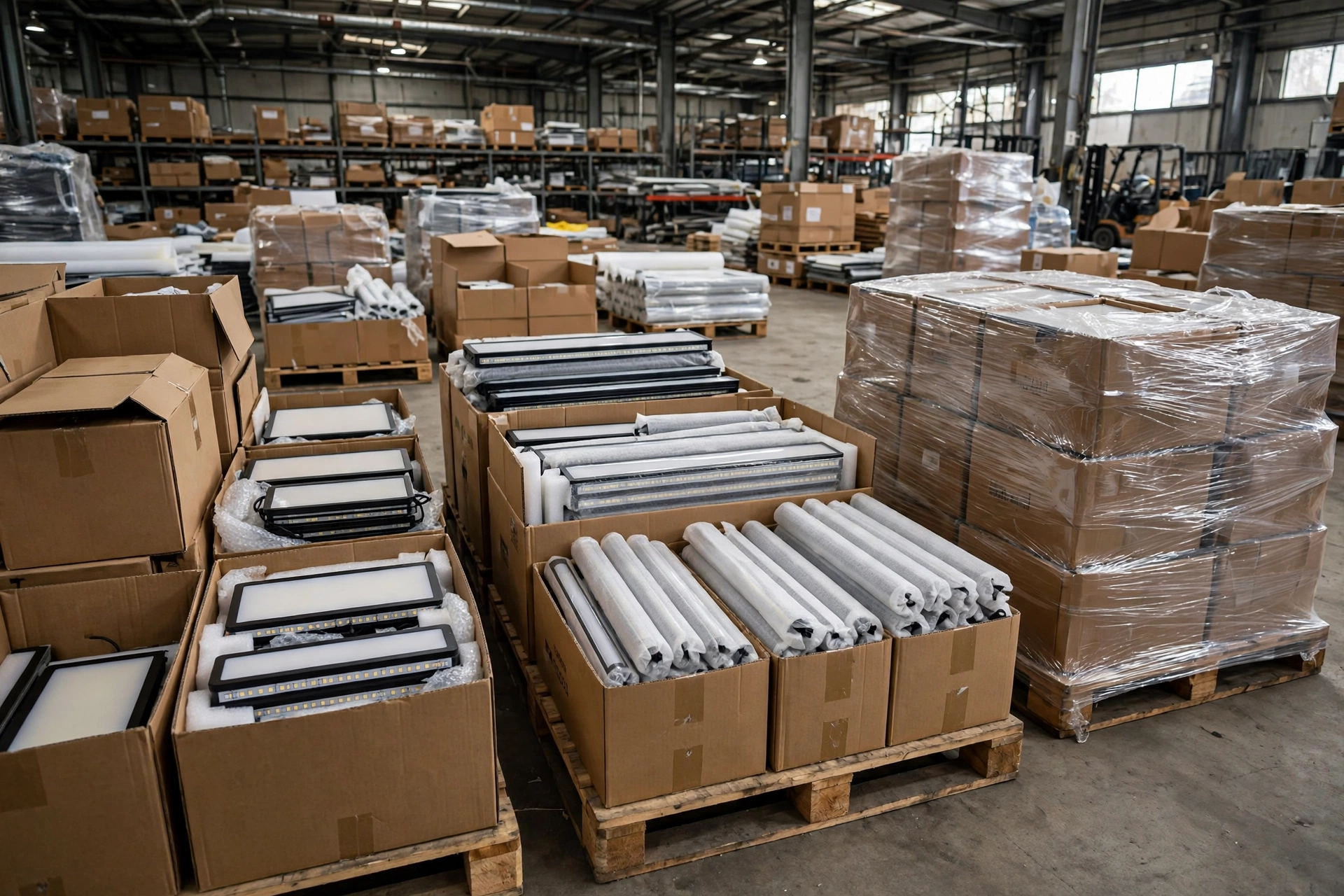
LED lighting covers everything from small bulbs to long tube fixtures and large panels, and most of it is fragile general cargo. The work starts with the product size and the glass: a shipment packed for fragile goods moves more smoothly than one booked as ordinary cartons.
Start with the product size and shape
The first questions are always the size and shape of each model: bulbs, tubes, panels or fixtures, and the dimensions of each. Long tubes need long cartons, and large panels need flat, rigid packing, so give the dimensions per model rather than just the carton count.
List every model separately, with its own quantity. A mixed carton of different fittings needs the full breakdown, not a single line for the carton.
Fragile packing and carton strength
LED fittings need dividers, cushioning and edge protection so the glass and the fittings cannot move or press against each other inside the carton. Cartons must be strong enough to hold their weight when stacked, and the packing must keep the fittings apart.
Keep one packing method across the whole order so the carrier and the warehouse review a single, consistent setup. Check every carton before it leaves the warehouse, and fix loose packing at origin rather than after the goods arrive.
Labelling and carton marks
Mark cartons as fragile and this side up where the goods need it, and add SKU and quantity labels that match the packing list. A mismatch between the labels and the documents slows down receiving at the warehouse.
Keep the marks consistent across the whole order. If one carton is marked differently from the rest, the warehouse has to stop and check it before the shipment can move on.
Ocean and air options
Ocean freight is the usual mode for larger LED lighting shipments, because the volumes are large and the goods are bulky. Air freight suits smaller or urgent lots, and the choice depends on the size of the goods and the schedule.
LED lighting on its own is usually general cargo, so the mode choice is about size, weight and timing rather than dangerous goods screening. If a fitting includes a lithium battery, that part is reviewed separately as a battery shipment.
What to send for a quote
A usable quote starts with the product list with dimensions for each model, quantities and carton count, package type and gross weight, origin and destination, and the cargo ready date.
An inquiry or estimate is not final carrier acceptance. Rates, transit time and acceptance all depend on the exact product, route and carrier, so confirm them in writing once the carrier has reviewed the full shipment data.
Related guides
- Amazon FBA Shipment Preparation from China: Complete Guide
- Shipping from China to the USA: Complete Guide
- Sensitive Cargo Shipping from China
- China-USA Glassware Shipping Checklist
- China-USA Shipping Carton Marking Checklist
- China-USA Home Decor Fragile Cargo Packaging
Official references
For a route-specific logistics review, provide the product, origin, destination, packed dimensions, weight and ready date.
Request a shipment review ↗Frequently asked questions
Is LED lighting dangerous goods?
LED lighting on its own is usually general cargo, not dangerous goods. If a fitting includes a lithium battery, such as an emergency light, that part is reviewed separately as a battery shipment, so list it on its own line in the shipment data.
How should long LED tubes be packed?
Tubes should be packed in long, rigid cartons with dividers and cushioning so they cannot move or press against each other. Check every carton before it leaves the warehouse, and keep one packing method across the whole order.
What carton marks matter for LED lighting?
Fragile and this-side-up marks, plus SKU and quantity labels that match the packing list. A mismatch between the labels and the documents slows down receiving at the warehouse.