China–Europe Rail Freight for Sensitive Cargo: What Can and Cannot Go by Train
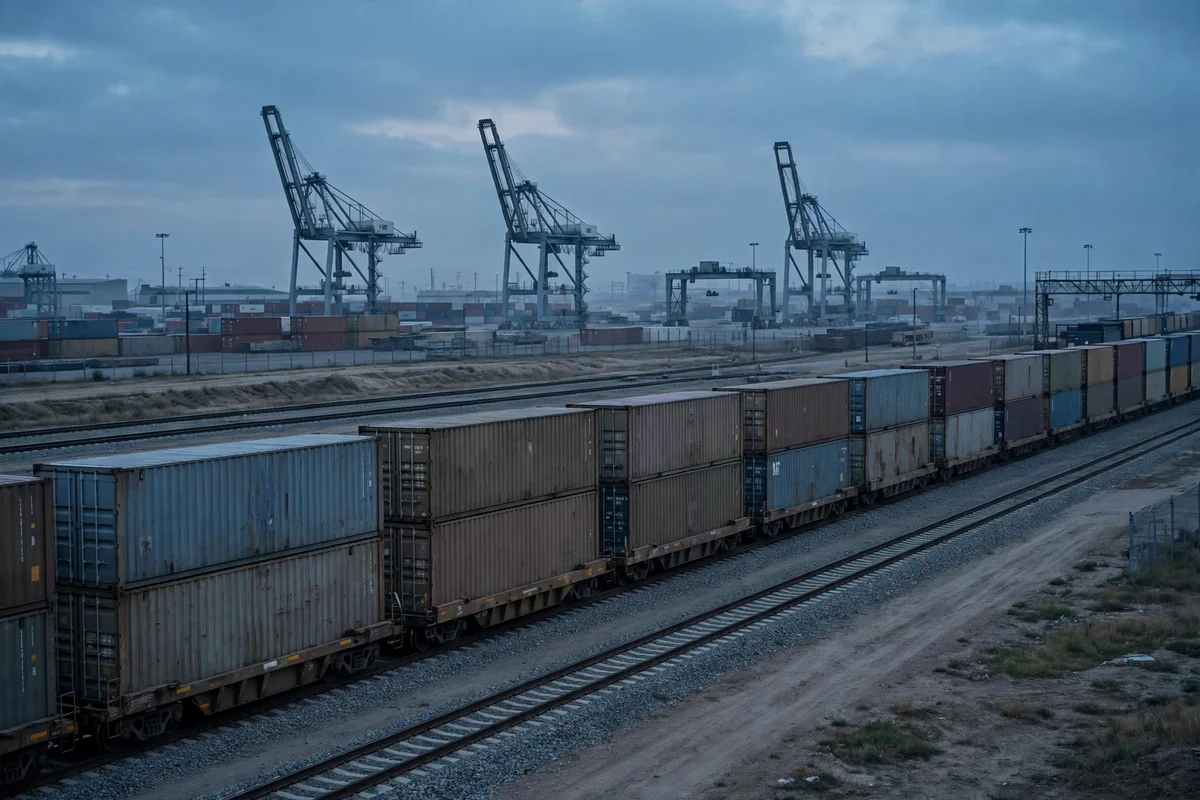
Sensitive cargo is screened before it rides a block train, and this guide walks the screen: read the cargo, read the gauge change, read the consignment note, settle the battery line and the aerosol line, and hand the sealed container over for the Europe handover.
How to use this guide
This guide covers the sensitive cargo rail screen only: reading the cargo, reading the gauge change, reading the consignment note, settling the battery line and the aerosol line, reading the sealed container beside the load, and handing the sealed container over for the Europe handover. It does not repeat the Europe shipping guide, the Germany perfume guide or the Europe lithium battery guide, which read no rail line beside them.
Work through the five stages in order, and do not close the rail record before the gauge change read stands settled. A rail record closed before the containers stand loaded may answer for containers the consignment note never names. The rail record, the consignment note, the battery line and the rail read are the records the seller and the receiver read.
Each stage keeps a record: note the rail record, the consignment note, the battery line, the aerosol line and the label record. A stage with no record is a stage the sensitive cargo shipment cannot answer for.
Stage 1 — Reading the sensitive cargo before the rail booking starts
Read the sensitive cargo from the goods the seller names for the Europe receiver: name the sensitive cargo in plain words, name the battery the cargo carries, name the aerosol the cargo carries, name the liquid the cargo carries, and name the Europe receiver the sensitive cargo travels to. A read that names the sensitive cargo, the battery, the aerosol, the liquid and the Europe receiver reads beside the rail record.
A block train carries sealed containers on a fixed route, so note the safety data sheet beside the rail record. Where the cargo carries a battery inside, note the battery beside the battery line. Where the cargo reads differently from the rail record, note the reading beside the consignment note. Where the aerosol the cargo holds reads apart from the aerosol line, note the aerosol beside the aerosol line.
Stage 2 — Reading the gauge change and the border points
Read the gauge change from the route the block train travels: China and the European Union run on 1,435 mm standard gauge, and the rail network between them runs on 1,520 mm broad gauge, so a westbound container is lifted twice, once at the China exit border and once at the Europe entry border. A read that names the gauge, the exit border and the entry border reads beside the rail record.
At the China exit border the sealed container is lifted from a standard gauge flatcar onto a broad gauge flatcar at Khorgos or Alashankou, and at the Europe entry border it is lifted back onto a standard gauge flatcar at Brest or Malaszewicze. The gantry crane lifts the sealed container with the seal intact, and the seal number is logged at each handover. Where the seal reads differently from the rail record, note the reading beside the consignment note.
Stage 3 — Reading the consignment note for the rail leg
Read the consignment note from the rail leg the container travels: the SMGS consignment note covers the China and broad gauge leg, the CIM consignment note covers the European leg, and a common CIM/SMGS consignment note covers a direct block train across both legs with no reissue at the border. A read that names the note and the border reads beside the rail record.
A rail consignment note is a transport contract and a receipt, not a document of title, so the Europe receiver collects the container with a copy of the note and proof of identity, and the note alone cannot hold unpaid goods. Where the consignment note names a receiver the rail record never names, note the reading beside the consignment note. Where the note names a border the route never crosses, ask the operator in writing for the border the container answers for.
Stage 4 — Settling the battery line and the aerosol line
Settle the battery line and the aerosol line from the rail record: read the battery the rail record names for each carton, read the aerosol the rail record names for the spray, read the liquid the rail record names, and put the safety data sheet beside the rail record, so the battery travels with the cargo it belongs to.
Pure lithium batteries travel as dangerous goods and most block trains refuse them, so a carton of loose cells with no device inside never rides a general block train. Small consumer-type cells built into a device may travel as general cargo within the limits the Chinese rail guidance names: lithium metal cells of 1 g or less per cell and 2 g or less per battery pack, and lithium-ion cells of 20 Wh or less per cell and 100 Wh or less per battery pack, with a battery test report, a transport conditions assessment and a packaging inspection report beside the rail record. Damaged, recalled or scrapped batteries never ride a block train. Aerosols, perfumes and paints need special approval, and many operators refuse them outright, so ask the operator in writing for the aerosol the cargo answers for.
Stage 5 — Handing the sealed container over for the Europe handover
Hand the sealed container over for the Europe handover: name the mode the shipment answers for, name the cartons the shipment travels in, and note the handover beside the consignment note. Where the sealed container travels by rail to an inland terminal, note the mode beside the handover, and ask the operator in writing for the terminal the container answers for. Import clearance and the entry summary declaration are settled at the inland rail terminal, not at a seaport, and the Europe receiver clears the goods there. A handover with no consignment note beside it reads as unconfirmed.
Reading the rail record, the gauge change, the consignment note, the battery line and the Europe line as one line from China to Europe
A sensitive cargo shipment to Europe by rail reads as one line with the sensitive cargo beside it: the shipment travels with the sensitive cargo the seller names for the Europe receiver. The rail record names where the shipment starts, the consignment note names what each container answers for, the gauge change names where the container is lifted, and the battery line names the battery the cargo holds.
The rail record is set from the sensitive cargo the seller names for the Europe receiver: the rail record the rail read reads in, and the rail record the closed rail read answers for.
The gauge change is read against the rail record: the gauge change the shipment names, the containers the gauge change lifts, and the rail record the gauge change reads beside the consignment note. Containers with no gauge change read as a reply, not a shipment. The seal the container carries reads beside the gauge change: the seal number the consignment note names, and the crane lift the border line names. The border point reads beside the seal: the Khorgos lift the rail record names, and the Malaszewicze lift the rail record names.
A single carton with no name reads as a single carton; the same unnamed carton reads as a pattern, and the reader notes the pattern on the rail record. The pattern reads beside the rail record, not beside the carton alone.
The battery line is read beside the aerosol line: the battery line as it stands, the aerosol line as it stands, and the safety data sheet beside the rail record. Where the rail record names one battery for one carton and another battery for another carton, note each battery beside its carton.
The aerosol line is read beside the label record: the aerosol line, the label record, and the flammable line the aerosol line carries. The label record names the sensitive cargo labeling the carton carries.
A retailer reads the label record beside the consignment note before the cartons stand on the shelf, and a platform reads it beside the consignment note before the sensitive cargo stands listed. A sensitive cargo carton holds sensitive cargo, and a general cargo carton holds general cargo. A spray aerosol, a perfume and a paint travel in cartons the rail record names apart, so each cargo answers for its own carton, its own battery line and its own label line. A perfume bottle and a paint can travel in cartons the rail record names apart, so each cargo answers for its own carton, its own aerosol line and its own label line.
The rail record, the consignment note, the battery line, the aerosol line and the label record are read together. The sensitive cargo shipment ties each carton to where the sensitive cargo starts, the consignment note ties the container to the battery each consignment note carries, the aerosol line ties the spray to the flammable line, and the label record ties the carton to the warning words. All five read together.
Which sensitive cargo line to settle first when the cargo record and the operator read differently
A carton is settled against the rail record; the load is closed when the seller and the receiver read it together.
| Label | When it applies | What to do first |
|---|---|---|
| The battery line names a battery the carton never holds | The battery line and the carton record read differently | Read the battery line, the battery and the rail record together |
| The aerosol line names an aerosol the carton never holds | The aerosol line and the carton record read differently | Read the aerosol line and the rail record together |
| The consignment note names a border the route never crosses | The consignment note and the rail record read differently | Read the consignment note, the gauge change and the rail record together |
| The label record names label words the carton never carries | The label record and the carton record read differently | Read the label record and the rail record together |
| The gauge change names a lift the container never takes | The gauge change and the consignment note read differently | Read the gauge change, the border point and the rail record together |
Why a sensitive cargo rail shipment waits before the booking read closes
Most holds come back to a few causes. A rail record is sent with no battery line named, so the battery line reads with no battery to answer for. A consignment note is read with no gauge change beside it. An aerosol line is read with no label record beside it.
The fix is the same in each case: name the battery line, name the consignment note, the aerosol line and the gauge change, and put the answer on the rail record.
Next is a seller that names no operator note.
What this sensitive cargo rail freight guide leaves open for the seller and the Europe receiver
This guide cannot decide whether an operator will carry sensitive cargo the rail record holds open: the operator decides, and the seller confirms it.
It also cannot replace operator or customs broker advice on a specific shipment. Where an operator names a step this guide does not name, ask the operator.
It also cannot say whether the sensitive cargo the consignment note never read matches the rail record.
Europe guides on this site
- Shipping from China to Europe: Complete Guide
- China to Germany Perfume and Cosmetics Shipping Guide: From the Perfume and Cosmetics Classification to the German Port Handover
- Lithium Batteries from China to Europe: Ocean, Air and Road Handover Checklist
- Aerosols from China to Europe: Classification, Packaging and Carrier Review
- Solar Panels from China to Europe: Oversized Packing and Container Loading Checklist
- Paint and Coatings from China to Europe: Classification, Packaging and Carrier Review
Related guides
- Shipping from China to Germany: Sea, Air and Rail for Special Cargo
- Shipping from China to Europe: Complete Guide
- China to Germany Perfume and Cosmetics Shipping Guide: From the Perfume and Cosmetics Classification to the German Port Handover
- Lithium Batteries from China to Europe: Ocean, Air and Road Handover Checklist
- Aerosols from China to Europe: Classification, Packaging and Carrier Review
- Solar Panels from China to Europe: Oversized Packing and Container Loading Checklist
- Paint and Coatings from China to Europe: Classification, Packaging and Carrier Review
Official references
- IATA: Cargo
- FIATA: International Federation of Freight Forwarders Associations
- ICC: Incoterms 2020
- US Customs and Border Protection: Trade
- GOV.UK: Import goods into the UK
For a route-specific logistics review, provide the product, origin, destination, packed dimensions, weight and ready date.
Request a shipment review ↗Frequently asked questions
Can sensitive cargo go by China–Europe block train?
Some sensitive cargo can, and much cannot: most block trains refuse dangerous goods, pure lithium batteries never ride a general block train, and aerosols, perfumes and paints need special approval, so screen the cargo against the operator acceptance list before the rail booking starts.
What does the railway ask for on a China–Europe block train?
The railway asks for a consignment note, the SMGS note for the China and broad gauge leg and the CIM note for the European leg, with the safety data sheet, the battery test report and the packaging inspection report beside the rail record where the cargo carries a battery.
Can lithium batteries go by rail from China to Europe?
Pure lithium batteries cannot ride a general block train. Small consumer-type cells built into a device may travel as general cargo within the limits the Chinese rail guidance names, with a battery test report, a railway transport conditions assessment and a packaging inspection report beside the rail record.