Shipping from China to Germany: Sea, Air and Rail for Special Cargo
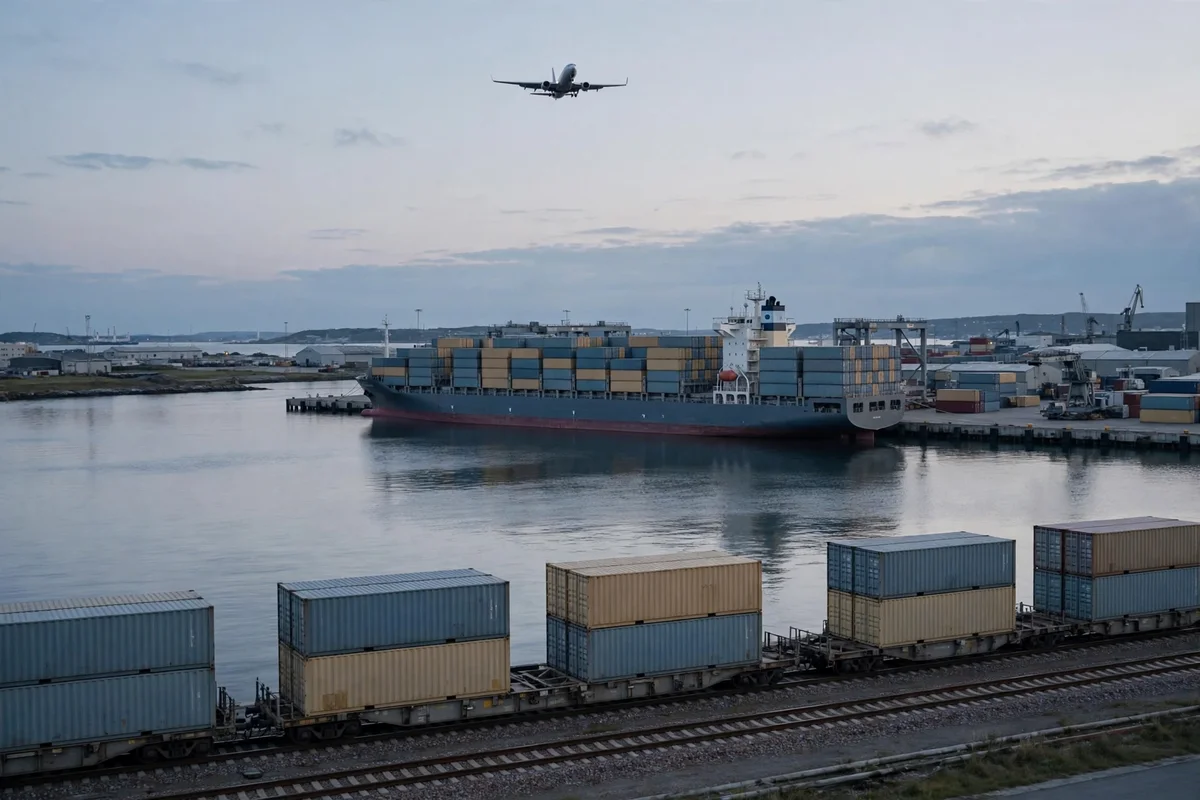
Germany is the largest import market in the European Union, and the lane from China moves by sea, air and rail. This guide walks the lane for special cargo: how each mode screens dangerous goods, what the customs file needs, and what the German packaging law asks.
How to use this guide
This guide covers the Germany lane only: sea, air and rail from China to Germany for special cargo, with the customs file and the German packaging law beside the mode. It does not repeat the Europe route guide, which walks the lane from China to Europe in general terms, or the Germany perfume line, which walks perfume and cosmetics to the German port handover. Read this guide where Germany itself is the question.
Work through the five stages in order, and do not close the customs file before the document the mode asks for is ready.
Each stage keeps a record: note the mode, the document and the cargo kind. Where two modes read the same cargo differently, keep both answers and let the stricter one govern the packing.
Stage 1 — What the Germany lane is: sea, air and rail in one lane
The Germany lane is one lane with three modes, and the mode is chosen after the cargo is read. Sea carries the bulk of the lane, air carries the urgent and the light, and rail carries the middle ground where the operator accepts the cargo. The three modes share one customs file.
Germany is the largest import market in the European Union, and the lane from China reaches German ports by sea, airports by air, and rail terminals by train. The importer, the EORI registration and the customs declaration are the same in each case. What changes is the screen: each mode reads the cargo under its own rules, and a cargo one mode accepts may be refused by another.
Read the cargo first, then the mode, then the file. A perfume, a battery and an aerosol each read differently, and the mode that fits one may refuse another. The guide walks the three screens in order, then the customs file and the packaging law.
Stage 2 — Sea: what the sea screen asks for special cargo
Sea is the usual mode for special cargo to Germany, and its screen reads the cargo under the maritime dangerous goods rules. The carrier asks for a declaration naming the cargo, the packing and the hazard in the same words the booking uses, and the packing must hold the cargo still. A declaration for a similar cargo answers for no shipment.
Perfume and cosmetics travel by sea where the liquid is flammable and air refuses it. The safety data sheet names the exact product and brand, and the inner packing seals the liquid with absorbent material inside a carton that holds it still. The carrier reads the sheet against the bottle.
Batteries travel by sea inside a device or packed with a device, with a test summary naming the actual cell and a declaration naming the battery, the device and the packing. A battery shipped alone reads differently, and a damaged battery has no sea route. Where the carrier refuses the cargo, the refusal note names the document or the packing.
Stage 3 — Air: what the air screen asks for special cargo
Air is the mode for the urgent and the light, and its screen is the strictest of the three. The airline reads the cargo under the air dangerous goods rules, and asks for the safety data sheet or the test summary before the booking is made. A cargo the airline never read has no air route.
Flammable liquids divide the air screen: some services accept them with the right sheet and packing, and some refuse them by air altogether. A perfume one service accepts may be refused by another, so the sender asks the service first.
Batteries divide the air screen by how they travel: a battery inside a device, a battery packed with a device, and a battery shipped alone each read differently. The test summary names the actual cell, and the declaration names the battery, the device and the packing. A summary for a similar cell answers for no shipment.
Stage 4 — Rail: what the rail screen asks for special cargo
Rail is the middle mode of the lane, and its screen is the narrowest of the three. The operator generally refuses dangerous goods, and a cargo the sea and air screens accept may still have no rail route. The sender asks the operator first: where the operator refuses the cargo, the shipment moves by sea or by air instead.
Small built-in batteries may move by rail where the operator accepts them, and the consignment note names the battery, the device and the packing. A battery shipped alone has no rail route, and a damaged battery is refused before any document is read. The rail screen reads the cargo as packed, not as sold.
The rail route crosses borders before it reaches Germany, and each border reads the same consignment note, naming the cargo, the packing and the receiver. Where the note names a cargo the operator refuses, the wagon is held at the border, and the fix follows the refusal note.
Stage 5 — EU customs, EORI and the German packaging law
Every mode ends at the same customs file, read at the German border. The importer holds an EORI registration, and the customs declaration names the goods, the origin and the importer. The customs office reads the declaration against the packing list and the goods inside the carton.
The German packaging law reads beside the customs file, and it asks the party that places packaged goods on the German market to register the packaging. The registration names the packaging the shipment carries, and the importer or the seller confirms it before the goods move. A shipment with no packaging registration may be held at the border.
The trade term reads beside the file, and names who clears customs and who pays the import tax. The term is written into the booking in the same words on both sides, and the importer confirms it before the goods leave China. Where the term is unclear, the customs office reads the declaration.
Reading one perfume carton, one battery carton and one aerosol carton through the same Germany screen: the mode, the packing and the customs file as one file
Take one perfume carton, one battery carton and one aerosol carton, and read the mode, the packing and the customs file as one file. The perfume carton holds bottles of alcohol perfume, the battery carton holds a device with a battery packed beside it, and the aerosol carton holds cans under pressure. The three cartons travel one lane, each with a different screen in the file, and each with its own document behind it.
Behind the perfume carton stands the safety data sheet. The sheet names the exact perfume and brand, and describes the alcohol inside the bottle. The sender reads the sheet against the bottle: the liquid the sheet describes must be the liquid inside the bottle, sealed inside absorbent material inside a carton that holds it still.
The perfume carton reads the modes in order. Air refuses it where the service never accepts flammable liquids by air, and the sender asks the service first. Sea accepts it where the sheet and the packing agree, and the carrier reads the declaration against the sheet. Rail refuses it, and the sender does not ask the rail operator to read a cargo the operator generally refuses.
Behind the battery carton stands the test summary. The summary names the cell inside the device. The sender reads the summary against the device: the cell in the summary must be the cell inside the device, and the device beside it must be the device the carton holds. A summary naming a different cell reads as no summary at all.
The battery carton reads the modes in order. Air accepts it where the battery travels packed with the device and the summary names the actual cell. Rail accepts it where the operator accepts small built-in batteries and the consignment note names the battery, the device and the packing. Sea accepts it where the declaration names the battery, the device and the packing in the same words the booking uses.
Behind the aerosol carton stands the safety data sheet for the cans under pressure. The sheet names the exact product and brand, and describes the gas inside the can. The sender reads the sheet against the can: the gas the sheet describes must be the gas inside the can, and the packing must hold the can still and keep the valve covered.
The aerosol carton reads the modes in order. Air refuses it where the service never accepts cans under pressure by air, and the sender asks the service first. Sea accepts it where the sheet and the packing agree. Rail refuses it, and the sender moves the carton by sea instead. The mode follows the screen, and the screen follows the cargo.
Now read the customs file against the three cartons. The EORI registration names the importer, the customs declaration names the goods in each carton, and the packaging registration names the packaging the three cartons carry. The sender, the importer and the carrier each read the same file, and the file closes when the mode, the packing and the declaration agree.
Which mode fits which cargo situation
Read the cargo and the customs file before choosing.
| Label | When it applies | What to do first |
|---|---|---|
| A perfume or alcohol liquid in cartons | The liquid is flammable and air refuses it | Ask the sea carrier, with the safety data sheet |
| A small urgent cosmetic replenishment | The cargo carries no hazard | Ask the air service, with the no-hazard declaration |
| A device with a small built-in battery | The battery travels inside the device | Ask the rail operator first, with the test summary |
| An aerosol or a can under pressure | The cargo is refused by air | Ask the sea carrier, with the safety data sheet |
| A cargo refused by one mode | The mode never read the cargo or the documents | Read the refusal note, then ask a mode that reads the cargo |
Why a Germany shipment waits before the mode is booked
Most holds come back to a few causes: a safety data sheet names a similar product from the same factory rather than the exact cargo on the booking, so the sheet answers for no shipment. A declaration is sent where the carrier asked for a safety data sheet.
The fix is the same: name the document, the cargo it names, and the packing beside them.
Next is a test summary naming a different cell than the one inside the device, and a customs file with no EORI registration beside it.
What this Germany lane guide leaves open for the sender and the importer
This guide cannot decide whether a carrier will accept a cargo the screen holds open: the carrier decides.
It also cannot replace carrier or customs advice on a specific shipment: where the carrier names a step this guide does not name, ask the carrier.
It also cannot say whether cargo the documents never read is free of harmful chemicals.
Germany and Europe guides on this site
- China to Germany Perfume and Cosmetics Shipping Guide: From the Perfume and Cosmetics Classification to the German Port Handover
- Shipping from China to Europe: Complete Guide
- China–Europe Rail Freight for Sensitive Cargo: What Can and Cannot Go by Train
- Dangerous Goods Air Freight from China: Complete Guide
- Dangerous Goods Sea Freight Checklist: IMDG Booking & Handover
- UN-Approved Packaging for Dangerous Goods from China: Marks, Tests and the DG Packaging Certificate
Related guides
- Germany Import Customs Declaration Guide for Goods from China
- China to Germany Perfume and Cosmetics Shipping Guide: From the Perfume and Cosmetics Classification to the German Port Handover
- Shipping from China to Europe: Complete Guide
- China–Europe Rail Freight for Sensitive Cargo: What Can and Cannot Go by Train
- Dangerous Goods Air Freight from China: Complete Guide
- Dangerous Goods Sea Freight Checklist: IMDG Booking & Handover
- UN-Approved Packaging for Dangerous Goods from China: Marks, Tests and the DG Packaging Certificate
Official references
- IATA: Cargo
- FIATA: International Federation of Freight Forwarders Associations
- ICC: Incoterms 2020
- US Customs and Border Protection: Trade
- IMO: International Maritime Organization
- GOV.UK: Import goods into the UK
- ICAO: International Civil Aviation Organization
For a route-specific logistics review, provide the product, origin, destination, packed dimensions, weight and ready date.
Request a shipment review ↗Frequently asked questions
Can special cargo go from China to Germany by rail?
Rail generally refuses dangerous goods, and a cargo the sea and air screens accept may still have no rail route. Small built-in batteries may move by rail where the operator accepts them, with a consignment note naming the battery, the device and the packing. Ask the operator first.
What does the German importer need before the goods arrive?
The importer holds an EORI registration, and the customs declaration names the goods, the origin and the importer. The German packaging law asks the party that places packaged goods on the German market to register the packaging. Confirm the registration before the goods move.
Which mode fits a perfume shipment from China to Germany?
Sea fits a perfume shipment where the liquid is flammable and air refuses it, with a safety data sheet naming the exact perfume and brand and sealed inner packing with absorbent material. Air fits where the service accepts flammable liquids. The perfume line walks the perfume from classification to the port handover.