Supplier Qualification Checklist: 30 Checks Before Placing an Order with a China Supplier
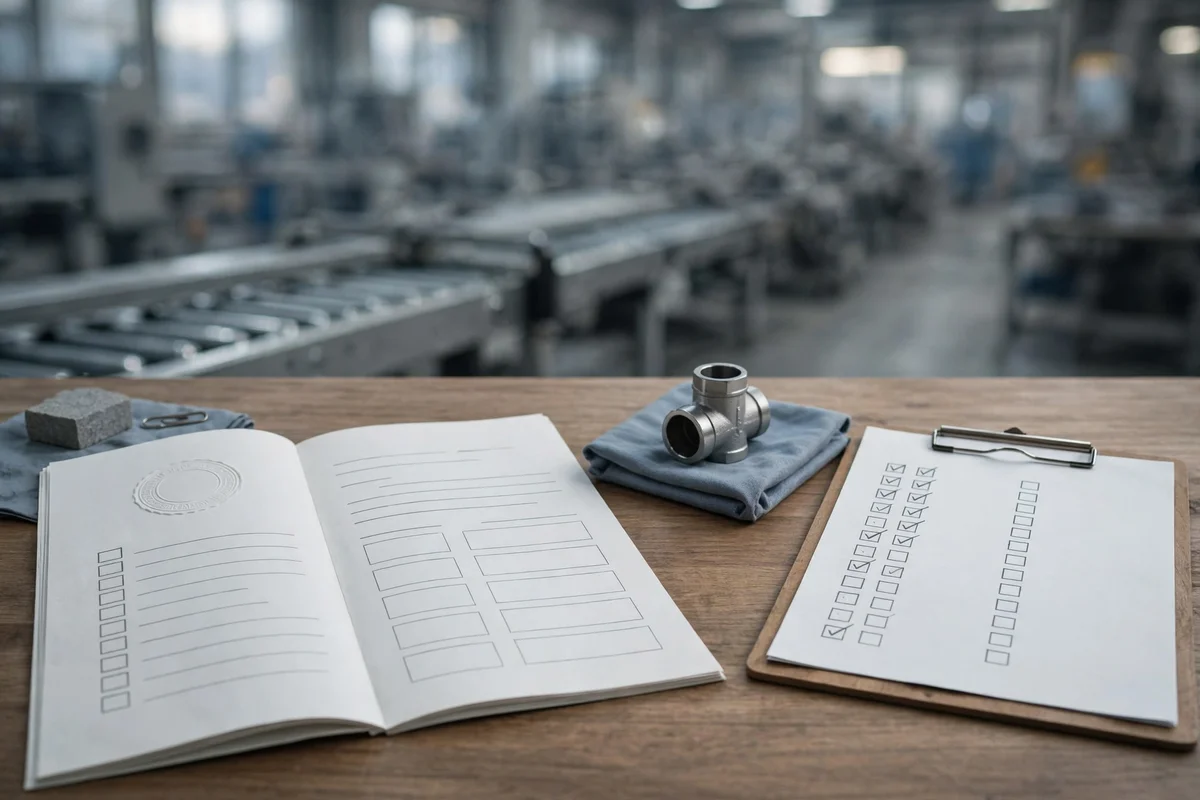
Qualifying a supplier in China follows one line from the first enquiry to the first order: check the licence, walk the factory floor, read the sample against the specification, read the quality reports, and check the export papers. This checklist walks through each check stage by stage.
How to use this checklist
This checklist covers supplier qualification only: the business licence, the factory floor, the samples, the quality reports and the export papers. It does not repeat the supplier visit checklist on this site, which covers visit planning, or the market guide, which covers sourcing at the Yiwu market.
Work through the four stages in order, and do not place an order until every item in the stage is checked. A supplier qualified on paper alone leaves the buyer with a licence that says one thing and a factory floor that shows another.
Keep every record the checklist names: the licence copy, the factory audit report, the sample, the test report and the export papers. A check with no record behind it is a check the buyer cannot prove later.
Stage 1 — Licences and registration
A supplier starts on paper. The licence, the registration record and the export papers name the supplier, the product scope and the address; read them before any talk of samples or production.
Where a paper names a different supplier, a different product scope or a different address, stop and ask for the paper that explains the difference.
Stage 2 — The factory on site
A licence names a supplier; the factory floor shows whether that supplier can make the order. Walk the floor, look at the lines, the equipment, the material and the team.
Where the floor shows a product line the licence never names, or a step sent elsewhere without a name, the qualification is not settled.
Stage 3 — Samples and quality
A sample proves what the supplier can make; a test report and a quality certificate prove what the sample was checked against. Read the sample, the report and the certificate together.
Where the sample differs from the specification, or the report names a different product, the sample does not qualify the supplier.
Stage 4 — Export papers and working together
Export papers and working terms decide whether a qualified supplier can ship the order. Read the packing list, the marks and the freight term before the order is placed.
Where the papers name a different product, quantity or mark from the order, the shipment record cannot answer for the goods.
Reading the business licence, the factory floor, the sample and the quality report as one line from the first enquiry to the first order
The business licence is the first link in the line. It names the supplier, the product scope, the registered address and the legal representative, and every other paper the supplier sends should name the same supplier. Read the licence name against the registration record, the export licence and the bank account name: one name through all four papers. Where the name changes from paper to paper, the supplier on the licence is not the supplier the buyer is talking to, and the later checks rest on the wrong name.
The factory floor is the second link. A licence can name a product scope the floor never makes, so walk the floor and look at what is actually running: the production lines, the equipment, the raw material stock and the team. The material on the floor should match the material the sample was made from, and the team should cover each step the order needs. Where a step is sent to another factory, ask for the name of that factory and read it as part of the qualification, not as a side note.
The sample is the third link, and it must come from the production line. A sample taken from a display piece answers for the display, not for the goods the order will ship. Mark the sample with the supplier name, the product and the specification it was checked against, and keep it as the standard the inspection reads against. Where the sample differs from the written specification, the sample stands and the order does not go to that supplier until a sample made to the specification arrives.
The quality reports are the fourth link. A test report should name the same product and the same material as the sample, and a quality certificate should be current and name the supplier. A factory audit report should name the same address and the same product line as the licence and the floor. Read the three reports together: a test report for one product, a certificate for another and an audit report for a third address do not add up to a qualified supplier.
The export papers are the fifth link. The packing list, the shipping marks and the freight term are read against the order, and the supplier should say in writing which export papers it prepares and which the buyer must prepare. A packing list that names a different quantity from the order, or marks the cartons do not carry, leaves a shipment record the receiver cannot check against anything at the destination.
Working together is the sixth link. Answers that arrive in writing, a trial order that tests the supplier on a small first order, and working terms set down before the first order is placed are all checks, not courtesies. A supplier that answers in writing and keeps the records the checklist names is a supplier the buyer can trace; a supplier that answers only by talk leaves no record for the buyer to read later.
The six links are read as one line. The licence ties the supplier to the factory, the factory ties the sample to the production line, the sample ties the quality reports to the goods, and the reports tie the export papers to the order. Where any link in that line is missing, the qualification is not settled, and the missing link is settled with the supplier before the first order is placed.
Which qualification check to settle first when the licence and the factory tell different stories
A difference between papers is settled with the supplier; a difference on the floor is settled at the factory.
| Difference found | When it applies | What to do first |
|---|---|---|
| The licence scope does not name the product | The order names a product outside the licence scope | Ask the supplier for the licence record that covers the product |
| The factory address differs from the registered address | Production happens at an address the licence never names | Ask the supplier to explain the difference in writing |
| The sample differs from the written specification | The sample was made from different material or finish | Ask the supplier for a sample made to the specification |
| The test report names a different product | The report was issued for another product | Ask the supplier for a report that names this product |
| The packing list names a different quantity from the order | The order sheet and the packing list disagree on the count | Ask the supplier which count stands on the record |
Why a supplier fails qualification before the first order is placed
Most failures come back to a few causes. A licence scope that never names the product, so the supplier on paper cannot answer for the order. A factory floor that makes a different product line, so the sample comes from a line the licence never names. A test report that names a different product, so the quality record answers for goods the buyer never ordered.
The fix is the same in each case: name the supplier, name the product, and put the answer on the record before the order is placed.
Second is a sample taken from display stock, third a packing list that names a different quantity from the order, and fourth a supplier that answers only by talk and leaves no record.
What this supplier qualification checklist leaves open for the buyer and the forwarder
This checklist cannot decide whether a supplier will hold the goods until the load ships: the supplier decides, and the buyer confirms it in writing with the supplier.
It also cannot replace broker or forwarder advice on a specific order. Where a supplier names a step this checklist does not cover, ask the forwarder.
It also cannot say whether the goods inside the cartons match the packing list: that rests with the inspection record at the factory.
Supplier sourcing guides on this site
- Planning a Yiwu or Shenzhen Supplier Visit: A Buyer’s Checklist
- Yiwu Small-Commodities Market Sourcing Process Guide: From the First Stall to the Shipment
- How to Consolidate Orders from Multiple China Suppliers before Shipping to the USA
- Human Hair Supplier Traceability: Questions to Ask Before Import
- China Factory Pickup: EXW, FCA and Handover Checklist
- Factory Production Delay Before Vessel Cutoff: A Buyer’s Freight Recovery Plan
Related guides
- Sourcing Payment and Documents Release Follow-Up Guide: From the Advance Payment Confirmed to the Documents Released
- Sourcing Purchase Order Delivery Follow-Up Guide: From the Order Placed to the Delivery Date Confirmed
- Sourcing Post-Inspection Corrective Action Guide: From the Inspection Report to the Release Decision
- Sourcing Inspection Sampling Guide: From the First Carton Draw to the Inspection Report
- Planning a Yiwu or Shenzhen Supplier Visit: A Buyer’s Checklist
- Yiwu Small-Commodities Market Sourcing Process Guide: From the First Stall to the Shipment
- How to Consolidate Orders from Multiple China Suppliers before Shipping to the USA
- Human Hair Supplier Traceability: Questions to Ask Before Import
- China Factory Pickup: EXW, FCA and Handover Checklist
- Factory Production Delay Before Vessel Cutoff: A Buyer’s Freight Recovery Plan
Official references
- US Customs and Border Protection: Trade
- ICC: Incoterms 2020
- FIATA: International Federation of Freight Forwarders Associations
- IATA: Cargo
For a route-specific logistics review, provide the product, origin, destination, packed dimensions, weight and ready date.
Request a shipment review ↗Frequently asked questions
What should be checked first when qualifying a supplier in China?
Check the business licence first: the supplier name, the product scope, the registered address and the export licence. Where the licence does not cover the product or names a different supplier, the later checks rest on a paper that does not answer for the order.
How should a factory visit fit into supplier qualification?
Use the visit to read the factory floor against the licence: the address, the production lines, the equipment, the material stock and the team. A visit that only talks through the order leaves the floor unchecked; the visit checklist on this site covers how to plan the visit.
What should be done when the sample differs from the specification?
Ask the supplier for a sample made to the specification, and keep the failed sample beside the record. Do not place an order on a sample that differs: the sample stands as the standard the inspection reads against, and an order placed on a different sample leaves the buyer with goods no record answers for.