Air Freight Consolidation Guide: From the Loose Cartons to the ULD Build-Up and the House Air Waybill Split
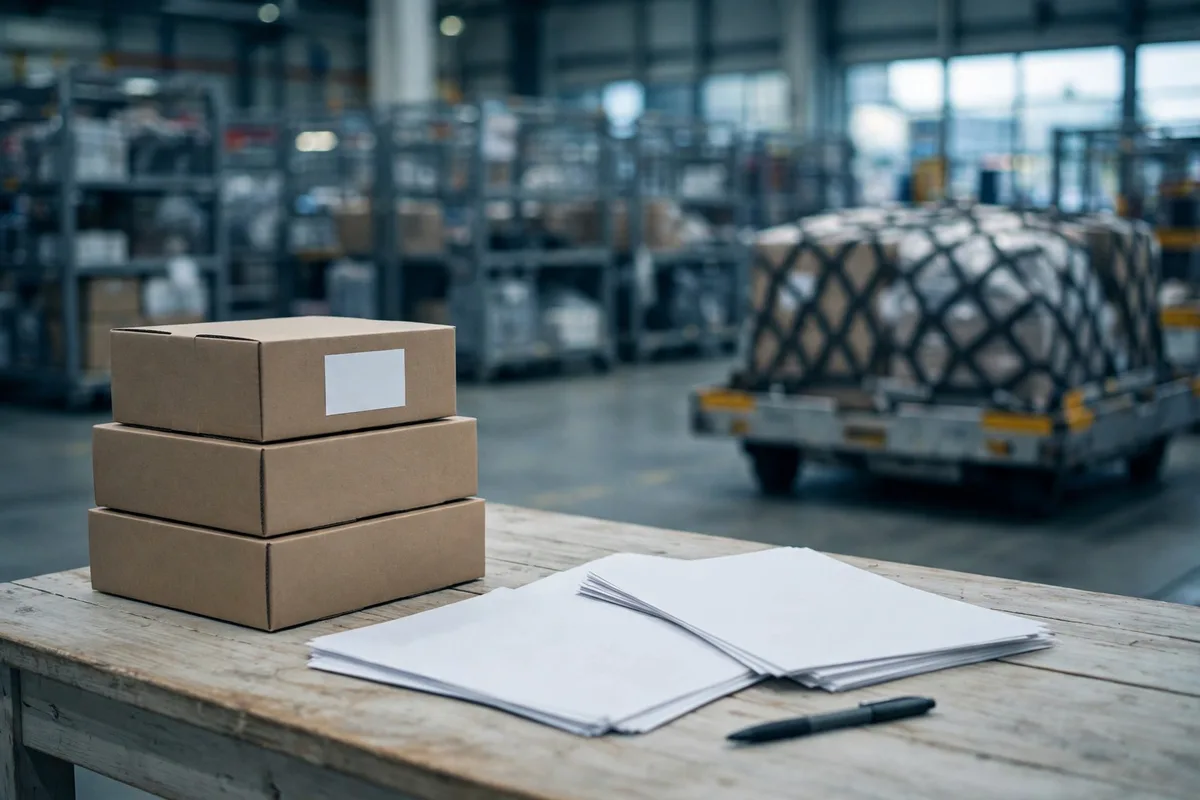
The cartons leave China as one consolidated shipment, and this guide walks the build: gather the cartons, build the ULD, split the master air waybill from the house air waybill for each receiver, read the labelling and the shipping marks, and break the load down at the destination.
How to use this guide
This guide covers the air freight consolidation only: gathering the loose cartons, building the ULD, splitting the master air waybill from the house air waybill for each receiver, reading the labelling and the shipping marks, and breaking the load down at the destination. It does not repeat the air freight page that reads the direct, consolidated or express choice and the carrier handover, or the China to USA air freight page that reads the space allocation and the air waybill, or the air freight from China page that reads the cargo, the carrier review and the route review, or the loose cartons and palletized freight page that reads the pallet height and the handling unit, or the air freight or ocean freight comparison, which reads the mode choice, or the dangerous goods air freight page.
Work through the five stages, and do not close the ULD build before the cartons stand gathered. A ULD closed before the cartons stand gathered may carry goods the house air waybill never names. The cartons, the ULD build, the master air waybill, the house air waybill, the labelling, the shipping marks and the break-bulk are the records the seller and the receiver read.
Each stage keeps a record: note the cartons, the ULD build and the house air waybill drawn from them. A stage with no record is a stage the consolidation cannot answer for.
Stage 1 — Gathering the loose cartons at the consolidation point
Gather the loose cartons at the consolidation point: name each carton, name the receiver each carton answers for, and put the labelling on each carton beside the shipping marks, so the cartons read beside the house air waybill each carton answers for.
Where a carton carries goods for two receivers, note both receivers beside the labelling, and ask the carrier in writing which house air waybill the carton answers for. Where a carton stands with no labelling beside it, set the carton aside, and note the carton beside the carton list.
Stage 2 — Building the ULD and reading the pallet build
Build the ULD with the cartons the consolidation gathers: put the heavy cartons low in the ULD, put the light cartons high in the ULD, and keep the cartons for one receiver together, so the ULD build reads beside the house air waybill for that receiver.
Where the ULD build mixes cartons for two receivers, note the mix beside the ULD build, and ask the carrier in writing which house air waybill each carton answers for. Where a carton reads as dangerous goods, note the dangerous goods line beside the classification the safety data sheet names, and ask the carrier in writing which ULD the carton answers for.
Stage 3 — Splitting the master air waybill from the house air waybill
Split the master air waybill from the house air waybill: the master air waybill names the consolidation, and each house air waybill names one shipment inside it, with the receiver, the cartons and the labelling the shipment carries. Read the master air waybill, each house air waybill and the ULD build together, so each reads the cartons.
Where a house air waybill names cartons the ULD build never names, read the house air waybill, the ULD build and the carton list together. Where the master air waybill names a receiver no house air waybill names, ask the carrier in writing which house air waybill the receiver answers for.
Stage 4 — Reading the labelling, the shipping marks and the customs check at the destination
Read the labelling and the shipping marks against the house air waybill: name the lines the house air waybill carries, name the labelling each line answers for, and put the safety data sheet beside the house air waybill, so the customs check reads the goods the house air waybill names.
Read the DDP or DAP line beside the house air waybill: DDP puts the import settlement on the seller, and DAP puts it on the receiver, so the customs check reads which party settles the import. Where the DDP line stands with no importer of record beside it, ask the customs broker in writing which party the DDP line names.
Stage 5 — Breaking the load down at the destination and handing the goods over
Break the load down at the destination, and read the deconsolidation beside the house air waybill: open the ULD, name each carton beside the house air waybill it answers for, and hand each carton to the receiver the house air waybill names. Read the break-bulk, the house air waybill and the labelling together, so each reads the goods.
Where the goods travel onward to a warehouse, note the warehouse beside the break-bulk, and follow the delivery to the address. Where the goods stay at the destination, ask the customs broker in writing for the break-bulk the goods answer for. A break-bulk with no house air waybill beside it reads as unconfirmed.
Reading the carton gathering, the ULD build, the pallet build, the master air waybill, the house air waybill, the labelling, the shipping marks and the break-bulk as one line from the loose cartons to the destination
An air freight consolidation is different from a shipment with no consolidation line: the shipment travels with the goods the seller names for the consolidation, and the goods are read through the ULD build. The carton gathering names where the consolidation starts, the ULD build names what the load answers for, the pallet build names how the cartons stand in the ULD, the master air waybill names the consolidation, the house air waybill names each shipment inside it, the labelling names the goods, the shipping marks name the cartons, and the break-bulk names how the consolidation stays true, and the eight are read together, with the seller beside the receiver.
The ULD build is set from the cartons the seller names for the consolidation: the ULD build the cartons read in, the ULD build the customs check confirms beside the house air waybill, and the ULD build the closed break-bulk answers for. The ULD build names the cartons behind it.
The house air waybill is read against the ULD build: the house air waybill the consolidation names, the cartons the house air waybill carries, and the ULD build the house air waybill reads beside the carton list. Cartons with no house air waybill read as a reply, not as a shipment. The house air waybill is the record the consolidation rests on.
A single carton with no labelling reads as a single carton; the same unlabelled carton in a consolidation reads as a pattern, and a pattern asks a different question: what stands behind the labelling. The reader notes the pattern on the house air waybill, so the seller does not treat a pattern as single cartons.
The customs check is read beside the house air waybill: the customs check as it stands, the house air waybill as it stands, and the cartons as they stand beside the customs check. A check read that names only the master air waybill reads only the consolidation, and the house air waybills go unread.
The break-bulk is read beside the house air waybill: the deconsolidation the load reads beside, the receiver the break-bulk answers for, and the house air waybill the break-bulk rests on. A break-bulk with no house air waybill beside it reads as a load the customs check cannot close, and the seller settles it with the customs broker in writing before the delivery.
The pallet build stands beside the ULD build: the pallet build the consolidation names, the cartons the pallet build answers for, and the receiver the pallet build rests on. The pallet build is read against the labelling the house air waybill first confirmed, and the settlement stands on the customs broker note in writing.
The carton gathering, the ULD build, the pallet build, the master air waybill, the house air waybill, the labelling, the shipping marks and the break-bulk are read together. The consolidation ties each carton to where the consolidation starts, the ULD build ties the carton to the goods each house air waybill carries, and the DDP or DAP line ties the consolidation back to the import settlement the seller and the receiver read together. Where any link in that line is missing, it is settled with the customs broker in writing before the delivery. All eight read together.
Which consolidation line to settle first when the house air waybill and the ULD build do not match
A consolidation line is settled against the ULD build; the consolidation is closed when the seller and the receiver read the house air waybill together.
| Difference found | When it applies | What to do first |
|---|---|---|
| The house air waybill names a carton the ULD build never names | The house air waybill and the ULD build read differently | Read the house air waybill, the ULD build and the carton list together |
| The labelling names goods the house air waybill never names | The labelling and the house air waybill read differently | Read the labelling, the house air waybill and the shipping marks together |
| The shipping marks name a carton the pallet build never names | The shipping marks and the pallet build read differently | Read the shipping marks, the pallet build and the house air waybill together |
| The master air waybill names a receiver no house air waybill names | The master air waybill and the house air waybill read differently | Ask the carrier in writing which house air waybill the receiver answers for |
| A carton stands with no labelling beside it | The carton leaves the customs check with no labelling beside it | Read the carton, the labelling and the house air waybill together |
Why an air freight consolidation waits at the destination before the break-bulk closes
Most holds come back to a few causes. A carton is gathered with no labelling named, so the house air waybill reads with no labelling. A ULD is built with no carton list beside it, so it reads only the ULD build. A master air waybill is read with no house air waybill beside it, so it reads only the consolidation.
The fix is the same in each case: name the labelling, name the carton list and the house air waybill, and put the answer on the house air waybill before the consolidation is closed.
Next is a seller that names no customs broker note for a consolidation the house air waybill names, then a carton that reads only the master air waybill.
What this air freight consolidation guide leaves open for the seller and the receiver
This guide cannot decide whether a carrier will carry a consolidation the ULD build holds open: the carrier decides, and the seller confirms it.
It also cannot replace carrier or customs broker advice on a specific consolidation. Where a carrier names a step this guide does not name, ask the carrier.
It also cannot say whether the goods the customs check never read match the house air waybill.
Air freight guides on this site
- Air Freight Booking Checklist: Direct, Consolidated & Carrier Handover
- China to USA Air Freight Booking and Surcharges Guide: From the Booking Request to the Surcharge Breakdown and the Air Waybill
- Air Freight from China: Complete Guide
- Loose Cartons vs. Palletized Freight: China–US Shipping
- Air Freight or Ocean Freight from China to the USA: How to Compare
- Dangerous Goods Air Freight from China: Complete Guide
Related guides
- Air Freight Booking Checklist: Direct, Consolidated & Carrier Handover
- China to USA Air Freight Booking and Surcharges Guide: From the Booking Request to the Surcharge Breakdown and the Air Waybill
- Air Freight from China: Complete Guide
- Loose Cartons vs. Palletized Freight: China–US Shipping
- Air Freight or Ocean Freight from China to the USA: How to Compare
- Dangerous Goods Air Freight from China: Complete Guide
Official references
- US Customs and Border Protection: Trade
- ICC: Incoterms 2020
- FIATA: International Federation of Freight Forwarders Associations
- IATA: Cargo
For a route-specific logistics review, provide the product, origin, destination, packed dimensions, weight and ready date.
Request a shipment review ↗Frequently asked questions
What should be gathered first when loose cartons ship as one consolidated shipment?
Gather the loose cartons first: name each carton, name the receiver each carton answers for, and put the labelling on each carton beside the shipping marks, so the cartons read beside the house air waybill each carton answers for.
How should the master air waybill and the house air waybill be split in an air freight consolidation?
Split the master air waybill from the house air waybill: the master air waybill names the consolidation, and each house air waybill names one shipment inside it, with the receiver, the cartons and the labelling the shipment carries; read the master air waybill, each house air waybill and the ULD build together before the split stands settled.
What should be checked when the house air waybill and the ULD build do not match?
Name the line the ULD build leaves open, read it against the house air waybill and the carton list, and ask the customs broker in writing for it.