Shenzhen Electronics Sourcing and Pre-Shipment QC Guide: From Selection to the Consolidated Load
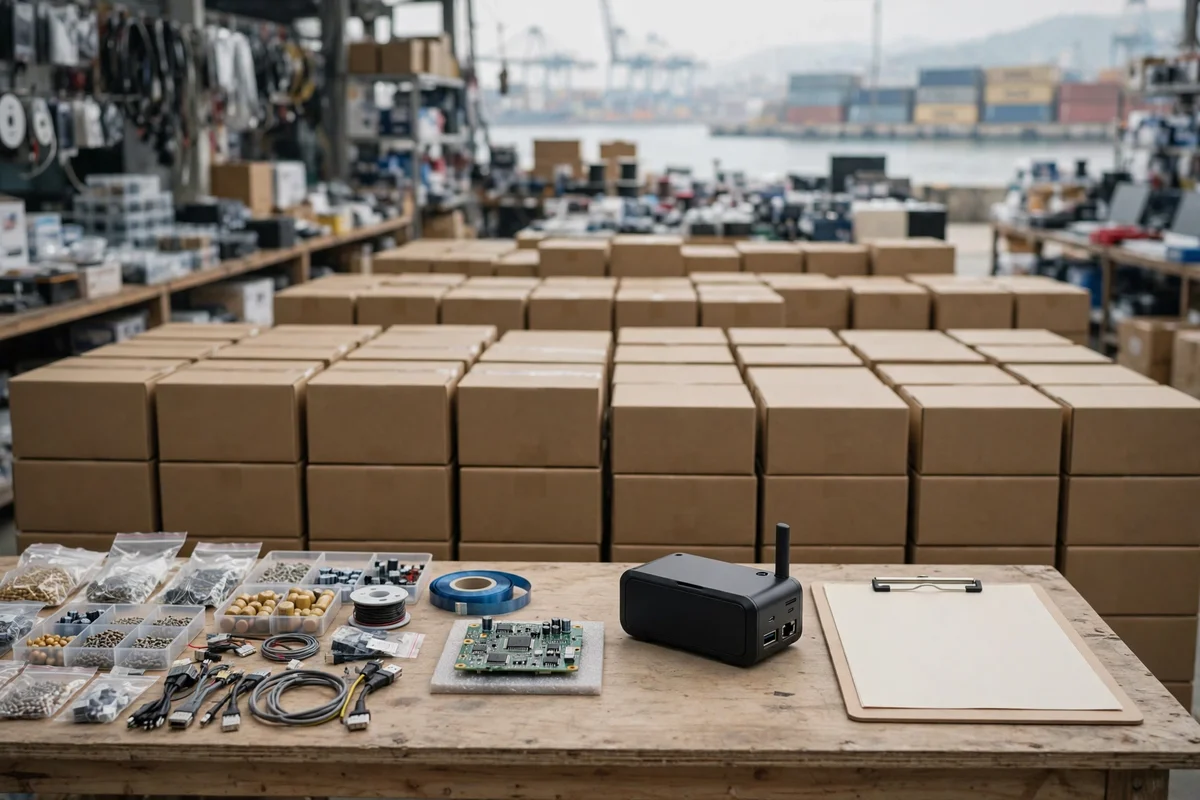
Sourcing electronics in Shenzhen follows one process from selection to the shipment: select the products and the suppliers, confirm samples, inspect the goods on a random draw, check the packing and the marks, consolidate the orders, and ship the load out. This guide walks through each stage in order.
How to use this guide
This guide covers the electronics sourcing process only: selecting products and suppliers in Shenzhen, confirming samples, inspecting goods before shipment, checking packing and marks, and consolidating orders from several suppliers. It does not repeat the supplier qualification checklist, which covers licences and registration, or the container loading checklist, which covers the load at the container.
Work through the five stages in order, and do not consolidate an order until the samples and the inspection for that supplier are settled. An order consolidated from suppliers never compared leaves the buyer with goods the shipment record cannot trace to a supplier.
Each supplier keeps its own record: note the supplier name, the product, the sample, the inspection result and the carton marks before moving to the next. A supplier with no record is a supplier the shipment cannot be traced back to.
Stage 1 — Selecting electronics products and suppliers in Shenzhen
Start with the product, not the supplier. Write down the product, the function, the parts it needs, the finish, the packing and the quantity the buyer needs, then walk the market area for that product line. A supplier that stocks the product line in depth is a starting point; one that stocks everything is one to pass by until the product line is settled.
Shortlist suppliers by what is on the shelf and on the bench: the same product in more than one finish, spare parts or matching items beside it, and cartons packed and marked. Ask the supplier which products it stocks in depth and which it orders in from elsewhere, and note the answer beside the supplier name. In Huaqiangbei, stalls sit close together, so compare suppliers inside one product area before crossing to another.
Stage 2 — Confirming samples and sealed samples before ordering
Take a sample from the supplier before ordering, and take it from the stock the supplier will ship from, not from a display piece kept apart. Test the sample the way the buyer will use it: switch it on, run its main functions, check its fit with the parts it connects to, and read its finish against the description. Mark the sample with the supplier name and the product, and keep it beside the order record.
Ask the supplier to seal one sample as the sealed sample both sides agree on, and keep the sealed sample apart from the stock. The sealed sample is the standard the inspection reads against: where the goods differ from the sealed sample, the sealed sample stands and the order does not go to that supplier until the difference is settled.
Stage 3 — Pre-shipment inspection on a random draw
Inspect the goods before shipment on a random draw from the finished cartons, not from pieces the supplier sets aside. Draw from several cartons across the order, and read each drawn piece against the sealed sample for function, finish, size, colour, parts and packing. A draw taken only from the top carton answers for the top carton, not for the order.
Note every defect found in the draw beside the carton it came from, and sort the defects by what they change: one that stops the function, one that changes the finish, and one in the packing or the marks. Where the draw shows a defect that stops the function, ask the supplier to show goods that match the sealed sample; where the supplier cannot, the inspection stands and the order does not ship from that supplier.
Stage 4 — Packing, marks and carton checks
Check the packing against the product: the inner packing that holds the piece, the outer carton that holds it, and the marks on the carton that name the product, the quantity and the supplier. Read the marks on every carton against the order sheet, and count the cartons for every supplier before the load leaves. A carton with no marks is a carton the shipment record cannot trace to a supplier.
Ask the supplier which packing the order needs before the goods are packed, and confirm the marks in writing before the cartons are sealed. Where a carton is packed before its marks are confirmed, a wrong mark is found only when the carton is opened again.
Stage 5 — Consolidating orders from several suppliers and shipping out
Consolidation starts after the samples and the inspections are settled, never before. List every supplier order on one sheet: the supplier name, the product, the quantity, the carton count, the packing and the marks. A load consolidated from suppliers with no settled sample leaves the buyer with goods no supplier answers for.
Keep each supplier order separate inside the consolidated load: cartons from one supplier stay together, marked with that supplier name, so a short count or a defect traces back to its supplier. Hand the forwarder the order sheet, the packing list, the carton marks and the handover record for every supplier, and confirm the destination, the receiver and the freight term in writing.
Reading the selection, the sealed sample, the inspection draw and the consolidation as one line from the first stall in Huaqiangbei to the shipment
Shenzhen electronics sourcing starts in a market of stalls, not of factories. A stall shows goods on a shelf and a bench and takes orders for them; a factory makes goods to an order. The buyer who treats a stall as a factory asks it for production it does not run. Read the stall as a stall: what is on the shelf, what it stocks in depth, and what it orders in from elsewhere.
Huaqiangbei groups its stalls by product line, and the grouping is the first selection tool. Walk the product area that matches the product first, and compare suppliers inside it before crossing to another. A stall in the wrong area may still show the product, but its neighbours will not, and the comparison works only where several suppliers show the same product line side by side.
Selecting electronics is different from selecting small commodities: the function decides first. A product that looks right and fails its function check is not the product, whatever its finish. Read the function on the sample: switch it on, run its main functions, check its fit with the parts it connects to, and read the finish after the function holds. A sample that passes the finish and fails the function is a sample the order does not follow.
The sealed sample is what makes the selection hold past the first visit. A factory sample is made to the buyer order; a stall sample is taken from stock already held. Seal one sample both sides agree on, mark it with the supplier name and the product, and keep it apart from the stock as the standard the inspection reads against. Where the goods differ from the sealed sample, the sealed sample stands.
Inspection on a random draw is what keeps the sealed sample honest across the whole order. Draw from several cartons across the order, never from pieces the supplier sets aside, and read each drawn piece against the sealed sample. A draw taken only from the top carton answers for the top carton, and a draw from set-aside pieces answers for the pieces the supplier chose to show.
Marks and packing are what tie the inspected goods to the shipment. The marks on the carton name the product, the quantity and the supplier, and the packing holds the piece through the load. Read the marks on every carton against the order sheet before the load leaves the supplier, and count the cartons for every supplier against the same sheet. A carton with no marks is a carton the shipment record cannot trace, and a load that mixes suppliers without marks is a load no supplier answers for.
The selection, the sealed sample, the inspection draw and the consolidation are read together. The supplier name ties the sample to the shelf, the sealed sample ties the inspection to the goods, the marks tie every carton to its supplier, and the order sheet ties every carton in the load back to the supplier it came from. Where any link in that line is missing, the shipment record cannot answer for the goods, and the missing link is settled at the supplier before the load ships.
Which electronics difference to settle first when the sample and the goods do not match
A sample difference is settled at the supplier; a load difference is settled against the order sheet.
| Difference found | When it applies | What to do first |
|---|---|---|
| Two suppliers offer the same product with different finishes | The offers name different parts or packing for the same product | Compare the sealed sample, the function and the packing before choosing a supplier |
| A supplier shows a sample that differs from the goods on the shelf | The sample comes from a display piece, not from stock | Ask the supplier for a sample taken from the stock |
| The inspection draw finds goods that differ from the sealed sample | The goods in the cartons do not match the sealed sample record | Ask the supplier to show goods that match the sealed sample |
| The consolidated load lists goods from a supplier with no inspection record | The supplier order was consolidated before its inspection was settled | Hold that supplier order out of the load until its inspection is settled |
| The shipment record names a supplier the order never named | The order sheet and the shipment record disagree on the supplier | Ask the forwarder in writing which supplier stands on the record |
Why a Shenzhen electronics order is held back before the load ships
Most holds come back to a few causes. A supplier is chosen before its sample is confirmed, so the buyer orders goods the sealed sample never covered. A sample is taken from a display piece, so the inspection reads goods the cartons do not hold. An order is consolidated before its inspection is settled, so the load carries goods no supplier answers for.
The fix is the same in each case: name the supplier, name the sealed sample, and put the answer on the order sheet before the load moves.
Second is a carton count that does not match the order sheet, third a mark the cartons do not carry, and fourth a shipment record that names a supplier the order never named.
What this Shenzhen electronics sourcing and pre-shipment QC guide leaves open for the buyer and the forwarder
This guide cannot decide whether a supplier will hold the goods until the load ships: the supplier decides, and the buyer confirms it in writing with the supplier.
It also cannot replace forwarder or buyer advice on a specific order. Where a supplier names a step this guide does not cover, ask the forwarder.
It also cannot say whether the goods inside the cartons match the packing list: that rests with the inspection record at the supplier.
Sourcing and consolidation guides on this site
- Planning a Yiwu or Shenzhen Supplier Visit: A Buyer’s Checklist
- Supplier Qualification Checklist: 30 Checks Before Placing an Order with a China Supplier
- Yiwu Small-Commodities Market Sourcing Process Guide: From the First Stall to the Shipment
- Container Loading Checklist for Importers: Photos, Weight and Cargo Securing
- Cargo Damage Inspection Checklist: 30 Checks From Arrival to the Survey Report
- How to Consolidate Orders from Multiple China Suppliers before Shipping to the USA
Related guides
- Sourcing Purchase Order Delivery Follow-Up Guide: From the Order Placed to the Delivery Date Confirmed
- Sourcing Inspection Sampling Guide: From the First Carton Draw to the Inspection Report
- Sourcing LCL Consolidation Guide: From Supplier Deliveries to One Consolidated Shipment
- Planning a Yiwu or Shenzhen Supplier Visit: A Buyer’s Checklist
- Supplier Qualification Checklist: 30 Checks Before Placing an Order with a China Supplier
- Yiwu Small-Commodities Market Sourcing Process Guide: From the First Stall to the Shipment
- Container Loading Checklist for Importers: Photos, Weight and Cargo Securing
- Cargo Damage Inspection Checklist: 30 Checks From Arrival to the Survey Report
- How to Consolidate Orders from Multiple China Suppliers before Shipping to the USA
Official references
- US Customs and Border Protection: Trade
- ICC: Incoterms 2020
- FIATA: International Federation of Freight Forwarders Associations
- IATA: Cargo
For a route-specific logistics review, provide the product, origin, destination, packed dimensions, weight and ready date.
Request a shipment review ↗Frequently asked questions
What should be settled first when sourcing electronics in Shenzhen?
Settle the product first, then the suppliers: write down the product, the function, the parts it needs, the finish, the packing and the quantity, walk the market area that groups suppliers by that product line, and shortlist suppliers by what is on the shelf before confirming samples.
How should the pre-shipment inspection be drawn for electronics?
Inspect the goods on a random draw from the finished cartons, not from pieces the supplier sets aside: draw from several cartons across the order, and read each drawn piece against the sealed sample. Where the draw shows a defect that stops the function, ask the supplier to show goods that match the sealed sample.
What should be done when the goods differ from the sealed sample?
Ask the supplier to show goods that match the sealed sample, and where the supplier cannot, do not place the order with that supplier. The sealed sample stands: goods the supplier cannot match to the sealed sample leave the buyer with goods no supplier answers for.