Cargo Damage Inspection Checklist: 30 Checks From Arrival to the Survey Report
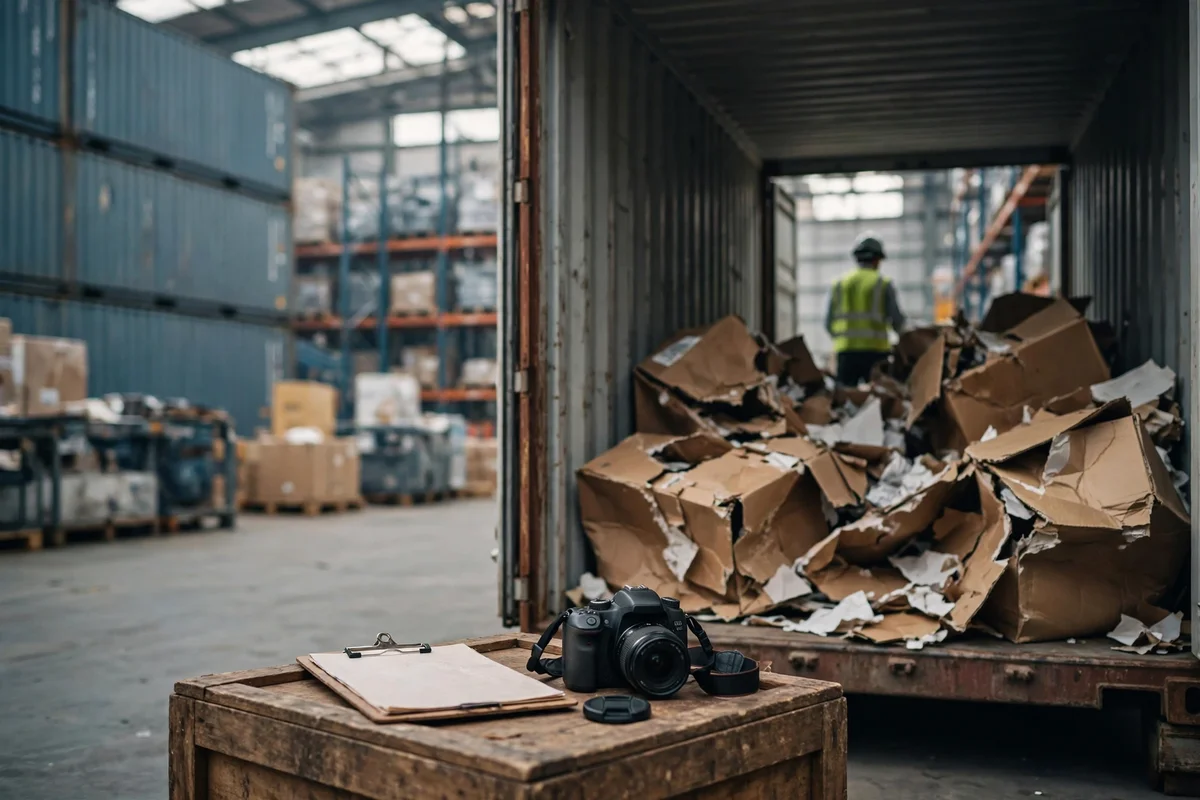
Cargo damage found on arrival is settled by the record made on the spot: what was damaged, where it sat, and what the photos show before anything is moved. Walk the load with the packing list open, write down every mark, and photograph each one before the cartons are shifted.
How to use this checklist
This page covers the arrival inspection only: the damage found and recorded, the photos and evidence kept, the survey asked for and the survey report read, and the file made ready before a claim is filed. It does not repeat the insurance claims checklist, which covers the notice, the evidence, the filing and the settlement, or the photo evidence guide, or the customs inspection checklist, which covers the response when customs opens the goods.
Work through the four stages in order, with the packing list, the bill of lading and the delivery order open on the desk. Read every mark on the load against the papers, and photograph each one before anything is moved. Do not answer from memory: ask the carrier in writing where a mark or a count reads differently.
The carrier, the receiver and the surveyor each see a different part of the load, so a load checked at the doors and a load checked carton by carton are not the same check. Read the load and the papers together at each step of the inspection.
Stage 1 — Damage found and recorded
Stage 1 covers the damage found and recorded: the load walked carton by carton, the count read against the packing list, and every mark written down. Damage found after the load is shifted is the gap found most often.
Read the load in full light, from the doors to the back wall. Where a carton shows a mark, write down the mark, the number on the carton, and where it sat in the load.
Stage 2 — Photos and evidence kept
Stage 2 covers the photos and the evidence kept: the load photographed as found, each damaged carton photographed, and every photo kept with the file. A photo taken after the load was moved is the gap found most often.
Photograph the load as found, wide first and close up after. Where a photo leaves out a mark, take it again with the mark and the carton number in the frame.
Stage 3 — Survey asked for and survey report read
Stage 3 covers the survey asked for and the survey report read: the carrier asked in writing, the surveyor reading the load with the file open, and the report read against the record and the photos. A survey asked for after the goods were cleared away is the gap found most often.
Ask the carrier in writing for a survey, and keep the request on the file. Where the report names damage the record never named, ask the surveyor in writing what was seen.
Stage 4 — File ready before a claim
Stage 4 covers the file made ready before a claim is filed: the papers, the record, the photos and the survey report together, so the file can be handed over whole. A file with a missing paper is the gap found most often.
Read the file a second time before it is handed over. Where a paper is missing, ask the party who holds it in writing, and keep the answer on the file.
Reading the arrival inspection as one record from the container doors to the claim file
No other page on this site reads the arrival inspection as one record, and that is what this section does. A photograph on its own says only that a mark was seen: it says nothing about where the carton sat in the load, or whether the count on the packing list still stands. A damage note on its own says only that a mark was written down: it says nothing about what the photograph shows, or whether the seal number on the bill of lading still stands. A survey report on its own says only what the surveyor saw: it says nothing about the load as found. Read together, the inspection is one record from the container doors to the claim file: the load is walked carton by carton, every mark is written down with the number on the carton and where it sat, each damaged carton is photographed before anything is moved, the surveyor reads the load with the file open, and the file is handed over whole.
What the record does not say matters as much as what it says. It does not say when the damage happened: a crushed carton can hold no trace of the leg where it was crushed. It does not say who is liable for the damage: a wet floor can hold no trace of the party who let the water in. Where the record shows a break — a count that reads differently from the packing list, a photograph that leaves out a carton, a survey report that names damage the record never named — the file must show who was asked and what was answered.
The record also has to match the load, not just the papers. A count read from a copy of the packing list is a count read from paper, not from the load: count the cartons as they stand, and read the count again with a second person. A photograph taken after the load was moved is a photograph of a load that no longer stands as found: photograph the load before anything is shifted. Read the inspection as one record against the load as it stands, not as it stood at loading, and ask the carrier in writing where a mark, a count or a number has moved.
Which paper to ask for first when the damage record and the survey report read differently
A count that reads differently is settled with the party who counted the load, a photograph that leaves out a carton with the photographer, a survey report that names new damage with the surveyor, and papers that name a different mark with the party who signed them.
| Difference found | When it applies | What to do first |
|---|---|---|
| Count reading differently from the packing list | The cartons counted on arrival are fewer than the count on the packing list | Ask the party who counted the load in writing to count again, then ask the carrier |
| Photograph leaving out a damaged carton | A carton named in the record has no photograph showing the mark | Ask the party who took the photographs in writing to photograph it again, then ask the surveyor |
| Survey report naming damage the record never named | The report names a mark that no one wrote down at arrival | Ask the surveyor in writing what was seen, then ask the carrier |
| Papers naming a different mark on the carton | The mark on the bill of lading is not the mark on the carton | Ask the party who signed the papers in writing to read the mark again, then ask the forwarder |
Why a damage inspection file is sent back before a claim is read
Most files sent back before a claim is read come back to the same few causes. The photographs were taken after the load was moved: the cartons were shifted, and the wide photograph shows a load that no longer stands as found. The count was read from memory: the cartons were counted once, the number was written down later, and the count on the file no longer matches the count on the packing list.
The fix is the same in each case: photograph the load before anything is moved, count the cartons as they stand with the packing list open, and write down every mark with the number on the carton and where it sat.
A second cause is a survey asked for after the goods were cleared away: the surveyor arrives to an empty floor, and the report can only repeat what the file already says. A third is a record that names the damage but not the position: the file says a carton was crushed, and no one can say whether it sat at the doors or at the back wall.
A fourth cause is a file handed over in pieces: the photographs sit with one party, the survey report with another, and the damage record with a third. Without the whole file, a claim cannot be read against the load as found, and the file cannot show who to ask. Keep the papers, the record, the photographs and the survey report together, and hand the file over whole.
What this cargo damage inspection checklist leaves for the surveyor and the insurer to decide
This checklist cannot decide what caused the damage: the surveyor decides that, and the insurer decides what the policy covers.
It also cannot replace surveyor or insurer advice on a specific load. Where a request names a paper this checklist does not cover, ask the surveyor or the insurer in writing.
It also cannot say whether a claim will be paid: that rests with the insurer, and with the file the claim asks for.
Export guides on this site
- International Freight Insurance Claims Checklist: Notice, Evidence, Filing & Settlement
- Damaged Import Freight: How to Document Packaging and Cargo Condition
- Destination Port Customs Inspection Response Checklist: 30 Checks Before the Goods Are Opened
- Freight Forwarder Selection Checklist: Credentials, Quotes, Service & Contract
- Container Seal & Container Condition Checklist: 30 Checks Before Handover
- Empty Container Return Checklist: 30 Checks Before the Depot Gate
Related guides
- Loading Photo and Video Evidence Checklist: 30 Checks for the Container Loading Record
- International Freight Insurance Claims Checklist: Notice, Evidence, Filing & Settlement
- Damaged Import Freight: How to Document Packaging and Cargo Condition
- Destination Port Customs Inspection Response Checklist: 30 Checks Before the Goods Are Opened
- Freight Forwarder Selection Checklist: Credentials, Quotes, Service & Contract
- Container Seal & Container Condition Checklist: 30 Checks Before Handover
- Empty Container Return Checklist: 30 Checks Before the Depot Gate
Official references
- US Customs and Border Protection: Trade
- ICC: Incoterms 2020
- FIATA: International Federation of Freight Forwarders Associations
- IATA: Cargo
For a route-specific logistics review, provide the product, origin, destination, packed dimensions, weight and ready date.
Request a shipment review ↗Frequently asked questions
What should I photograph first when damaged cartons are found on arrival?
Photograph the load as found, wide first with the doors open and the load in full view, then photograph each damaged carton close up with the mark and the number on the carton in the frame. Do not move any carton before the photographs are taken, and keep the photographs with the damage record and the packing list.
What if the survey report names damage my own record never named?
Ask the surveyor in writing what was seen, and read the report line by line against the damage record and the photographs. Do not change the record to match the report: keep both on the file, with the question and the answer written down beside them.
What if the carrier says the damage happened after the goods were delivered?
The record made on the spot is the answer: the photographs taken before anything was moved, the damage record written down at arrival, and the survey report read against both. Ask the carrier in writing which mark the carrier disputes, and keep the answer on the file.