Destination Port Customs Inspection Response Checklist: 30 Checks Before the Goods Are Opened
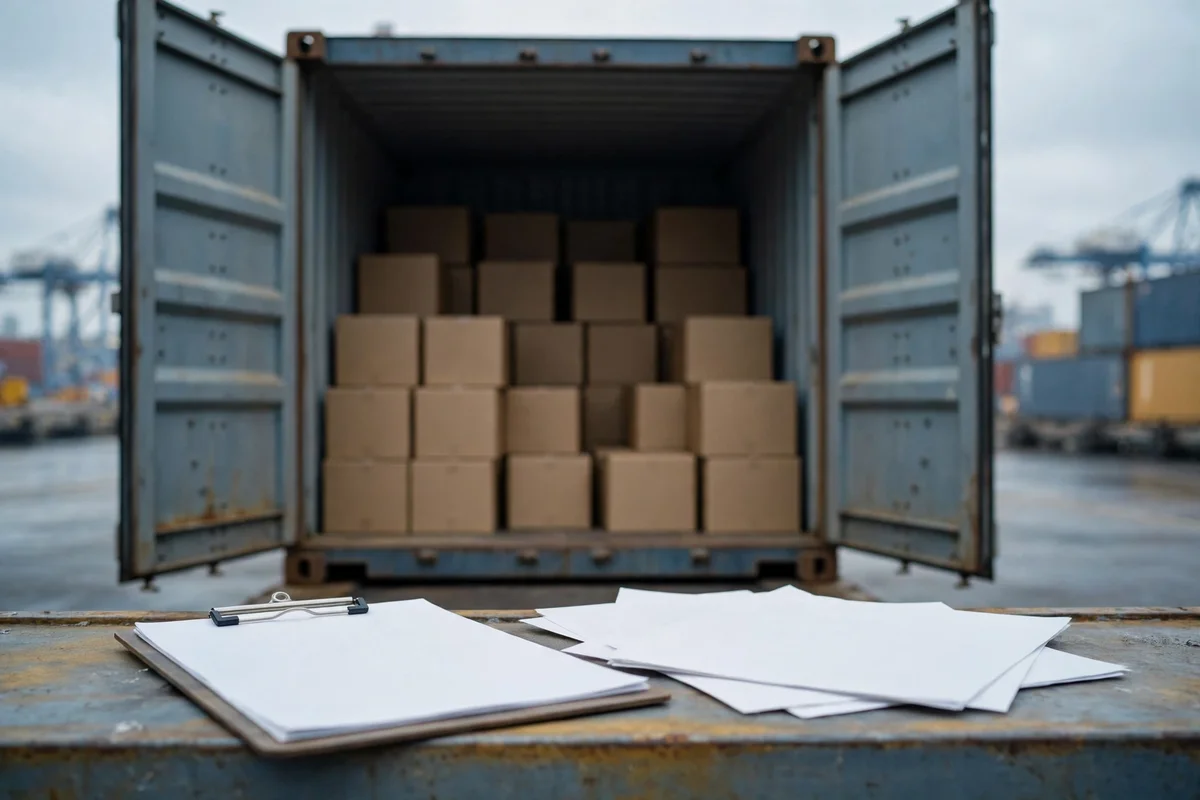
When customs at the destination port picks a container for inspection, the shipment waits until the inspection is done. The notice names the container, the lines to open and the papers to bring. Read the notice first, then work through the four stages below, with the broker beside you.
How to use this checklist
This page covers the response to a customs inspection at the destination port only. It does not repeat the US import customs clearance checklist, which walks the whole entry from filing to release, or the US import customs supplementary documents checklist, which covers the documents asked for after clearance. It does not repeat the customs broker selection checklist, which is about choosing a broker, or the container loading inspection checklist, which covers photos, weight and securing before the goods leave the origin.
Work through the four stages in order, with the inspection notice, the entry file, the commercial invoice and the packing list open. Read each line of the notice against the papers it names, and note where the notice asks for a paper the file does not hold. Do not answer from memory: ask the broker in writing which paper is right, and keep the written answer with the shipment file.
The inspection is run by customs, and the broker speaks for the importer, so a question answered to customs and a question answered to the broker are not the same answer. A paper shown at the inspection site and a paper filed with the entry are read by different readers. Read the notice while the goods are still sealed, and check every line of it against the entry before the container is opened.
Stage 1 — Verifying the inspection notice
Stage 1 covers the notice itself: the container number, the seal number, the lines to open, the papers to bring and the place to present them. A notice read in a hurry is the difference found most often here.
Read the notice line by line beside the bill of lading and the entry summary, and ask whether each line has a match on the other. Where the notice names a container and the papers name another, ask the broker in writing which container is held.
Stage 2 — Preparing documents and goods
Stage 2 covers the papers and the goods: the entry file, the invoice, the packing list and the supporting papers the notice names. A paper the notice asks for and the file does not hold is the gap found most often here.
Read the papers the notice names beside the entry, and ask whether each one is ready to show. Where a paper is missing, ask the seller or the broker in writing for it, and do not guess at its contents.
Stage 3 — Cooperating on site during the inspection
Stage 3 covers the inspection site: the goods presented as the notice asks, the cartons opened as customs asks, and the answers given as the broker advises. A carton opened before customs asks is the mistake found most often here.
Stand beside the goods while customs works, and answer only what is asked, with the papers in hand. Where customs asks for a paper not in the file, note the request in writing and ask the broker what to send.
Stage 4 — Release and supplementary-document follow-up
Stage 4 covers what follows the inspection: the release, the supplementary documents customs asks for, and the file closed with every answer in writing. A supplementary document sent without a written request is the loose end found most often here.
Read the release and any request for supplementary documents against the notice, and ask whether every line is answered. Where customs asks for a supplementary document, send it through the broker, and keep a copy with the file.
Reading what the inspection notice itself tells you before the goods are opened
The inspection notice is the only instruction that counts, and no other page on this site covers it. The notice names the container that is held, the seal number on that container, the lines to open, the papers to bring, the place to present the goods and the contact to call. Read each line of it against the entry before the container is opened: the container number against the bill of lading, the seal number against the papers filed, the lines to open against the packing list, the entry number against the entry summary. Where a line of the notice has no match on the papers, ask the broker in writing which version is right, and keep the written answer with the notice. Do not open the container to check a line the notice already answers, and do not answer a line of the notice from memory.
What the notice does not say matters as much as what it says. It does not say what is wrong with the shipment, it does not say what customs expects to find, and it does not set a result: it asks for the goods to be shown, and the papers to be read. The broker's guess at why the container was picked is not the notice, and the seller's guess is not the notice either. The notice also tells you which kind of inspection it asks for: a document review asks for papers, and a physical opening asks for cartons to be opened. Do not open cartons for a document review, and do not offer papers the notice does not ask for at a physical opening. After the inspection, read the release against the notice line by line, and keep the notice with the file, so the record of what was asked for stays beside the record of what was shown.
Which question to settle first for each line the inspection notice names
A container number is settled with the broker, a seal number with the papers, a goods line with the seller, a missing paper with the broker.
| Difference found | When it applies | What to do first |
|---|---|---|
| A container number on the notice reads differently from the bill of lading | The container number on the inspection notice reads differently from the container number on the bill of lading | Ask the broker in writing which container is held, then check the entry |
| A seal number on the notice reads differently from the papers | The seal number on the inspection notice reads differently from the seal number on the papers filed | Ask the broker in writing which seal is right, then check the bill of lading |
| A goods line on the notice reads differently from the packing list | A goods line named on the inspection notice reads differently from the same line on the packing list | Ask the seller in writing whether the two lines name the same goods, then ask the broker |
| A document named on the notice is missing from the file | The inspection notice names a document the shipment file does not hold | Ask the broker in writing where the paper is held, then ask the seller |
Why a container is picked for inspection at the destination port
Most inspections come back to the same few causes in the file. The entry and the papers read differently: a goods name shortened on the entry, a quantity written one way on the invoice and another way on the packing list, marks that read one way on the cartons and another way on the list. The goods description reads as different goods from the papers. A supporting paper the entry refers to is missing from the file, so the entry cannot be read whole.
The fix is the same in each case: finish the papers first, read the entry against them before filing, and keep the file whole until the goods are released. Where a correction is made, make it on every paper at the same time, and ask in writing where the right version is in question.
A second cause is a paper filed from an earlier shipment: the origin statement, the marks or the goods name copied from the last shipment, and never checked against this one. A third is a carton count that changes after filing, when a carton is added or taken out and the packing list is not corrected. Read the entry against the papers as they stand, not as they stood when the shipment was booked, and ask the broker in writing where a line has moved.
What the inspection response leaves for customs and the broker to decide
This response cannot decide whether the goods will be released: customs decides that, and the broker speaks for the importer. It cannot say what customs will ask for next, or whether a supplementary document will be asked for after the inspection.
It also cannot replace customs or broker advice on a specific shipment. Where a request names a paper this checklist does not cover, or a goods line is disputed, ask customs or the broker in writing. It cannot open a container customs has not asked to open.
It also cannot say how long the inspection will take, or when the goods will move again: that rests with customs, and with the papers the inspection asks for. Where the release is still waiting, ask the broker in writing what is still asked for, and keep the answer with the file.
Export guides on this site
- US Import Customs Clearance Checklist: Entry, Duty & Release
- US Import Customs Supplementary Documents Checklist: Common Reasons & Pre-Entry Checks
- Customs Broker Selection Checklist: License, Communication & Terms
- Container Loading Checklist for Importers: Photos, Weight and Cargo Securing
- Pickup After Customs Clearance Checklist: Delivery Order, Container & Return
- International Shipping Documents Checklist: Export, Transport & Customs Clearance
Related guides
- Cargo Damage Inspection Checklist: 30 Checks From Arrival to the Survey Report
- Telex Release / Sea Waybill Checklist: 30 Checks Before the Goods Are Released
- US Import Customs Clearance Checklist: Entry, Duty & Release
- US Import Customs Supplementary Documents Checklist: Common Reasons & Pre-Entry Checks
- Customs Broker Selection Checklist: License, Communication & Terms
- Container Loading Checklist for Importers: Photos, Weight and Cargo Securing
- Pickup After Customs Clearance Checklist: Delivery Order, Container & Return
- International Shipping Documents Checklist: Export, Transport & Customs Clearance
Official references
- US Customs and Border Protection: Trade
- ICC: Incoterms 2020
- FIATA: International Federation of Freight Forwarders Associations
- IATA: Cargo
For a route-specific logistics review, provide the product, origin, destination, packed dimensions, weight and ready date.
Request a shipment review ↗Frequently asked questions
What should I do first when customs at the destination port picks a container for inspection?
Read the inspection notice first, line by line, and check it against the bill of lading and the entry summary. The notice names the container, the seal, the lines to open, the papers to bring and the place to present the goods. Where a line of the notice has no match on the papers, ask the broker in writing before the goods move.
What if the inspection notice names a document the shipment file does not hold?
Ask the broker in writing where the paper is held, and ask the seller in writing for a copy where the broker says so. Do not guess at the contents of a paper the notice asks for, and do not send a paper customs has not asked for.
What if customs asks for a supplementary document after the inspection?
Send it through the broker, with a copy kept in the shipment file, and ask in writing whether anything else is still asked for. Move the goods only after the release is confirmed in writing.