Empty Container Return Checklist: 30 Checks Before the Depot Gate
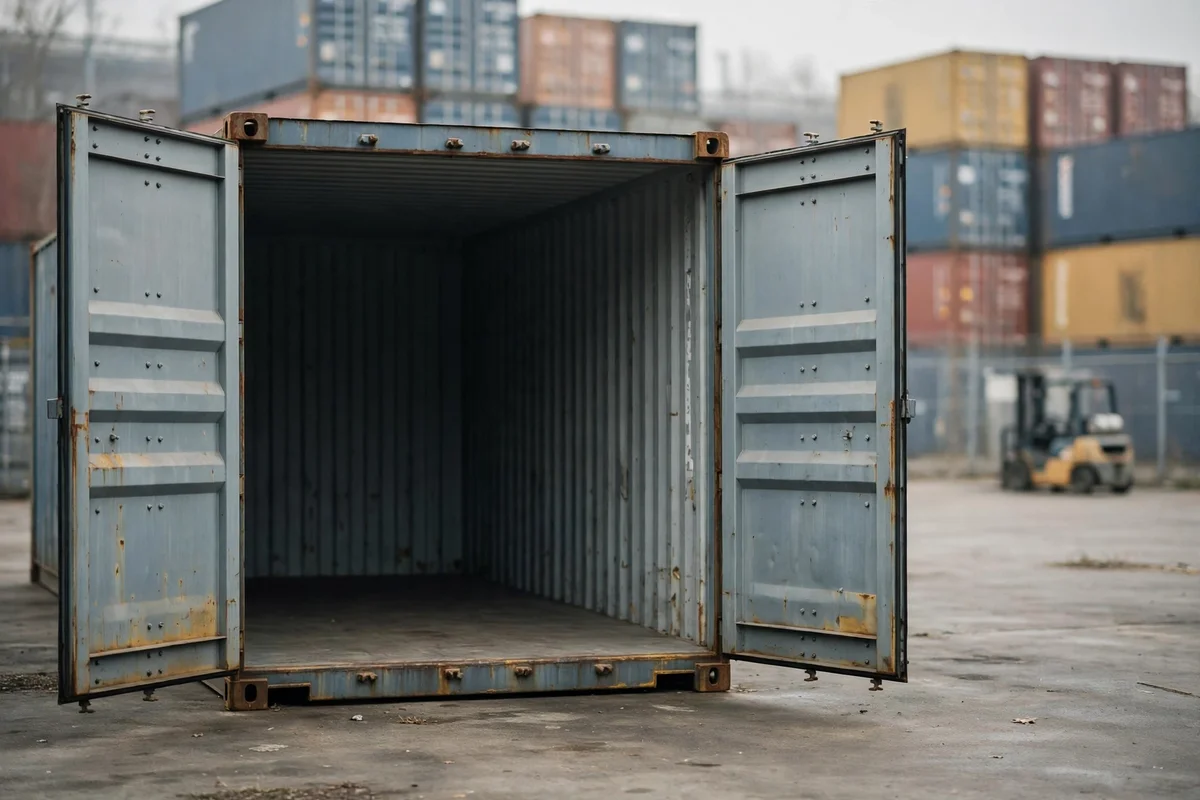
An empty container turned away at the depot gate is turned away because the return was booked for the wrong place, the container was not clean, or the papers do not match. Check each item before the container leaves the unloading point, so the return is accepted the first time.
How to use this checklist
This page covers the empty container return only: the return location and booking, the empty container condition and cleaning record, the seal removal and residue check, and the return paperwork and free-time handover. It does not repeat the demurrage and detention checklist, which covers free time and the charges that follow a late return, or the pickup after customs clearance checklist, which covers the delivery order, or the bill of lading checklist, which settles the parties and freight terms.
Work through the four stages in order, with the return booking, the bill of lading and the unloading note open on the desk. Read the return location on the booking against the location the depot names, letter by letter. Do not answer from memory: ask the carrier in writing which return point stands.
The container is unloaded by the receiver and taken back by the carrier, so a container checked at unloading and a container checked at the depot gate are not the same check. Read the container and the papers together at each step of the return.
Stage 1 — Return location and booking
Stage 1 covers the return location and booking: the return point the carrier named, the booking reference read against the papers, and the return instruction confirmed in writing. A return booked for the wrong place is the difference found most often.
Read the return point beside the booking. Where the booking names a different place, ask the carrier in writing which return point stands.
Stage 2 — Empty container condition and cleaning record
Stage 2 covers the empty container condition and the cleaning record: the walls, roof, floor and doors checked after unloading, the container swept clean, and every mark written down. A container sent back dirty or with damage no one wrote down is the fault found most often.
Read the empty container in full light, inside and outside. Where the container shows damage or residue, ask the carrier in writing whether the container still stands for return.
Stage 3 — Seal removal and residue check
Stage 3 covers seal removal and the residue check: the seal cut off after unloading, the seal number noted, and every label and mark from the last load taken off. A seal left on the doors or a label left on the wall is the fault found most often.
Read the doors after the seal is cut off. Where a seal or a label is still on the container, take it off and write down what was removed.
Stage 4 — Return paperwork and free-time handover
Stage 4 covers the return paperwork and the free-time handover: the return receipt, the handover note, and the free time read against the papers, so the return is written down. A return with no receipt is the gap found most often.
Read the return receipt beside the container and the booking. Where the receipt leaves out a mark, ask the depot in writing to add it before the container is left behind.
Reading the empty container return as one handover from unloading to the depot gate
No other page on this site reads the empty container return as one handover, and that is what this section does. A return booking on its own says only that a place was named: it says nothing about whether the container that arrives at that place is clean, or whether the seal was taken off. A clean container on its own says only that the inside was swept: it says nothing about whether the return point on the booking is the point the depot will accept. Read together, the return is one handover from unloading to the depot gate: the container is unloaded and checked, the seal is cut off and the number noted, the inside is swept and the residue taken off, and the empty container is handed back with a receipt naming the container number and the condition at return.
What the return record does not say matters as much as what it says. It does not say the goods were in order when they were taken out: a clean container can hold no trace of goods that were never seen. It does not say the container was fit for the next load: an inside with no dents and no rust can still hold a smell that does not belong. Where the record shows a break — a return point that reads differently, a seal left on the doors, a label from the last load still on the wall — the file must show who was asked and what was answered.
The record also has to match the container, not just the papers. A return point read from a copy of the booking is a place read from paper, not from the depot gate: ask the carrier in writing which return point stands before the container moves. A container checked from the outside only is a container half checked: open the doors, look at the floor, smell the inside, and write down what you find before the seal is cut off. Read the return as one handover against the booking as it stands, not as it stood at booking, and ask the carrier in writing where a return point or a mark has moved.
Which paper to ask for first when the empty container is refused at the return point
A wrong place is settled with the carrier, dirt or residue with the party who unloaded the container, a seal or a label left on with the party who took the goods out, papers that do not match with the party who signed them.
| Difference found | When it applies | What to do first |
|---|---|---|
| Return point reading differently from the booking | The depot names a place that is not the place on the booking | Ask the carrier in writing which return point stands, then ask the forwarder |
| Container sent back dirty or with residue left inside | The inside holds dirt, residue or a smell from the last load | Ask the party who unloaded the container in writing to clean it again, then ask the carrier |
| Seal or old label still on the container at the depot gate | The seal sits on the doors, or a label from the last load sits on the wall | Ask the party who took the goods out in writing to take it off, then ask the depot |
| Return receipt leaving out a mark on the container | The receipt names the number but not the damage, the dirt or the smell | Ask the depot in writing to add the mark, then ask the carrier |
Why an empty container is refused at the return point
Most refusals at the return point come back to the same few causes in the file. The return point and the booking read differently: a depot name copied from an earlier return, a return point read from memory, a booking changed with no note. The container and the receipt read differently: dirt found at the depot gate that the unloading note never named, residue that was written down as a stain, a smell that no one wrote down at all.
The fix is the same in each case: read the return point letter by letter against the booking, read the empty container in full light inside and outside, and keep the return receipt whole until the carrier confirms the return in writing.
A second cause is a seal or a label left on the container: the seal sits on the doors after unloading, or a label from the last load sits on the wall, and the depot will not take the container as it stands. A third is a container cleaned from the outside only: the doors shut and the walls look sound, while the floor inside holds residue or the inside holds a smell that does not belong.
A fourth cause is a return with no record: the container was handed back, and no one wrote down the container number or the condition when it was handed back. Without that receipt, a container refused at the gate cannot be traced to the unloading where the dirt was left, and the file cannot show who to ask. Keep a return receipt for every return, with the container number and the condition at the time.
What this empty container return checklist leaves for the carrier and the depot to decide
This checklist cannot decide whether the container will be taken: the depot decides that, and the carrier decides when the container moves.
It also cannot replace carrier or depot advice on a specific container. Where a request names a paper this checklist does not cover, or a container is disputed at the gate, ask the carrier or the depot in writing.
It also cannot say when the container will move again: that rests with the carrier, and with the papers the return asks for.
Export guides on this site
- Demurrage & Detention Charges Checklist: Free Time, Terminal & Return
- Pickup After Customs Clearance Checklist: Delivery Order, Container & Return
- Bill of Lading Checklist: Parties, Freight Terms, Clean Bill & Originals
- Container Seal & Container Condition Checklist: 30 Checks Before Handover
- Ocean Freight Booking Checklist: FCL, LCL & Carrier Handover
- Multimodal Transport Checklist: 30 Checks From Booking to Delivery
Related guides
- Demurrage & Detention Charges Checklist: Free Time, Terminal & Return
- Pickup After Customs Clearance Checklist: Delivery Order, Container & Return
- Bill of Lading Checklist: Parties, Freight Terms, Clean Bill & Originals
- Container Seal & Container Condition Checklist: 30 Checks Before Handover
- Ocean Freight Booking Checklist: FCL, LCL & Carrier Handover
- Multimodal Transport Checklist: 30 Checks From Booking to Delivery
Official references
- US Customs and Border Protection: Trade
- ICC: Incoterms 2020
- FIATA: International Federation of Freight Forwarders Associations
- IATA: Cargo
For a route-specific logistics review, provide the product, origin, destination, packed dimensions, weight and ready date.
Request a shipment review ↗Frequently asked questions
What should I check first when the depot will not take the empty container back?
Read the return point on the booking against the point the depot names, letter by letter, and ask the carrier in writing which return point stands. Do not leave the container at the depot gate until the carrier confirms the return point in writing.
What if the empty container still holds dirt or a smell from the last load?
Ask the party who unloaded the container in writing to clean it again, and ask the carrier whether the container still stands for return. Do not send the container back on a receipt that leaves out the mark.
What if the seal is still on the doors when the container reaches the depot?
Ask the party who took the goods out in writing to cut the seal off and note the seal number on the file. Do not leave the container at the depot gate with the seal still fitted, and do not cut the seal off without writing the number down first.