Demurrage & Detention Charges Checklist: Free Time, Terminal & Return
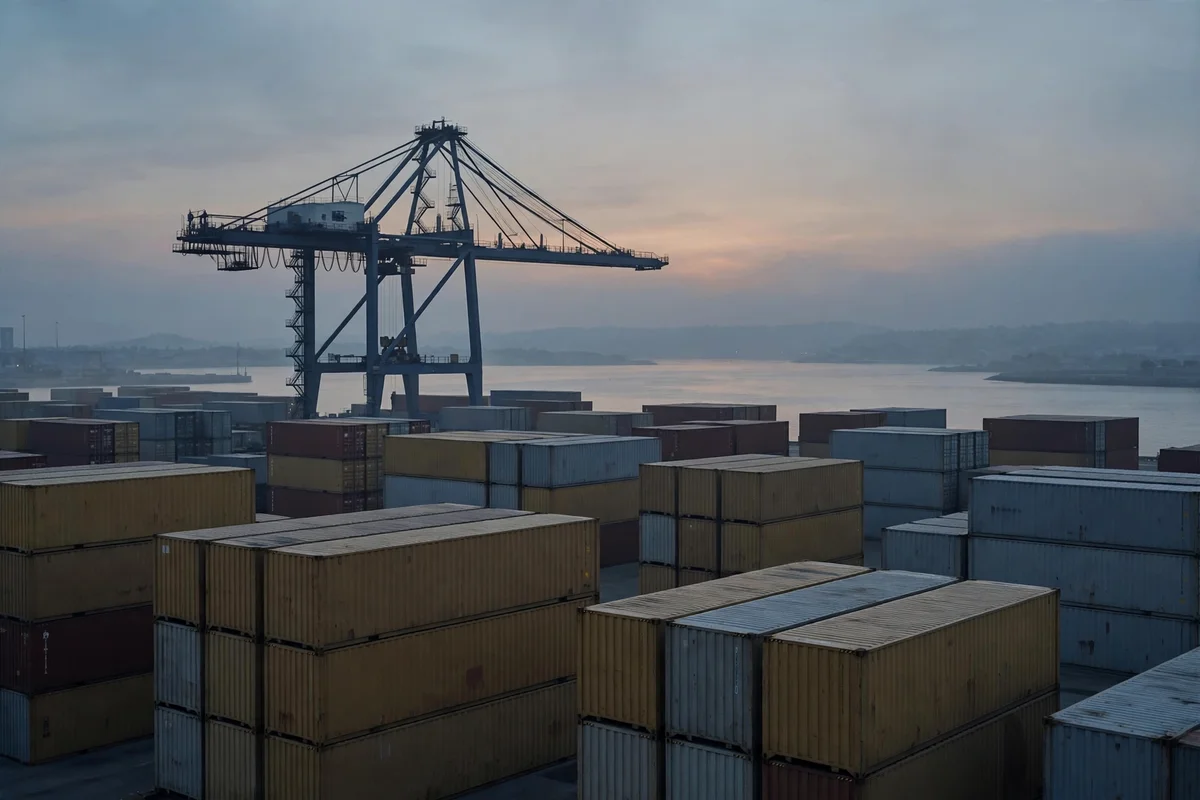
After arrival, demurrage and detention start with the free time the carrier allows. Ask for every charge by name, the event that starts the clock and the event that stops it, in writing. This checklist lists thirty items in four stages, so each one is checked before gate-out.
How to use this checklist
This page lists demurrage and detention charge names only, one by one, with the free-time check points that go with them: the free time, the terminal demurrage charge, the detention or per diem charge, the empty return and the CFS storage charge, each asked about after the vessel arrives. It does not repeat the ocean freight surcharges checklist on this site, which lists the surcharge names to ask about before booking — bunker, peak season, congestion and terminal handling — where demurrage and detention appear as two named lines only. Surcharges are asked about before booking; demurrage and detention run after arrival, when the free time ends. It does not repeat the US ocean freight demurrage, detention and CFS storage guide on this site, which explains the charge types and invoice review in prose, with no tick list. It does not repeat the ocean freight booking checklist, the bill of lading checklist or the freight forwarder selection checklist, which cover booking, the bill of lading and choosing the partner. Use this page after arrival; use those pages to compare quotes, book, check the bill of lading and choose the forwarder.
Work through the four stages in order, with the arrival notice and the governing tariff or contract open beside this page. Ask about each charge by name, and ask for the free-time start event and the stop event in writing: which event starts the clock, which event stops it, and who confirms each one. Where the invoice shows a single figure with no charge names, ask for the figure broken down line by line. Keep the written answers with the invoice, so the invoice can be checked against them when it arrives. Ask the same list of names on every shipment, so two invoices can be compared line by line instead of figure against figure.
Demurrage commonly concerns a loaded container inside a marine terminal beyond the free time the carrier or terminal allows. Detention, also called per diem, commonly concerns carrier equipment outside the terminal beyond the return window. CFS storage commonly concerns LCL freight kept at a warehouse after the free period. The governing tariff or contract defines the exact clocks: this checklist asks for the names and the events, not the figures. A charge that is never named is not necessarily absent — it may simply appear on the invoice later. Ask for every charge by name before the free time runs out.
Stage 1 — Free-time terms before arrival
Stage 1 checks the free-time terms before the vessel arrives: the free time for demurrage, the free time for detention, the events that start and stop each clock, and who sends the notices. Each one needs a written answer before arrival.
Ask who sets each free time and what it is based on — the carrier tariff, the terminal tariff or the contract. Where the tariff names a free time, ask for the event that starts it and the event that stops it, and ask which party sends the arrival notice and the availability notice. Where the free time can pause, ask for the pause in writing too. Keep the answers in writing with the booking.
Stage 2 — Demurrage at the terminal
Stage 2 checks the demurrage charge for the loaded container inside the terminal: the charge itself, the availability event, the gate-out event and the release steps that must happen before the free time ends. These apply where the container waits at the terminal, so ask which terminal and which tariff each one applies to.
Ask for the demurrage charge as a separate line on the invoice, apart from the freight and the surcharges. Where the container waits for customs examination, ask whether a charge applies during the examination. Ask for the delivery order and the terminal release as written confirmations, and ask for the drayage appointment and the chassis before the container is collected.
Stage 3 — Detention and empty return
Stage 3 checks the detention charge for carrier equipment outside the terminal: the charge itself, the empty-return location, the return event and the receipt that proves the return. These apply after the container leaves the terminal, so ask which depot takes the empty and which event stops the clock.
Ask for the detention charge as a separate line on the invoice, and ask for the empty-return location in writing. Where the depot turns a truck away, log the attempt in writing and keep the record. Where the return cannot be made in time, ask for a written extension before the window closes, not after. Keep the gate interchange receipt for the empty return with the file.
Stage 4 — LCL storage, invoices and disputes
Stage 4 checks the LCL storage charge and the invoice: the CFS storage charge, the CFS notices, the release and pickup steps, and the invoice checks that follow. Ask for each one after arrival, and ask for the dispute deadline and method before paying a charge that was never named.
Ask for the CFS storage charge by name, and ask for the CFS arrival and availability notice with the free storage period it states. Ask for the cargo release and the pickup appointment before the freight is collected from the warehouse. Check the itemised invoice line by line against the tariff or contract and the written free-time terms, and keep the event timeline for the file.
Which charge applies to this shipment?
Every charge needs a written answer, but the question to ask differs by charge. Demurrage follows the loaded container inside the terminal; detention follows the equipment outside it; CFS storage follows LCL freight at the warehouse; a dispute follows a billed charge the shipper asks to be checked. Ask the question that fits the charge.
| Charge | When it applies | What to ask before paying |
|---|---|---|
| Demurrage | A loaded container inside the terminal beyond the free time the carrier or terminal allows | Ask for the availability event, the gate-out event and the tariff that sets the charge |
| Detention / per diem | Carrier equipment outside the terminal beyond the return window | Ask for the empty-return location, the return event and the receipt that proves it |
| CFS storage | LCL freight kept at a warehouse after the free period | Ask for the CFS notice, the free storage period and the pickup event |
| Invoice dispute | A billed charge the shipper asks to be checked, corrected or waived | Ask for the dispute deadline, the dispute method and the records that support it |
Common reasons demurrage and detention surprise shippers
Most surprises share the same few causes. The free time started on the availability notice, which nobody read. The gate-out event was never named, so the clock kept running after pickup. The empty return was refused at the depot, and the refusal was never logged. The detention charge appeared as a single line with no event named. The LCL freight was charged on a container free-time assumption, while the CFS tariff set a shorter free period.
The fix is the same in each case: ask for every charge by name and every clock event in writing before the vessel arrives, keep the notices and receipts with the invoice, and check the invoice against them line by line when it arrives. Where a charge appears that was never named, ask the billing party in writing before paying, and keep the answer in the file.
What this checklist cannot decide
This checklist cannot decide the demurrage or detention charge, or whether a charge applies to a given shipment: those follow the carrier tariff, the terminal tariff, the contract and the events. It cannot predict a change in free time or a change in the charge: those follow the tariff, the notices and the events. It cannot decide whether a shipment should move as FCL or LCL: that follows the cargo, the volume and the schedule.
It also cannot replace the carrier's, the terminal's or the forwarder's written confirmation on a specific shipment. Where a charge is disputed, the invoice does not match the tariff, or a charge appears that was never named, ask the billing party in writing before paying, and keep the answer in the file. It cannot settle a dispute about a charge that was never named on the invoice: that follows the written answers the carrier or forwarder gave before arrival. It cannot clear goods that customs has not released, and it cannot change a charge after the invoice is issued without the agreement of the party that issued it.
Demurrage and detention guides on this site
- Ocean Freight Booking Checklist: FCL, LCL & Carrier Handover
- Ocean Freight Surcharges Checklist: Bunker, Peak Season, Congestion & Terminal Charges
- Bill of Lading Checklist: Parties, Freight Terms, Clean Bill & Originals
- Freight Forwarder Selection Checklist: Credentials, Quotes, Service & Contract
- US Import Customs Clearance Checklist: Entry, Duty & Release
Related guides
- Ocean Freight Booking Checklist: FCL, LCL & Carrier Handover
- Ocean Freight Surcharges Checklist: Bunker, Peak Season, Congestion & Terminal Charges
- Bill of Lading Checklist: Parties, Freight Terms, Clean Bill & Originals
- Freight Forwarder Selection Checklist: Credentials, Quotes, Service & Contract
- US Import Customs Clearance Checklist: Entry, Duty & Release
Official references
- US Customs and Border Protection: Trade
- ICC: Incoterms 2020
- FIATA: International Federation of Freight Forwarders Associations
- IATA: Cargo
For a route-specific logistics review, provide the product, origin, destination, packed dimensions, weight and ready date.
Request a shipment review ↗Frequently asked questions
What is the difference between demurrage and detention?
Demurrage commonly concerns a loaded container inside a marine terminal beyond the free time the carrier or terminal allows. Detention, also called per diem, commonly concerns carrier equipment outside the terminal beyond the return window. The governing tariff or contract controls the precise definition and clock: ask for both in writing, with the event that starts each clock and the event that stops it.
What should I ask about before the vessel arrives?
Ask about all four groups: the free-time terms, demurrage at the terminal, detention and the empty return, and CFS storage with the invoice checks. That covers the free-time events, the availability and gate-out events, the empty-return location and receipt, and the CFS free period. Start with the free-time terms, then demurrage, then detention, and finish with the invoice checks. Ask for the full list in writing, and ask for a written statement that the list is complete.
Does an invoice dispute stop demurrage or detention from accruing?
Do not assume so. Check the governing tariff, the contract and the invoice dispute terms, continue the release and return planning, and document the event timeline while the billing party reviews the dispute. Keep the free-time terms, the notices, the pickup and return receipts and the communication trail, and ask for the dispute process and the decision in writing.