Pickup After Customs Clearance Checklist: Delivery Order, Container & Return
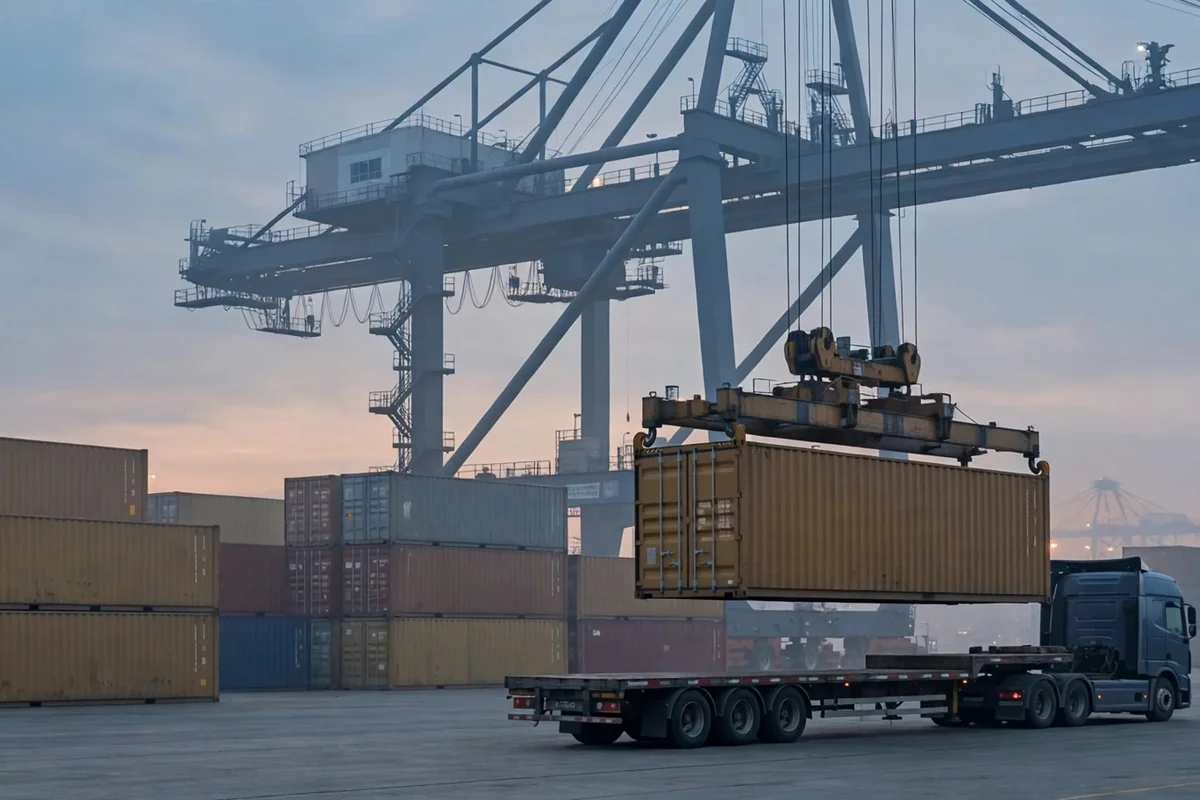
Once customs releases the shipment, pickup is a chain of written confirmations: the delivery order, the container and seal check, the pickup appointment and the gate-out. This checklist lists thirty items in four stages, so each one is checked before the truck leaves the terminal or the warehouse.
How to use this checklist
This page lists the pickup steps that follow customs release, one by one: the delivery order, the container and seal check, the pickup appointment and the gate-out, the delivery to the warehouse and the empty return. It starts where the US import customs clearance checklist on this site ends — that page covers the entry, the duty and the release, and it names pickup only as the next step. It does not repeat the demurrage and detention charges checklist on this site, which lists the charge names and the free-time check points to ask about after arrival, where pickup appears only as the gate-out event and the empty return. Charges are asked about by name on that page; the physical pickup is done on this page. It does not repeat the bill of lading checklist or the ocean freight booking checklist, which cover the bill and the booking. Use this page after customs release; use those pages to clear the goods, check the charges, check the bill and book the freight.
Work through the four stages in order, with the delivery order, the customs release notice and the booking open beside this page. Check each paper against the next one before the truck is sent: the container number on the delivery order against the bill of lading, the seal number on the papers against the seal on the box, and the pickup appointment against the gate access the terminal allows. Where a number does not match, stop and ask the broker or the carrier in writing before the container moves. Keep the written answers with the delivery order, so the pickup can be checked against them at the gate.
Pickup commonly concerns a container that customs has released and a terminal or warehouse that must hand it over to the right party. The delivery order names the party allowed to collect the freight, the container number and the seal number prove the box is the one on the papers, the appointment sets the gate access, and the gate-out event proves the container left the terminal. The empty return closes the chain: the empty container goes back to the depot the carrier names, and the receipt proves it arrived. A pickup that is never checked step by step may simply leave no record when a charge or a damage claim follows. Ask for every paper and every event in writing before the truck is sent.
Stage 1 — Release papers and the delivery order
Stage 1 checks the papers that allow pickup: the customs release, the delivery order, the bill of lading status and the charges that must be settled before release. Each one needs a written answer before the truck is sent.
Ask for the customs release in writing, with the entry number and the release event it states. Ask for the delivery order by name, and check the party it names against the party that will collect the freight. Where the bill of lading must be surrendered, ask for the surrender or the telex release in writing too, and ask which charges must be settled before release.
Stage 2 — Pickup appointment and the truck
Stage 2 checks the pickup appointment and the truck that will collect the container: the appointment reference, the gate access, the chassis and the driver authorisation. These apply before the truck reaches the gate.
Ask for the pickup appointment in writing, with the reference and the gate access it allows. Ask for the chassis and the truck to be confirmed before the appointment, and ask for the driver authorisation the terminal asks to see. Where the container needs power, ask for the power supply at the terminal and on the truck. Ask for the container location inside the terminal in writing.
Stage 3 — Container and seal check at the gate
Stage 3 checks the container itself before it leaves the terminal: the container number, the seal number and the seal, the exterior and the doors. Check the box against the papers while the truck is still inside the terminal.
Read the container number off the box and check it against the delivery order and the bill of lading, and read the seal number off the seal and check it against the papers. Where the seal number does not match, do not move the container: ask the broker or the carrier in writing and keep the answer on file. Note any damage on the interchange receipt before the truck leaves.
Stage 4 — Gate-out, delivery and empty return
Stage 4 checks the gate-out, the delivery and the empty return: the gate-out event, the delivery to the warehouse, the proof of delivery and the empty container going back to the depot. Keep the receipts together so the chain from release to return is complete.
Ask for the gate-out event in writing, with the time it was recorded and the gate it passed, and ask for the delivery to be confirmed by the receiver, with a signed proof of delivery. Ask for the empty-return location in writing before the container is unloaded, and keep the gate interchange receipt for the empty return with the file.
Which pickup step applies to this shipment?
Every pickup needs the same papers, but the check that matters most differs by shipment: a full container is checked at the terminal gate, LCL freight is collected at the warehouse, a reefer container needs power as well as papers, and the empty return follows every container pickup.
| Shipment | When it applies | What to ask before pickup |
|---|---|---|
| FCL container pickup | A full container released by customs and collected at the terminal gate | Ask for the delivery order, the container and seal check, the appointment and the gate-out event |
| LCL warehouse collection | Loose freight released by customs and collected from the warehouse | Ask for the cargo release, the load plan, the pickup reference and the signed proof of delivery |
| Reefer container pickup | A refrigerated container released by customs that needs power during pickup | Ask for the power supply at the terminal and on the truck, with the temperature check at handover |
| Empty return | The empty container going back to the depot after unloading | Ask for the return location, the return event and the receipt that proves it |
Common reasons pickup goes wrong after clearance
Most pickup failures share the same few causes. The delivery order named a different party from the one that sent the truck, so the terminal refused the handover. The seal number was never checked against the papers, so a mismatch was found only after the container had left. The appointment was booked for the wrong terminal, and the truck was turned away at the gate. The empty container was returned to the wrong depot, and the return was never recorded. Damage found after gate-out had no note on the interchange receipt to support the claim.
The fix is the same in each case: check every paper against the next one before the truck is sent, read the container and seal numbers off the box at the gate, note any damage on the interchange receipt before the truck leaves, and keep the gate-out and return receipts with the delivery order. Where a number does not match, stop and ask the broker or the carrier in writing before the container moves.
What this checklist cannot decide
This checklist cannot decide the pickup charges, or whether a charge applies to a given shipment: those follow the carrier tariff, the terminal tariff, the contract and the events. It cannot predict a change in the free time or a change in the charge: those follow the tariff, the notices and the events. It cannot decide whether a shipment should move as FCL or LCL: that follows the cargo, the volume and the schedule.
It also cannot replace the carrier's, the terminal's or the forwarder's written confirmation on a specific shipment. Where a charge is disputed, the invoice does not match the tariff, or a paper is missing, ask the billing party or the broker in writing before paying or moving the container. It cannot settle a dispute about damage that was never noted at the gate: that follows the interchange receipt and the photos taken before gate-out. It cannot clear goods that customs has not released.
Pickup and clearance guides on this site
- US Import Customs Clearance Checklist: Entry, Duty & Release
- Demurrage & Detention Charges Checklist: Free Time, Terminal & Return
- Bill of Lading Checklist: Parties, Freight Terms, Clean Bill & Originals
- Ocean Freight Booking Checklist: FCL, LCL & Carrier Handover
- Freight Forwarder Selection Checklist: Credentials, Quotes, Service & Contract
Related guides
- US Import Customs Clearance Checklist: Entry, Duty & Release
- Demurrage & Detention Charges Checklist: Free Time, Terminal & Return
- Bill of Lading Checklist: Parties, Freight Terms, Clean Bill & Originals
- Ocean Freight Booking Checklist: FCL, LCL & Carrier Handover
- Freight Forwarder Selection Checklist: Credentials, Quotes, Service & Contract
Official references
- US Customs and Border Protection: Trade
- ICC: Incoterms 2020
- FIATA: International Federation of Freight Forwarders Associations
- IATA: Cargo
For a route-specific logistics review, provide the product, origin, destination, packed dimensions, weight and ready date.
Request a shipment review ↗Frequently asked questions
What papers must be in hand before the truck is sent to the terminal?
Four papers: the customs release, the delivery order naming the party allowed to collect the freight, the bill of lading status — surrendered or telex released where the release needs it — and the pickup appointment with its reference. Check the container number on the delivery order against the bill of lading before the truck is sent.
What should I check on the container before it leaves the terminal?
Read the container number off the box and check it against the delivery order and the bill of lading, read the seal number off the seal and check it against the papers, and check that the seal is intact. Check the exterior for dents, holes and rust, check the doors, hinges and locking rods, and note any damage on the interchange receipt before the truck leaves. Keep photos of the number, the seal and any damage with the file.
What happens if the seal number does not match the papers?
Do not move the container. Ask the broker or the carrier in writing, keep the answer on file, and follow the instruction they give before the container leaves the terminal. Note the mismatch on the interchange receipt, keep photos of the seal and the papers, and do not cut the seal until the broker or the carrier confirms the step in writing.