Delivery to Warehouse Checklist: Appointment, Receiving, Handover & Empty Return
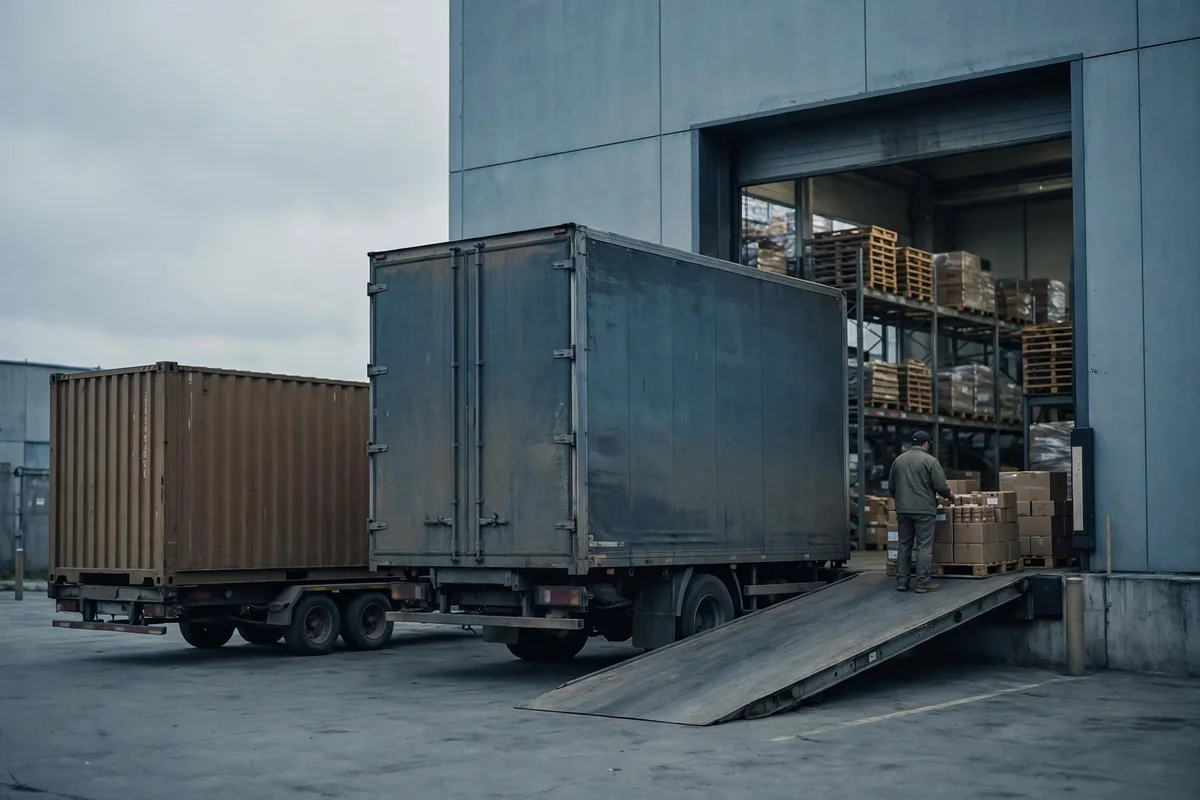
After clearance and port pickup, the freight still has to reach the warehouse: book the appointment, check the load at the gate, confirm the count at receiving, and return the empty container with a receipt. This checklist lists thirty items in four stages, so each step is confirmed in writing.
How to use this checklist
This page covers the warehouse leg only: the freight has cleared customs and left the port, and now it has to be booked into a warehouse, received at the dock, and handed over with a signed slip, after which the empty container goes back with a receipt. It does not repeat the pickup after customs clearance checklist on this site, which covers the delivery order, the pickup appointment and the gate-out check at the port. It does not repeat the FBA inbound shipment checklist, which covers Amazon-specific prep, labelling and carrier handover. It does not repeat the demurrage and detention charges checklist, which covers the charges that follow a late return. Use this page for the warehouse leg; use those pages for the pickup, the FBA shipment and the charges.
Work through the four stages in order, with the delivery order, the packing list and the bill of lading copy open beside this page. Confirm the warehouse appointment in writing before the truck is dispatched, and check the seal and the container number at the gate before the truck leaves. At the warehouse, count the cartons against the packing list before the receiving slip is signed, and note any damage on the slip itself. Keep the appointment confirmation, the receiving slip and the empty return receipt in one file, so the whole leg can be traced from the file without asking anyone to remember it.
A warehouse delivery concerns the importer, the warehouse, the trucker and the forwarder. The warehouse sets the appointment and the receiving rules, the trucker carries the load and the papers, and the forwarder holds the delivery order and the booking. A delivery whose papers disagree may simply be turned away at the gate, and a count that is never checked at receiving becomes a dispute later. Ask for every appointment, every count and every return in writing before the truck moves.
Stage 1 — Warehouse appointment and delivery booking
Stage 1 books the warehouse delivery: the appointment slot, the dock, the contact, and the papers the gate asks for. Each one needs to be confirmed in writing before the truck is dispatched.
Ask the warehouse for the appointment in writing, with the slot, the dock number and the contact name it states. Ask for the warehouse address and the gate procedure, and ask which papers the driver must show at the gate. Give the trucker the delivery order number, the container number and the appointment details, and ask for the truck and trailer details to be sent to the warehouse before dispatch. Where the warehouse needs the carton count or the pallet count in advance, send it with the appointment request, and keep the written confirmation with the delivery file.
Stage 2 — Load check and transit to the warehouse
Stage 2 checks the load before the truck leaves the port and while it is on the road: the seal, the container number, the carton count and the papers in the cab. A fault found at the gate is a fix; the same fault found at the warehouse is a dispute.
Check the seal number against the delivery order before the truck leaves the gate, and check the container number against the bill of lading copy. Count the cartons that can be seen at the gate, and photograph the seal, the container number and any visible damage before departure. Ask the driver to carry the delivery order, the appointment confirmation and the packing list in the cab, and ask for the truck to be tracked to the warehouse. Where the seal is broken or the number does not match, stop and ask the forwarder in writing before the truck leaves.
Stage 3 — Warehouse receiving and box handover
Stage 3 covers receiving at the warehouse: check-in at the gate, unloading in the order the warehouse asks for, the count against the packing list, and the signed receiving slip. The slip is the record of what the warehouse took in.
Ask the driver to check in at the warehouse gate with the appointment confirmation and the delivery order, and ask for the unloading to follow the order the warehouse gives. Count the cartons against the packing list as they come off the truck, and note any shortage or damage on the receiving slip before it is signed. Ask for the signed receiving slip in writing, a copy for the file, and ask the warehouse to note the count and any exception on it. Where the count does not match, stop and ask the forwarder in writing before the slip is signed.
Stage 4 — Empty return and file close
Stage 4 returns the empty container and closes the file: the sweep, the return booking, the depot receipt, and the delivery file in order. The delivery is finished only when the empty return receipt is in the file.
Ask the driver to sweep the empty container and check it is empty before it leaves the warehouse, and ask for the return booking in writing, with the depot and the reference it states. Ask for the empty return receipt from the depot, and keep it with the receiving slip and the appointment confirmation. Where the container is damaged, note it on the return receipt before it is signed. Keep the whole file together, so a later question starts from papers rather than from memory.
Which warehouse delivery step applies to this shipment?
Every warehouse delivery needs the same core steps, but the extra steps differ by shipment: a full container to the importer's own warehouse needs the core set, a full container to a third-party warehouse needs the warehouse's own receiving rules, cartons from a shared container need the split, and a cross-dock needs the onward booking.
| Shipment | When it applies | What to ask before delivery |
|---|---|---|
| Full container to the importer's own warehouse | One container delivered to the warehouse the importer runs | Ask for the appointment, the receiving slip and the empty return receipt |
| Full container to a third-party warehouse | One container delivered to a warehouse run by another party | Ask for the warehouse's receiving rules and its appointment reference in writing |
| Cartons from a shared container | Cartons stripped from a container shared with other cargo | Ask for the carton split, the count per order and the receiving slip per order |
| Cross-dock or transload | Freight moved through the warehouse to another truck without storage | Ask for the onward booking and the handover slip for the next leg |
Common reasons warehouse deliveries go wrong
Most warehouse deliveries that go wrong share the same few causes. The appointment was never confirmed in writing, so the truck is turned away at the gate. The seal number on the delivery order does not match the seal on the container, so the load cannot be checked at the gate. The carton count at receiving was never checked against the packing list, so a shortage is found only later. Damage was never noted on the receiving slip, so there is no record of it. The empty container went back without a receipt, so the return cannot be proved.
The fix is the same in each case: confirm the appointment in writing before the truck is dispatched, check the seal and the container number at the gate, count the cartons against the packing list before the receiving slip is signed, note any damage on the slip itself, and keep the empty return receipt with the file. Where a count does not match, stop and ask the forwarder in writing before the slip is signed.
What this checklist cannot decide
This checklist cannot decide the warehouse receiving rules that apply to a given delivery, or the appointment the warehouse will give: those follow the warehouse, its dock plan and its own rules. It cannot predict the receiving outcome, and it cannot set the delivery result: that follows the papers, the count and the warehouse check. It cannot decide whether a delivery will be accepted at the gate: that follows the appointment, the papers and the warehouse rules.
It also cannot replace the warehouse's or the forwarder's advice on a specific delivery. Where an appointment is refused, a count is disputed, or a query comes back, ask the forwarder in writing before the next step. It cannot book a delivery for a shipment that never cleared customs, and it cannot turn a load that was never picked up into a warehouse delivery.
Delivery and warehouse guides on this site
- Pickup After Customs Clearance Checklist: Delivery Order, Container & Return
- Warehouse Delivery Appointments for Imports: Data to Confirm Before Dispatch
- FBA Inbound Shipment Checklist: Prep, Packing & Carrier Handover
- Demurrage & Detention Charges Checklist: Free Time, Terminal & Return
- Bill of Lading Checklist: Parties, Freight Terms, Clean Bill & Originals
Related guides
- Pickup After Customs Clearance Checklist: Delivery Order, Container & Return
- Warehouse Delivery Appointments for Imports: Data to Confirm Before Dispatch
- FBA Inbound Shipment Checklist: Prep, Packing & Carrier Handover
- Demurrage & Detention Charges Checklist: Free Time, Terminal & Return
- Bill of Lading Checklist: Parties, Freight Terms, Clean Bill & Originals
Official references
- US Customs and Border Protection: Trade
- ICC: Incoterms 2020
- FIATA: International Federation of Freight Forwarders Associations
- IATA: Cargo
For a route-specific logistics review, provide the product, origin, destination, packed dimensions, weight and ready date.
Request a shipment review ↗Frequently asked questions
What papers should the driver carry to the warehouse?
Three papers: the delivery order with its number, the warehouse appointment confirmation with the slot and the dock, and the packing list with the carton count. Carry a copy of the bill of lading too, so the container number can be checked at the gate. Keep the driver contact on the file, so the warehouse can reach the driver if the slot changes.
What should I do when the warehouse count does not match the packing list?
Stop and do not sign the receiving slip as it stands. Count again with the warehouse, note the shortage or the extra cartons on the slip, photograph the load, and ask the forwarder in writing before the slip is signed. Keep the note and the photographs with the delivery file, and follow the instruction the forwarder gives before the next step.
When is the delivery finished — at the dock or at the empty return?
At the empty return. The receiving slip proves the warehouse took the freight in, and the empty return receipt proves the container went back. A delivery file is complete only when both papers are in it: the signed receiving slip and the empty return receipt. Keep both with the appointment confirmation, and close the file from the papers.