Oversized and Overweight Cargo Checklist: 30 Checks Before the Cargo Is Booked
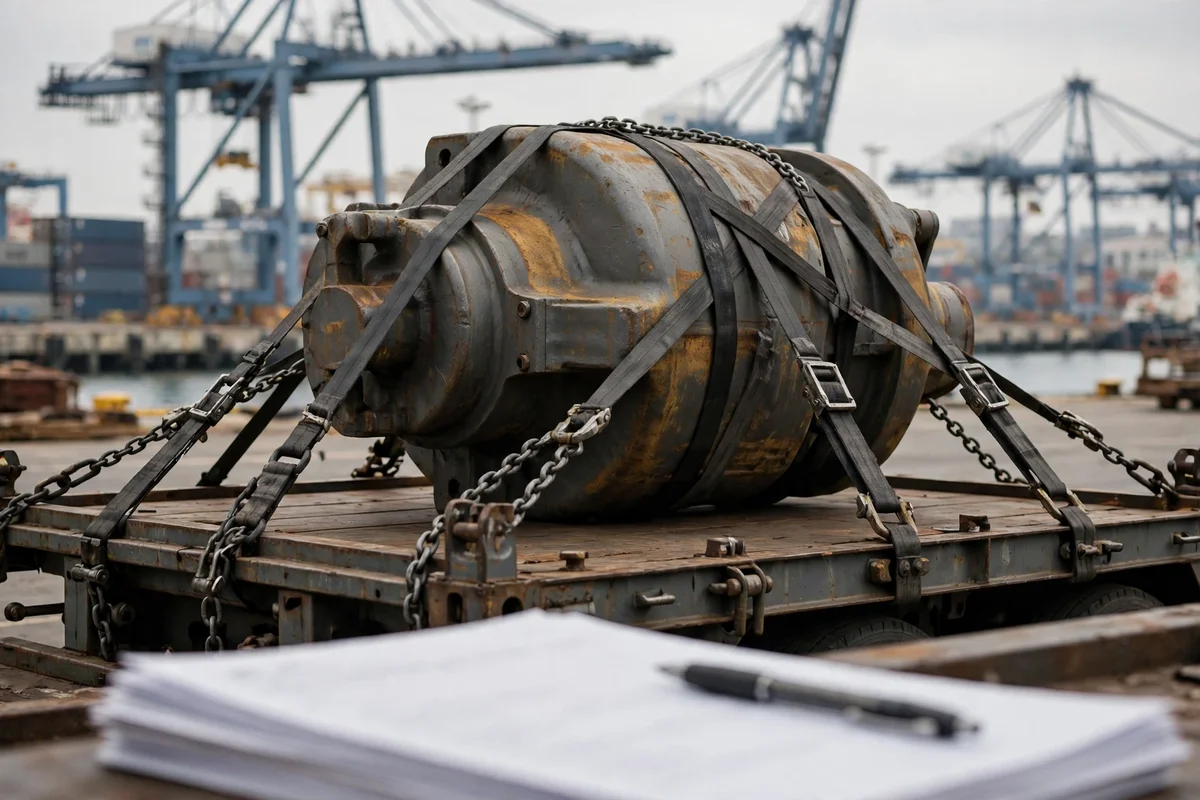
Oversized and overweight cargo is declared before it is booked, not after: declare the oversize dimensions and the weight against the booking, choose the special equipment against the declared dimensions, and check the lashing, the port and the sailing in writing before the cargo leaves the warehouse.
How to use this checklist
This page covers the moving of oversized and overweight cargo only: the oversize dimensions and the weight declared against the booking, the special equipment chosen against the declared dimensions, the lashing and the securing checked against the equipment, and the port and the sailing checked before the cargo moves. It does not repeat the container VGM checklist, the ocean freight booking checklist or the cold chain temperature-controlled cargo checklist.
Work through the four stages in order, with the booking, the packing list and the lashing plan open on the desk. Read every line on the booking against the paper that answers it, and ask the carrier in writing where a line reads differently.
The carrier, the terminal and the shipper each see a different part of the shipment, so a stowage agreed with one party is not a stowage agreed with all of them. Tell each party in writing where a line reads differently.
Stage 1 — Oversize dimensions and weight declared against the booking
Stage 1 covers the oversize dimensions and the weight declared against the booking: the dimensions compared with the dimensions measured at the warehouse, and the weight compared with the weight measured at the warehouse. A dimension declared without a measurement is the loose end found most often.
Declare the dimensions and the weight with the tape and the scale beside the booking file. Where a measurement reads differently from the booking, ask the shipper in writing before the equipment is chosen.
Stage 2 — Special equipment chosen against the declared dimensions
Stage 2 covers the special equipment chosen against the declared dimensions: the flat rack or the open-top container compared with the oversize dimensions on the booking, and the stowage compared with the stowage the carrier named. Equipment chosen before the dimensions are declared is the loose end found most often.
Choose the equipment after the dimensions are declared: equipment that reads differently from the declared dimensions changes which stowage the cargo takes and which lashing the cargo needs.
Stage 3 — Lashing and securing checked against the equipment
Stage 3 covers the lashing and the securing checked against the equipment: the lashing points compared with the lashing points the equipment note names, and the straps and the chains compared with the lashing plan the carrier agreed. A lashing point read past without a note is the gap found most often.
Read the lashing with the lashing plan beside the flat rack. Where a strap or a chain reads differently from the plan, ask the carrier in writing before the cargo is loaded.
Stage 4 — Port and sailing checked before the cargo moves
Stage 4 covers the port and the sailing checked before the cargo moves: the ports and the vessel read against the booking, and the terminal handling read against the handling the terminal agreed. A sailing that reads differently from the booking is settled by asking the carrier in writing which sailing stands.
Check the port and the sailing before the cargo leaves the warehouse: a port that reads differently from the booking is settled by asking the carrier in writing which port its records name.
Reading the dimensions, the weight, the equipment and the lashing as one line from the booking to the sailing
The oversized cargo booking is read as one line from the booking to the sailing, and a break anywhere in the line breaks the whole read. The booking names the oversize dimensions and the weight, the equipment note names the flat rack or the open-top container, the lashing plan names the straps and the chains, and the sailing is the sailing the carrier will load the cargo on. Each paper answers the one before it.
The oversize dimensions and the weight are the first place where the line parts ways. The warehouse measures the length, the width, the height and the weight, and the booking has to name the same dimensions and the same weight. Where the booking names dimensions the warehouse did not measure, the line breaks: the equipment may be chosen for dimensions the cargo never had, or the stowage may be planned for a shape the cargo never takes. Where the booking names a weight the warehouse did not measure, the line breaks the other way: the crane may be planned for a weight the cargo never had, and the lashing may be planned for a load the cargo never carries.
The special equipment is the second place where the line parts ways. The booking names the flat rack or the open-top container agreed before the cargo moves, and the equipment note names the equipment the carrier will supply. Where the equipment note names a flat rack the booking does not name, the line breaks: the cargo may arrive at a terminal that expects a different base, or the lashing points may sit where the straps cannot reach them. Where the booking names an open-top container the equipment note does not name, the line breaks the other way. A stowage position that reads differently from the stowage the carrier named is a different stowage until the carrier says otherwise in writing.
The lashing and the securing are the last place where the line is read before the sailing. The lashing points on the cargo have to be the lashing points the equipment note names, each strap and each chain has to follow the lashing plan the carrier agreed, and the sailing has to carry the same cargo, the same dimensions and the same weight as the booking. A lashing point read past without a note says nothing about whether the cargo stays put until the carrier confirms it in writing.
Which question to settle first when the dimensions, the weight or the equipment reads differently
Oversize dimensions or a weight the warehouse did not measure is settled with the shipper, and equipment or a stowage that reads differently is settled with the carrier or the terminal.
| Difference found | When it applies | What to do first |
|---|---|---|
| Oversize dimensions on the booking reading differently from the warehouse measurement | The booking and the warehouse name different dimensions | Ask the shipper in writing which dimensions stand |
| Weight on the booking reading differently from the warehouse measurement | The booking and the warehouse name different weights | Ask the shipper in writing which weight stands |
| Special equipment on the booking reading differently from the equipment note | The booking and the equipment note name different equipment | Ask the carrier in writing which equipment stands |
| Stowage position on the booking reading differently from the carrier record | The booking and the carrier name different stowage positions | Ask the carrier in writing which stowage stands |
Why an oversized cargo booking is held back before the equipment is chosen
Most oversized cargo bookings held back before the equipment is chosen come back to the same few causes. Oversize dimensions are named on the booking that the warehouse did not measure, so the carrier has no agreed dimensions to plan the equipment around. A weight reads differently from the warehouse measurement, so the stowage follows a weight the cargo never had.
The fix is the same in each case: name the dimensions, name the weight, name the paper that agrees them, and put the written answer on the file before the equipment is chosen.
A second cause is special equipment on the booking that reads differently from the equipment note. A third is a lashing plan on the booking that reads differently from the plan the carrier agreed. A fourth is a stowage position named on the booking that the carrier record does not name.
A fifth cause is a booking handed over with no warehouse measurement, no packing list, no equipment note and no lashing plan beside it. Keep the warehouse measurement, the packing list, the equipment note and the lashing plan with the booking, and hand the file over whole.
What this oversized cargo checklist cannot settle for the carrier and the shipper
This checklist cannot decide whether the cargo fits a stowage the carrier record does not name: the carrier and the shipper decide that from the carrier record and the written answers.
It also cannot replace carrier or terminal advice on a specific booking. Where a booking names a step this checklist does not cover, ask the carrier or the terminal in writing.
It also cannot say whether the cargo matches the count on the packing list: that rests with the packing list check.
Export guides on this site
- Container VGM Checklist: 30 Checks for Verifying Gross Mass Before Loading
- Ocean Freight Booking Checklist: FCL, LCL & Carrier Handover
- Cold Chain Temperature-Controlled Cargo Checklist: 30 Checks From Booking to Delivery
- Freight Forwarder Selection Checklist: Credentials, Quotes, Service & Contract
- Sea Freight from China: Complete Guide
- Dangerous Goods Air Freight Checklist: Documents, Packaging & Carrier Acceptance
Related guides
- Container VGM Checklist: 30 Checks for Verifying Gross Mass Before Loading
- Ocean Freight Booking Checklist: FCL, LCL & Carrier Handover
- Cold Chain Temperature-Controlled Cargo Checklist: 30 Checks From Booking to Delivery
- Freight Forwarder Selection Checklist: Credentials, Quotes, Service & Contract
- Sea Freight from China: Complete Guide
- Dangerous Goods Air Freight Checklist: Documents, Packaging & Carrier Acceptance
Official references
- US Customs and Border Protection: Trade
- ICC: Incoterms 2020
- FIATA: International Federation of Freight Forwarders Associations
- IATA: Cargo
For a route-specific logistics review, provide the product, origin, destination, packed dimensions, weight and ready date.
Request a shipment review ↗Frequently asked questions
What should be checked first when oversized cargo is about to be booked?
Declare the oversize dimensions and the weight against the warehouse measurement first, then choose the special equipment against the declared dimensions, then check the lashing and the securing against the lashing plan. Check the port and the sailing before the cargo leaves the warehouse.
How is special equipment chosen for oversized cargo?
Choose the flat rack or the open-top container from the oversize dimensions declared on the booking, and read the equipment note against the booking. Where the equipment note names equipment the booking does not name, ask the carrier in writing which equipment stands before the booking is placed.
When should the lashing be checked against the lashing plan?
Check the lashing before the cargo is loaded, and read the lashing points, the straps, the chains and the dunnage against the lashing plan. Where a strap or a chain reads differently from the plan, ask the carrier in writing which line stands.